print media - search results

Countdown begins for 25th WAN-IFRA Conference India 2017 in Chennai
This year’s WAN-IFRA Conference, to be held from 12 to 14 September 2017, is special as it is the 25th (Silver Jubilee) year of the event in India.

Perfect Digital gets western India’s first HP Latex 315

Comart creates vehicle wrap for Hector’s Paper Boat

Fuji’s Samba heads dominate emerging digital press market
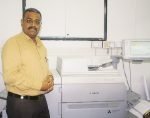
Tushar Xerox installs Canon, HP and KIP digital solutions

HP promotes green technology at Hemtextil
At Hemtextil, HP and its channel partner, Insight Print Communications, had a joint stand displaying the HP Latex 560 printer. “The HP Latex 560 is primarily used for signage and display, but now we are exploring the home furnishing and de décor segments

ColorJet creates home environment at Heimtextil
At Hemtextil, ColorJet displayed a 4-color eco-friendly digital textile printer with speeds up to 24 square meter per hour and a sublimation machine for all polyester materials.

Why are South Indian language papers investing in 4 x 1 presses?
The divergent paths of Indian language newspapers
According to the Group M report published by Mint on 16 February 2017, ad spending in India including radio, cinema and OOH is expected to grow by 10% in 2017 to Rs. 61,204 crore (approximately US$ 9.7 billion). The same report states that digital advertising will record the fastest growth at 30% to reach Rs. 9,490 crore in 2017, albeit at a slower pace than the 47% growth in 2016. Television is the largest ad medium and is expected to reach Rs. 27,638 crore at a growth rate of 8%.
In 2017, print advertising is forecast to achieve a stable growth rate of 4.5% to Rs. 18,258 crore, which is a slight increase over the 4% ad revenue growth in the previous year according to the same report. The increased spends is expected from sectors like auto, banking, financial services and insurance and eWallets that are said to prefer print advertising.
The report further quotes Girish Agarwal, director of DB Corp., which publishes the Hindi daily Dainik Bhaskar and Gujarati and Marathi dailies both named Divya Bhaskar, “In the past few years, English dailies have grown around 1-2% while Indian language print publications have grown at around 8-9%.” Other research indicates that a part of the digital ad revenue is also coming to newspapers. At the same time, the Indian dailies are reducing their dependence on ad revenues by increasing their subscription revenues by as much as 4-5% annually.
Indian language dailies are growing much faster than the big English language dailies and they are also benefitting from subscription price rises and growing digital ad revenues. However, there seems to be an imbalance or difference in the quality of investment in productive assets between the North and South Indian language dailies.
Long-term trends
More than a decade ago, it became apparent that the major trends amongst Indian dailies were increased circulation, increase in the number of color pages, an increase in geographic reach and in some cases new launches in other Indian languages. Another established trend was that many of the Indian language dailies were highly localized with at least one broadsheet page being changed for each district that the newspaper covered. Even before the idea of big data, Indian language dailies were able to fine-tune print runs on a daily basis with quality feedback from their distribution system.
As runs became longer, with many Indian language dailies having multiple editions and production plants, combined circulations reached and exceeded a million copies. Since they were driven by color ad revenues, to produce significant quantities with high quality color pages and plate changes for localized coverage, the new technology 4x1 presses were a reasonably logical choice—at least for their main or major centers.
Simultaneously, 4x1 press design improved with better shaftless motors, spray dampening systems and slenderness ratios that allowed thinner diameter narrow gap plate cylinders to reliably perform at higher speeds. New CCD technology brought better registration and closed loop color control systems while improved electronics and software improved computerized integration and control systems.
4x2 and 4x1 presses for high volumes
To reiterate, a 4x1 web offset press has a four broadsheet newspaper page wide and single page circumference plate cylinder. Before the advent of the 4x1 web offset presses, in order to print 70,000 copies an hour and above, it was necessary to have a 4x2 press whereby the press essentially rotated at 35,000 RPM but there was a second set of plates that could double the output. Big English language groups such as Bennett-Coleman, HT Media as well ABP for its high circulation Bengali daily have been running 4x2 presses for many years.
Of course this also meant that for changing one page for as little as 5,000 or 10,000 copies, two plates need to be changed. In addition, 4x2 presses with four color towers (4-Hi stacks) occupied large press rooms with a separate floor for the reel-stand and auto-splicers.
The four operation levels included a basement, a ground floor for press towers and control console; a first level gallery for plating and inking the 3rd and 4th color plates; and, a second level gallery for the superstructure (web movement, splitting, turning and combining webs). This necessitated large pressrooms and infrastructure costs for 4x2 presses. (There was also the additional cost of a mailroom equipment to automate the evacuation of high volume output which remains a consideration even with 4x1 presses).
In contrast with the huge infrastructure capital costs for installing a 4x2 press, the 4x1 (single circumference plate cylinders) reduced the height and weight of press towers while also encouraging reel-stands to be mounted on the same floor as the more compact towers. The operational costs associated with running a 4x2 press were also high in terms of manpower and electricity—webbing up and restarting after web breaks took a lot of time and considerable newsprint waste.
Made for India 4x1 presses
The initial 4x1 presses imported were the manroland Web Systems Regiomans by Bennett-Coleman and HT Media. Kasturi and Sons who were convinced of the 4x1 design and configuration, and were running a Mitsubishi 4x2 press at their Chennai plant, approached Mitsubishi to design and build a 4x1 for them. Called the DiamondSpirit SA (for South Asia), this 4x1 was first installed in one of Kasturi and Sons’ out of state plants in South India and later in many of their plants including its new plant in Maraimalai Nagar near Chennai. Japanese newspapers came to India to see the new 4x1 press and purchased these for their own modernization.
Partly at the urging of some of the language dailies in South India, the web press manufacturers such as manroland, Mitsubishi and Manugraph came up with more economical ‘made for India’ 4x1 presses. While Dainik Bhaskar was the only Hindi daily to purchase 4x1 presses which consisted of several KBA Prisma lines in a joint purchase with the newly launched English daily DNA, in collaboration with the Zee Television group, most of the 4 x1 presses have come to South India.
The exceptions are TKS 4x1 presses purchased by HT Media for their Greater Noida plant and the manroland Cromoman 4x1 presses purchased by Bennett-Coleman for their Pune editions in both English and Marathi and another Cromoman 4x1 purchased for their new Bengali daily out of Kolkata. The Cromoman was the first ‘made for India’ 4x1 press—designed to fit into a 2x pressroom—and could handle electricity outages with a soft stop instead of web breaks and webwraps.

South Indian dailies dominate the 4x1 market
The largest base of 4x1 presses and the one with the greatest growth momentum is clearly amongst the South Indian language dailies. Malayalam daily Malayala Manorama has in several stages purchased more than a dozen 4x1 presses from both Manugraph and Mitsubishi. Its fierce competitor Mathrubhumi has purchased five TKS 4x1 presses over the past five years. Tamil daily Dinamalar installed a Manugraph Smartline 4x1 in its new Madurai plant and then purchased a pair of the Goss Uniliner S 4x1 presses that were initially installed by the Deccan Chronicle group. Tamil daily Dina Thanthi installed both a new Seikan 4x1 press and a second-hand Seikan 4x1. The Printers Mysore, publishers of Deccan Herald in English and Prajavani in Kannada, purchased and re-installed the KBA Prisma 4x1 that English daily DNA had installed in Bengaluru. The most recent installation is of a manroland Cromoman 4x1 press is by Telugu daily Namaste Telengana for its new plant in Hyderabad.
Economics?
Apart from the question of why it is the South Indian language dailies that are by and large interested in and investing in 4x1 presses, there is also the question of why some of the Hindi, Marathi and Gujarati dailies are reluctant to do so? In many cases, language dailies are buying 6- and 7-tower 2x1 presses at speeds of 35,000, 40,000 or 50,000 copies an hour to cope with increased color pagination and circulation. In many of the language dailies, there are now multiple centers with circulations above 250,000 and in some cases around the 400,000 level and even above this. To produce this number of copies of a 24-page broadsheet daily with even acceptable quality color pages and advertising would require a minimum of two 2x1 presses, each with 6 full-color towers.
While the cost of two locally manufactured 2x1 presses is less than that of an imported 3-tower 4x1 press (for 24 pages full-color broadsheet pages), there are significant operational economies in a 4x1 press in terms of space, manpower, newsprint wastage, electricity and even ink. Both webbing up and ink pumping are automated functions in a 4x1 press. This difference in cost is greater in the case of the imported 4x1 presses than would be the case of Manugraph’s Smartline 4x1, which is locally manufactured. It is true that the cost of an automated mailroom is significant but attempting to automate the evacuation of several high-speed 2x1 presses may be more challenging than a mailroom system for a single 4x1 press, let alone the facility of producing uniquely counted and wrapped bundles with on-line labelling for distribution.
Flexibility
Apart from the cost considerations, some newspaper publishers feel that they have more flexibility and ease of operation with a battery of 2x1 presses, as they can run a variety of products. In fact, this often means that when running the edition with the same pages and advertisements on several presses, color quality is compromised while wastage and other costs are much higher.
The operation of 4x1 presses with automatic register, remote ink pumping and other controls has become easier. Improved handling with slitting of the web on top of the tower for combining the two webs into a single-width folder makes it easier for operators trained on 2x1 presses.
As far as running more than one product, this flexibility is now available on 4x1 presses with several types of split runs, especially as these presses are truly shaftless and electronically controlled. Any number of press towers on either side of a double folder configuration can be configured as two presses with great flexibility in the pagination of each product.
The author is a G7 Expert and an offset printer with hands-on experience in running sheetfed and web offset presses. You can reach him at editor@ippgroup.in.

India in focus at Frankfurter Buchmesse 2017
At Frankfurter Buchmesse 2017, the Business Club conference will focus on five publishing markets: France, India, South-East Asia, the UK and the US. This year, the Business Club conference ‘The Markets’ with the slogan ‘Change – a 360-degree view’ will kick off the Frankfurter Buchmesse (11-15 October 2017) with numerous political and international publishing topics on its agenda.
New York literary agent Andrew Wylie will open the conference. In his keynote, Wylie will examine, among other issues, which effects Donald Trump’s governance could have on the publishing industry. Wylie is considered one of the most powerful literary agents in the world. He founded the Wylie Agency in 1980 and now represents over 1,000 authors, artists and politicians, including Chimamanda Ngozi Adichie, Bob Dylan, Karl Ove Knausgård, Christian Kracht, Salman Rushdie, Philip Roth, Madeleine Thien, and Roberto Saviano.
On 10 October 2017 (9 a.m. to 1 p.m., Hall 4, room Europa, Frankfurter Buchmesse Business Club), The Markets conference will turn its attention to five publishing markets—France, India, South-East Asia, the UK, and the US. Representatives from these countries and regions will talk about the latest changes, analysing trends and developments.
The Indian publishing sector is growing at an impressive rate—not only because new target groups are being tapped but because many multinational publishing companies based in India now publish books in Indian regional languages such as Hindi and Marathi, thereby not only growing in terms of local authors, but also opening new business areas in the licensing market. In a conversation with a representative of the Indian publishing industry, Prashasti Rastogi from the German Book Office, New Delhi, will discuss how domestic and international publishers can take advantage of the growth in Indian publishing.
For the Eurocentric publishing industry, South-East Asia is not just many miles away geographically, innovations from this part of the world are also rarely noticed by the European book market. In an interview with Claudia Kaiser, vice president – business development South-East Asia of the Frankfurter Buchmesse, Arief Hakim, managing director of the Malaysian PTS Media Group, will talk about the move towards innovative developments in his region, particularly in the digital sector.
A panel discussion on the topic of ‘shifting perspectives’ with participants from a number of markets will round off the morning with a glance beyond the publishing sector. Conference attendees will have the chance to ask individual questions about the countries represented at The Markets in personal conversations directly at the Book Fair. Three market players from each of the respective markets will be available for matchmaking appointments and will provide detailed information about various publishing segments, including fiction, non-fiction, children’s books, distribution, and others.

GMG OpenColor 2.1 creates profiles without test charts
On 13 June 2017, GMG announced OpenColor 2.1—a new release of its award-winning multichannel profiling software especially useful for packaging proofing. OpenColor 2.1 now offers a measurement capability for custom patches.
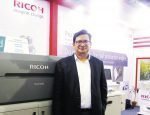
Ricoh India focuses on tier-2, -3 & -4 cities
Rakhi Chaudhary
Ricoh, a company specializing in office imaging equipment, production print solutions, document management systems and IT services, participated in PrintPack after a gap of two editions. Sambit Misra, chief operating officer at Ricoh India said, “This is the first time that we have participated in PrintPack and the response has been tremendous in terms of the business that we have been able to generate and also the number of prospects that we met. The positive side of the event was its venue, which attracted only serious buyers to the show.”
He further shared, “The concept that attracted customers at our stand was our approach and the uniqueness of our products as we asked customers not to print on paper, an approach totally different from other players in the industry. So, going beyond the industry can fetch more business. Our engines are equipped to handle multiple materials like PB, PVC, stain sheets, magnetic media and a variety of media which is non-paper. This is a challenge for most of our competitors because their machines don’t have the technology to handle this kind of variability. Our engines are created with a fuser temperature between 180 and 200 degrees.” Ricoh promoted white and neon inks extensively at the show.
According to Misra, nothing has changed in the industry in terms of technology but what has definitely changed is the aesthetics. Sharing his role at Ricoh India, he said, “My value addition to Ricoh has been to innovatively sell products to our new customer base and thus we are targeting the tier-2, -3 and -4 cities besides focusing more on selling high-end products to smaller cities.”
Ricoh has its engineers spread across the country and is currently focusing on the markets of Moradabad, Gorakhpur, Bareilly, etc. In terms of business, Ricoh has a very strong base in South India as the adoption of technology is high in this region. “Apart from the southern belt, we have seen positive growth in Uttar Pradesh, a state we have been focusing on for long now. Also, we are looking to tap the photo markets of Kerala, Chandigarh and Ludhiana. We currently have 60 engineers pan India, and we keep adding to that list as per the market demands,” he concluded.

Unique ICC-based test patches for output workflows with PDF/X-4
In the last quarter of 2016, Ghent Workgroup (GWG) announced the release of Ghent PDF Output Suite 5.0 for testing and adjusting PDF output workflows with color management in order to be fully compliant with PDF/X-4.

Dynamic separations including spot colors with GMG OpenColor 2.06
Germany-based developer and supplier of high-end color management software solutions, GMG announced a new release of GMG OpenColor, its award-winning multichannel profiling software in the beginning of 2017.

Nita Bhalla of Thomson Reuters Foundation is SOPA Journalist of the Year

Pamex 2017 expects a larger turnout
Organized by All India Federation of Master Printers (AIFMP) in association with Print-Packaging.com (P) Ltd Pamex 2017 is now only six months away.

Canon’s first 100 ppm digital color press

Michael Golden is the new president of WAN-IFRA

Packaging design is already evolving with the millennial generation – Shyam Sunder BK

Samvada plans to go pan India


WAN-IFRA and The Straits Times’ fight against fake news

MMS Lifetime Achievement Award for CN Ashok

Major Indian newspaper groups hike advertising prices

Is demand finally catching up with the need for education in India?
Huge growth for the book industry was forecast by Unesco in the 1950s in its slim publication called The Book Hunger. One could say that now demand for education (and books) as in many other economic segments is finally catching up with earlier forecasts...

Why should the next generation join the family business?

WAN-IFRA India 2017 Conference Chennai 12 to 14 Sep 2017

Publish Asia 2017 in Kuala Lumpur from 18 to 20 April

The environmental benefits of modern press controls

LBF Literary Festival Award to Bookaroo Children’s LitFest

Xerox launches Versant 3100 and Versant 180

Fujifilm Acuity LED 3200R to be launched in India soon
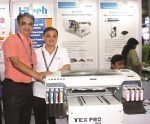
Hi-Tech Systems launches direct-to-garment press

Launch of new Océ ProStream as an alternative to offset

DD Enterprises installs 100ppm Canon imagePRESS C10000VP
Manifold Graphics’ new web venture pustaksagar.com

Energising the online presence of India’s most trusted daily newspaper

The Hindu on the web – with character!

The London Book Fair 2017

Hinderer + mühlich opens plant in India
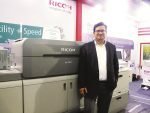
Ricoh India focuses on tier-2, -3 & -4 cities
Parksons Graphics achieves Idealliance G7 Master Qualification

Newspapers to see sluggish advertising expenditure growth this year

“Paradigm shift happening in the way English news is being consumed”

Tech-Max records 40% growth in business

Zünd to display digital cutting technology – Hall 10 Stand F41
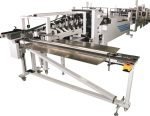
Paktek to display automatic folder-gluer – Hall 10 Stand F75

Alpap to showcase blankets and films – Hall 8 Stand E32A

Anil Agencies to display rigid box machine – Hall 10 F21

Frank Romano to speak at DOXNET 2017 on-site in Lucerne