print - search results

India in focus at Frankfurter Buchmesse 2017
At Frankfurter Buchmesse 2017, the Business Club conference will focus on five publishing markets: France, India, South-East Asia, the UK and the US. This year, the Business Club conference ‘The Markets’ with the slogan ‘Change – a 360-degree view’ will kick off the Frankfurter Buchmesse (11-15 October 2017) with numerous political and international publishing topics on its agenda.
New York literary agent Andrew Wylie will open the conference. In his keynote, Wylie will examine, among other issues, which effects Donald Trump’s governance could have on the publishing industry. Wylie is considered one of the most powerful literary agents in the world. He founded the Wylie Agency in 1980 and now represents over 1,000 authors, artists and politicians, including Chimamanda Ngozi Adichie, Bob Dylan, Karl Ove Knausgård, Christian Kracht, Salman Rushdie, Philip Roth, Madeleine Thien, and Roberto Saviano.
On 10 October 2017 (9 a.m. to 1 p.m., Hall 4, room Europa, Frankfurter Buchmesse Business Club), The Markets conference will turn its attention to five publishing markets—France, India, South-East Asia, the UK, and the US. Representatives from these countries and regions will talk about the latest changes, analysing trends and developments.
The Indian publishing sector is growing at an impressive rate—not only because new target groups are being tapped but because many multinational publishing companies based in India now publish books in Indian regional languages such as Hindi and Marathi, thereby not only growing in terms of local authors, but also opening new business areas in the licensing market. In a conversation with a representative of the Indian publishing industry, Prashasti Rastogi from the German Book Office, New Delhi, will discuss how domestic and international publishers can take advantage of the growth in Indian publishing.
For the Eurocentric publishing industry, South-East Asia is not just many miles away geographically, innovations from this part of the world are also rarely noticed by the European book market. In an interview with Claudia Kaiser, vice president – business development South-East Asia of the Frankfurter Buchmesse, Arief Hakim, managing director of the Malaysian PTS Media Group, will talk about the move towards innovative developments in his region, particularly in the digital sector.
A panel discussion on the topic of ‘shifting perspectives’ with participants from a number of markets will round off the morning with a glance beyond the publishing sector. Conference attendees will have the chance to ask individual questions about the countries represented at The Markets in personal conversations directly at the Book Fair. Three market players from each of the respective markets will be available for matchmaking appointments and will provide detailed information about various publishing segments, including fiction, non-fiction, children’s books, distribution, and others.

Call for registration: Training for the second batch starts 18 September
Under an agreement signed recently between All India Federation of Master Printers (AIFMP) and Beijing Institute of Graphic Communication (BIGC) to provide training in 3D printing and print electronics, a batch of seven trainees left for China on 20 May 2017. The highly subsidized training schedule has been specially fabricated for the members and other print entrepreneurs of the country.
The first batch of training is being conducted from 22 May to 18 August. Kamal Chopra, president AIFMP graced the send-off ceremony in Delhi. Chopra said it is for the first time ever that the AIFMP has brought such an opportunity for the print professionals in India as adequate training in both 3D printing and printed electronics is not available in the country.
The course studies include lecture, demonstrations and practical workshops on advance printing technologies relating to 3D printing and printed electronics as well as visit to a range of printing companies using these techniques will.
Registration opens for second batch
The next batch of the training is scheduled to commence from 18 September and registration is open only on first come first served basis. The admission is limited only for the persons sponsored by an institute/newspaper, printing or packaging unit. Students/Teachers engaged in printing education can also apply for the course. An independent board will select the candidate to be enrolled in the course. Each candidate will be issued an electronic admision letter by BIGC.
Total tuition fee for the three-month training is 10,000 yuan (US$ 1500), or approximately Rs. 1 lac. Hostel facilities are also available for the students at BIGC. Students will have to pay for visa, air-ticket and a non-refundable pre-deposit of 750 yuan (US$ 230) towards admission fees, health insurance, etc. AIFMP will also charge Rs. 5,000 as non-refundable registration charges. No formal qualification is essential; however, experience at a printing or packaging unit or basic knowledge of printing industry is essential. The course will be delivered in English and so an ability to communicate and understand in English language is required.

Naraina-based Imaginative Colours installs RMGT 924ST

Ricoh achieves Ghent Workgroup PDF Preflight Certification
On 7 June 2017, the Ghent Workgroup announced that Ricoh has successfully achieved GWG PDF preflight certification, addressing the highest level of preflight capability for reliable PDF processing. Simon Tapley, Workflow Solutions Manager, Ricoh Europe, explains that as an active member of the Ghent Workgroup (GWG), Ricoh is now well placed to give input to and help promote this valuable standards activity, which is designed to help ease the transmission of PDF content between creative professionals and print service providers.
Tapley expands, “This certification also allows us to develop and integrate tools within our TotalFlow software solutions to help our clients adopt and work with PDF standards (like PDF/X-4) and automate the checking and correction of files against these standards.” He explained that the integration of the Enfocus Pitstop Library within Ricoh’s TotalFlow solutions (TotalFlow Production Manager and TotalFlow BatchBuilder) allows users to configure PDF preflight as an integrated and automated workflow step.
It also provides support for the latest GWG preflight standards enabling users to take advantage of this directly within our solutions and ensure files comply with these standards. This has allowed Ricoh to receive GWG certification for the very latest GWG preflight profiles and demonstrates our commitment to providing easy to use, automated solutions that allow print service providers to produce high quality output with integrity to the original designer’s intent.
Andrew Bailes-Collins, co-chair of the GWG specifications committee and senior product manager for the PitStop product family at Enfocus, comments, “It is great to see Ricoh’s solutions passed Ghent Workgroup compliancy. This is a real benefit for their customers, taking away a lot of the guesswork and manual effort out of the system configuration. Customers can be assured that 'out-of-the-box' they are conforming to a known and proven standard.
“In addition as the senior product manager responsible for the PitStop product family at Enfocus, I am pleased to see Ricoh taking advantage of the GWG compliant preflight profiles, features and functionality offered by PitStop, which are integrated in TotalFlow Production Manager and TotalFlow Batch Builder.”
Didier Haazen, chair of the GWG compliance subcommittee and senior innovation advisor at VIGC, adds, “Ricoh has proven that preflight certification is important. Implementing OEM solutions helps Ricoh and the industry to quickly adopt the newest PDF standards and ensures predictability in the entire digital production chain.”
The GWG preflight certification is a validation of the prepress quality control specification developed by the GWG. It contains 14 different ‘variants’ aimed at different print market segments and output methods, all based on the ISO PDF/X-4 standard, but with additional conditions and restrictions relevant to each segment. The variants cover the majority of common print applications and include web- and sheetfed CMYK and/or spot color, plus magazine and newspaper advertisements. Because the certification is based on the PDF/X-4 standard, it also includes variants which allow the use of RGB colors within artwork files as well as ‘live’ transparency to support the most sophisticated and up-to-date graphic arts workflows.
The test suite used in the certification process comprises 260 test files that cover aspects such as correct detection of minimum image resolution, use of correct color spaces, white and black overprint settings, ink coverage, spot color usage and naming, and more. File content that does not meet the necessary conditions is either flagged with an error message or with a warning, depending on the importance of the issue and how it could affect output.
For more information on the GWG preflight certification procedure and test files, please visit: http://www.gwg.org/compliancy-testing-procedure. Information on the GWG PDF/X workflow specification which underpins the preflight certification can be found here: http://www.gwg.org/gwg-2015-pdfx-workflow/.

GMG OpenColor 2.1 creates profiles without test charts
On 13 June 2017, GMG announced OpenColor 2.1—a new release of its award-winning multichannel profiling software especially useful for packaging proofing. OpenColor 2.1 now offers a measurement capability for custom patches.
Ricoh India focuses on tier-2, -3 & -4 cities
Rakhi Chaudhary
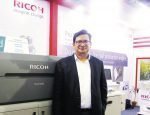
Ricoh, a company specializing in office imaging equipment, production print solutions, document management systems and IT services, participated in PrintPack after a gap of two editions. Sambit Misra, chief operating officer at Ricoh India said, “This is the first time that we have participated in PrintPack and the response has been tremendous in terms of the business that we have been able to generate and also the number of prospects that we met. The positive side of the event was its venue, which attracted only serious buyers to the show.”
He further shared, “The concept that attracted customers at our stand was our approach and the uniqueness of our products as we asked customers not to print on paper, an approach totally different from other players in the industry. So, going beyond the industry can fetch more business. Our engines are equipped to handle multiple materials like PB, PVC, stain sheets, magnetic media and a variety of media which is non-paper. This is a challenge for most of our competitors because their machines don’t have the technology to handle this kind of variability. Our engines are created with a fuser temperature between 180 and 200 degrees.” Ricoh promoted white and neon inks extensively at the show.
According to Misra, nothing has changed in the industry in terms of technology but what has definitely changed is the aesthetics. Sharing his role at Ricoh India, he said, “My value addition to Ricoh has been to innovatively sell products to our new customer base and thus we are targeting the tier-2, -3 and -4 cities besides focusing more on selling high-end products to smaller cities.”
Ricoh has its engineers spread across the country and is currently focusing on the markets of Moradabad, Gorakhpur, Bareilly, etc. In terms of business, Ricoh has a very strong base in South India as the adoption of technology is high in this region. “Apart from the southern belt, we have seen positive growth in Uttar Pradesh, a state we have been focusing on for long now. Also, we are looking to tap the photo markets of Kerala, Chandigarh and Ludhiana. We currently have 60 engineers pan India, and we keep adding to that list as per the market demands,” he concluded.

Konica Minolta showcases high-end digital presses
Mahan Hazarika
Konica Minolta demonstrated its high-end printing solutions including bizhub PRESS C1100/ C1085; bizhub PRESS C1070/C1060; bizhub PRESS 1250 and MGI JETvarnish 3DS at PrintPack India exhibition at India Expo Centre, Greater Noida. In addition, the company launched its end-to-end web printing solutions at the event including CS Remote Care Global Services, Accurio Pro solutions suite and Infinite Web to Print solutions. The company also showcased roll-to-roll labels printed on the bizhub PRESS C71cf label press.
“More than 150 serious visitors visited our stand just on the first day of the show,” said Kuldip Malhotra, head of sales at Konica Minolta India. “We received excellent response at the show, with people showing a lot of interest in our MGI JETvarnish 3DS.” The JETvarnish 3DS has spot UV and 3D tactile varnishing capabilities while transforming a standard printed output into a high-quality spot UV printed sheet into a high margin 3D-embossed output with a varnish of up to 100 microns with foiling, making the colors appear more vibrant.
“At the exhibition, our primary focus was on showing the visitors various innovative applications of the products that we had on display at the stand. Visitors normally don’t know what they can do with a particular product and the scalability; so we tried to give them an opportunity to see what different innovations they can try out on these products,” said Malhotra.
Speaking about the new label press—bizhub PRESS C71cf—launched by Konica Minolta last year, Malhotra said, “It is too early to say anything about the label press as it was launched just about three months ago at Labelexpo India 2016. Right now we are following up with many customers who have different queries about the product. So it will take some time before the product really hits the pressroom.”
The FY 2016-17 has been a very good year for Konica Minolta with the company still holding more that 50% market share, according to Malhotra. “We have been able to maintain our leadership as well as growth of our market share,” said Malhotra. “Demonetization had affected us temporarily, but we bounced back strongly. We did not face any major issues due to demonetization. Eventually, the market has now got back on track.” At current count, Konica Minolta has more than 3,000 production printers installed in India.
Unique ICC-based test patches for output workflows with PDF/X-4
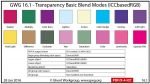
In the last quarter of 2016, Ghent Workgroup (GWG) announced the release of Ghent PDF Output Suite 5.0 for testing and adjusting PDF output workflows with color management in order to be fully compliant with PDF/X-4.

Dynamic separations including spot colors with GMG OpenColor 2.06
Germany-based developer and supplier of high-end color management software solutions, GMG announced a new release of GMG OpenColor, its award-winning multichannel profiling software in the beginning of 2017.

Nita Bhalla of Thomson Reuters Foundation is SOPA Journalist of the Year

Pamex 2017 expects a larger turnout
Organized by All India Federation of Master Printers (AIFMP) in association with Print-Packaging.com (P) Ltd Pamex 2017 is now only six months away.

Canon’s first 100 ppm digital color press

Kasturi NX installs Konica Minolta C1085

Michael Golden is the new president of WAN-IFRA


Polar invests in new training center

Thieme’s super specialty titles

JK Paper to receive Rs 325 crore financing from IFC

Konica Minolta launches Accurio Press C2070 and C2060

A1 Jumbo Xerox aims at productivity jump with HP Pagewide XL4000

An introduction to workflow technology

ArtiosCAD and Esko Automated Quality Assurance win at EDP Awards ceremony

Christian Duyckaerts appointed president of FESPA

Haldiram’s leading the packaged snack foods market

Predictions for sustainable foods in 2017

Welbound forges new partnerships

Can Uflex and the Chinese suppliers make an impact?

Modified Atmospheric Packaging for agricultural sector

HP helps brand owners elevate branding

Packaging design is already evolving with the millennial generation – Shyam Sunder BK

Wild Stone goes premium

Flex Films’ Poland plant could see capacity expansion

Annual can-making capacity in India rises to 480 million

New Focus for BookExpo America

6th Annual InnoPack Pharma Confex kicks off
The 6th Annual InnoPack Pharma Confex kicked off on 1 June 2017 at the Sahara Star in Mumbai. The first day of the conference attracted a packed house of professionals reflecting the variey and complexity of the pharma packaging industry. Several interesting and timely topics were discussed during the day, which began with a lamp lighting ceremony by the chief guest Rita Teaotia, secretary, Department of Commerce, Ministry of Commerce and Industry. In her address, Teaotia spoke of the government’s attempts in further improving the ease of doing business and said that in the current environment of slow global economic growth, India needs to further integrate with the global market. She described the Indian pharma industry as an export champions.
NC Saha, director of the Indian Institute of Packaging speaking as the guest of honor, described some of the Indian packaging trends as well as the trends in pharma packaging globally. He said that the Indian packaging industry is growing at the rate of 13% a year and is expected to reach US$32 billion by 2020. Talking about pharma packaging, Saha said that while the earlier aim of packaging was to just preserve the quality of enclosed medications, now the aim is also to prevent tampering and counterfeiting while at the same time facilitating dispensing accuracy. He noted that sustainability, cost effectiveness, robotics in primary packaging, radio frequency identification (RFID), unit dosage packaging, child-resistant packaging and senior citizen or accessible packaging are some of the growing trends in the pharma packaging space.
Sealing and closures
In the first conference session, Datwyler Sealing Solutions spoke of its Satara plant for manufacturing pharmaceutical closures and informed that a second plant could be in the offing in 2018. Its most advanced manufacturing solutions facility―FirstLine―is expected to start mid-2018.
Dessicants
In the session after lunch, Sakamoto’s manager of international sales Roger Lan spoke about his company’s innovative desiccant for pharmaceutical packaging. He explained, “Sakamoto Lime is a product which is highly suited as a replacement to silica being used as desiccant in pharma packaging. The major difference between silica and our product (Sakamoto Lime) is that our product is much cheaper than silica. Further, as we are all aware of the phenomenon known as container rain, which can lead to disastrous consequences of spoiling consignments loaded in containers for shipping, the use of lime (CaO) as a desiccant is also not advised as water contact with lime can create heat to rise up to 250 degree C.” Lan showed comparative results of Sakamoto’s Lime and how it fairs in comparison with other desiccants.
Blister-making
Shehul Seth, director, Accupack, explained the company’s three solutions―Victory & Galaxy, Plexus and Blister Draw. Designed in Europe, Victory & Galaxy are the two machines which can be combined for better results. The machine combination is called Harmony by Accupack. The company also offers an operational intelligence tool named Plexus, which can be helpful for connecting and managing plant operations while simultaneously tracking all activities and generating reports. The MIS-type of tool helps in optimizing utilization of manpower, machinery and other resources.
Seth then spoke of a third innovation―Blister Draw, a blister making software tool. By entering detailed blister requirements, 3D and 2D models are generated and displayed by the software.

Hygienic vacuum tech for pharma
Ajit Singh, managing director of Busch Vacuum India, spoke about vacuum technologies in pharmaceutical packaging applications. He spoke about the company’s vacuum pumps that are widely used for pharmaceutical applications like blisters.
Benzophenone
Gautam Kedia, regional manager for Western India of ITC’s Paperboards & Speciality Papers Division, briefed the audience on regulatory issues related to paper and board used for pharmaceutical packaging all over globe. He mentioned that Benzophenone formation caused by the usage of varnishes and UV inks is now regarded as a crucial hazard, adding that the pharma industry has started asking for certifications that the papers, plastics and inks and coatings used in packaging are Benzophenone free. Benzophenone, amongst its other uses, is a photo-initiator in curing UV inks and is also used as a UV blocker on plastics used in packaging. Thus, Benzophenone-free papers, plastics and other inputs are increasingly specified, sought after, used and better rewarded.
Best practices and safety issues in packaging development
Santosh Das, leader for commercial development at Becton Dickinson, India addressed, “Best practices and pitfalls of developing combination products―a system integration approach.” Prabir K Das, head of packaging technical services at the OSD division of Mylan Laboratories, spoke on the topic ‘Shelf life enhancement through improved packaging’ wherein he highlighted that the safety of drugs within the packaging can be ensured through tests at the packaging development stage taking into consideration various foreseeable environmental, logistical and market parameters such as temperature, humidity, shelf life and others. Kaustubh Dubale, global market development manager for pharma packaging from Solvay Speciality Polymers, suggested blister packaging solutions for temperatures and conditions that precipitate the formation of water vapor, and the need for a barrier for safety of drugs. As an illustration, Dubale spoke about his company’s DIOFAN SuperB product.
Lastly, the first day of the InnoPack Pharma Confex 2017 concluded with an address by Gregory Silveria, plant manager of Huhtamaki PPL’s Webtech division. Silveria spoke about the Benzophenone and migration concerns in pharma packaging while focussing on the difficulties in manufacturing printed labels and solutions while avoiding migration and contamination by Benzophenone. 'Pack in a box' was an exclusive session undertaken by West Pharma to interact with the attendees.

Scholarly journals and magazines from ICPR

Naph Graphics innovates its web offset presses

Samvada plans to go pan India

Quark Software’s QuarkXPress 2017 to be launched on 24 May

Manugraph enters the Japanese 2 x 1 newspaper market

Sakata India to consolidate gains in 2017

The Indian government needs to get serious about forests and paper
It’s true that print prices and margins are under pressure globally and also that Indian print businesses through the All India Federation of Master Printers led by the two Mumbai associations, have started a campaign to inform print buyers of the prevailing increase in prices of inputs including paper. The campaign has had initial success in Mumbai, with commercial printers persuading regular customers to raise prices in some cases by 5, 7.5 and 10%. However, the same report says that so far the offset packaging printers have not been able to similarly influence their generally larger volume customers.
There is no question that hyper-competition or selling at unremunerative prices has resulted in a crisis in the industry which has not been able to protect itself at a time when the domestic paper industry is in fact healthy and becoming more efficient. The subcontinent needs a healthy paper industry but this is a difficult proposition considering that the country is totally inefficient in its production of wood fiber or raw material.
Not only are the forests dismally mismanaged by the states and the national government but so are the water and ground water resources in the country. India uses more ground water than either China or the United States, and this too mostly in its hugely inefficient agriculture. While we take great pride in exporting Basmati rice, most of us are neither aware of the extraordinary amount of water needed to produce it, nor that that Indian scientists have developed genetically modified varieties that use less water but which cannot be tried out because our discussion of genetically modified crops is both unscientific and sentimental.
Healthy forestry which can yield fiber requires organized harvesting of old trees since it is the faster growing young trees that have the maximum capacity to bind carbon and act as carbon sinks that generate oxygen and clean the atmosphere. Thus, healthy forests can actually supply better fiber and pulp than Indian paper manufacturers currently have access to. Although one of my friends has recently written about fast growing bamboo as an alternative raw material for pulp, I believe she may be somewhat misguided. Bamboo is first of all inefficient for paper pulp because it is hollow and its one-way logistics from the forests to the mills is expensive. Secondly, bamboo is far more useful as a raw material for directly manufacturing other products. Eucalyptus, a fast growing tree, is also of limited value for pulp since it tends to rapidly bring up ground water and the water table.
Although our current government and the state are perceived to be more responsive, we are still far away from having rational and politically acceptable thinking on matters such as sustainable forestry or the role of forestry in protecting watersheds that in turn feed the rivers. Similarly, in spite of the good work done by various organizations including the Centre of Science and Environment and its recognition by the government, a rational and systematic approach to solid waste, garbage and recycling is still in the hands of a few ethical city commissioners and non-governmental organizations. As I have written several times, very little of our used paper actually reaches paper mills for recycling—a figure that is still below 20% and still relies on the ‘informal sector’ for collection.
Although there is no question that both the demand for paper and print in India are above our 7% GDP growth, the paths to health for the paper and print industry are not simple or short term. But isn’t this why we elect governments? To go beyond slogans and to meaningfully invest in and exploit our two most abundant natural resources in a virtuous cycle—human ingenuity and natural sunlight—which can be combined to generate better forests, rivers, pulp, paper and print.
– Naresh Khanna, editor@ippgroup.in

WAN-IFRA and The Straits Times’ fight against fake news
Amar Ujala and Daily Ajit buy both Manugraph and TPH presses

Down to Earth celebrates 25 years with Hindi launch

Zaware Creative invests in Heidelberg solutions

Rapida PRO 75 breakthroughs in half format market
Even with market disruptions, India’s 7% GDP growth and strong consumer spending continues to drive the food, non-food, pharma and cosmetics packaging markets. As in the metal, glass, plastic, and flexible markets (regularly covered by our monthly Packaging South Asia), the Indian carton market continues to expand capacities led by the multi-locational printer converters.
KBA’s Indian distributor Indo Polygraph Machinery has a strong pipeline for highly configured multicolor presses for the 2017-18 financial year. These come on the back of a strong FY 16-17 with multiple press installations and repeat orders by Parksons Packaging, TCPL, ITC P&SPPD and York Printers. A significant number of these carton presses came to East and North-East India in what must be seen as long-awaited economic development in the region, if not as an industrial upsurge as yet.
The past financial year also saw an installation of a KBA Rapida 75 PRO, which represents a positive activity for KBA and Indo Polygraph, hitherto considered competitive only in the 105-106 format and especially in the 7-color coater full UV press high configurations with full automation options. Another Rapida 75 PRO is already scheduled for installation at York Printers in East India in the current financial year, together with five Rapida 105 and 106 presses ordered. A significant development is that pharma carton converters have also started looking at and buying full-UV curing offset presses, and Award Offset in Western India has ordered a Rapida 105 7-color plus coater full UV press.
The 2017-18 year’s KBA pipeline for India already has five presses in the 105 and 106 format and one Rapida 75 PRO that are currently under installation or shipping. One can expect at least seven or eight highly configured presses to be installed before 31 March 2018.
The Rapida 75 PRO, which seems to have made KBA competitive in the Indian half-format sheetfed offset market, is a new press with the company’s user-friendly TouchTronic operation wherein all operating functions can be accessed with a maximum of two taps on the corresponding screen buttons. ‘One-button job changes’ helps reduce make-ready time by up to 50%. All preselected functions are activated in time-optimised order at the press of a button. Fast changeovers and make-readies on KBA presses have been noticed by Indian customers, although there is still room for improvement given what the technology allows and encourages.
DriveTronic SIS feeder
The productivity of the Rapida 75 PRO has been raised with standard printing speeds of up to 15,000 sheets an hour and an optional high-speed package for 16,000 sheets an hour. KBA, which has always had strong feeders including DriveTronic with four servo motors, is now providing an optional Sensoric Infeed System (SIS) with electronically controlled lateral sheet alignment for its Rapida series.
The entire feeder and feed table till the first print unit include automation features using new optics and pneumatics for aligning and delivering sheets with accurate positioning and gentleness that make for precise and timely sheet movement and consequently for the best opportunity for ink transfer. Apart from the pile side alignment with the SIS sensor, the sheet monitoring uses an ultrasonic double-sheet detector and a multiple sheet detector suitable for a variety of substrates.
In addition to the skew-sheet correction at the feeder head, optical skewed sheet sensors aid in alignment. New optical front lay sensors activate electro-pneumatics that prevent sheets from overshooting the front lays. Apart from automated format and other substrate settings, KBA new feeders are key to the concept of non-stop feeding and printing and for this reason they are ready for integration in logistics systems.

Digital and automation to drive growth