ht media - search results

Inaugural Media Expo Chennai in November

Change of management at ppi Media

Sakal en route to bridging digital and print media

JBM’s Global Translation Rights Catalogue 2016-17

5th Digital Media India Conference New Delhi 22 and 23 February 2016

5th Digital Media India Conference – New Delhi 22 and 23 February 2016

Ace Media installs Agfa Jeti Titan S and HS

Digital Media India 2015 in Delhi 10 – 11 February

Dainik Jagran installs ppi Media workflow

Epson India shows three products at Media Expo Mumbai 2015

Media Expo Mumbai 2015 – Inking a successful story

Media Expo Mumbai 16 to 18 January 2015

TRAI moves to put media houses in order

GRACoL 2013 and M1 certified system eliminates optical brightener distortion

Merging new and old media

The London media diary

Vakils Premedia to provide pre-media and POD books

Burning bright

Wan-Ifra Digital Media Conference, 5-6 February in Chennai

Authors embrace digital media at JLF

Anandabazar’s national media clout soars

The Business Daily boom in the country
A year ago there were six national newspapers or regional dailies in the English langauge business space, including Mint, published by HT Media Ltd, The Economic Times, published by BCCL, the Business Standard, Hindu Business Line from Kasturi and Sons, Financial Express from the Express Mumbai group, and DNA Money from the DNA joint venture of Zee Television and the Dainik Bhaskar group.
Since then, in the Hindi market segment, Economic Ttimes launched its daily on 19 February 2008 and currently has seven Hindi editions. Business standard launched their Hindi daily three days earlier on 16 February 2008. Both publications also have Gujarati editions. Amar Ujala had started a business daily Karobaar in 1994 and discontinued it in 1999. It will enter the market again with a business daily by the end of this year. The Dainik Jagran group and Network 18 have come together to launch a business daily in Hindi and Gujarati. The combined circulation of these vernacular is approximately Rs.13 lakhs (Rs.1.3 million) with a combined ad revenue of Rs.800 crore.
Dainik Jagran, Dainik Bhaskar, Amar Ujala, Deccan Chronicle, Financial Times
Upbeat trend in vernacular business dailies
Survey’s show only 0.4 per cent of the country’s population reads business papers of any kind. According to the Indian Readership Survey (a survey on readership carried out buy Media Readers Users Council, a not-for-profit entity that has representatives from advertisers, advertising agencies and media companies), 38 per cent of the population reads at least one daily news publication.
The advertising revenue generated by the financial dailies and magazines is about Rs.800 crore (US$ 200 million). The financial press reports that The Economic Times generates about Rs.600-crore of advertising revenue currently. The balance Rs.200 crore is apparently distributed between Business Standard, Hindu Business Line, The Financial Express, DNA Money, Mint and the numerous financial magazines and periodicals. Again, launching a business daily is not easy, say experts. It costs roughly Rs.12 to 20 to bring out a copy of a newspaper. If the circulation is one lakh (100,000) copies, the investment works out to about Rs.12 lakh per day. There is still apprehension as to whether the market can accommodate all the papers.
T Ninan the founder-editor and publisher of Business Standard writing about the prospect of financial dailies in Indian languages editorialized on the day of his paper Hindi launch,, “Our market research has revealed a hunger for news on the stock market, on companies and brands, on technological developments and consumer finance, on prices and interest rates. The survey findings reflect a more upbeat mood than many people might have assumed, a desire to grab opportunities, and a strong wish to be better informed on economic issues. It is now getting on to nearly six decades since the first English-language business newspaper was born.
It took about three decades after that for the first of these business newspapers to register paid circulation of a hundred thousand copies. In contrast, it goes almost without saying that the Hindi business newspapers will start off more confidently, with large circulation numbers from the very beginning. There will not be advertising to match, at least initially, but that may change because the marketing world too has woken up to the importance of the heartland. For all one knows, Hindi business readership might overtake English readership in the coming years, just as it has done when it comes to the general newspapers”.

Why are South Indian language papers investing in 4 x 1 presses?
The divergent paths of Indian language newspapers
According to the Group M report published by Mint on 16 February 2017, ad spending in India including radio, cinema and OOH is expected to grow by 10% in 2017 to Rs. 61,204 crore (approximately US$ 9.7 billion). The same report states that digital advertising will record the fastest growth at 30% to reach Rs. 9,490 crore in 2017, albeit at a slower pace than the 47% growth in 2016. Television is the largest ad medium and is expected to reach Rs. 27,638 crore at a growth rate of 8%.
In 2017, print advertising is forecast to achieve a stable growth rate of 4.5% to Rs. 18,258 crore, which is a slight increase over the 4% ad revenue growth in the previous year according to the same report. The increased spends is expected from sectors like auto, banking, financial services and insurance and eWallets that are said to prefer print advertising.
The report further quotes Girish Agarwal, director of DB Corp., which publishes the Hindi daily Dainik Bhaskar and Gujarati and Marathi dailies both named Divya Bhaskar, “In the past few years, English dailies have grown around 1-2% while Indian language print publications have grown at around 8-9%.” Other research indicates that a part of the digital ad revenue is also coming to newspapers. At the same time, the Indian dailies are reducing their dependence on ad revenues by increasing their subscription revenues by as much as 4-5% annually.
Indian language dailies are growing much faster than the big English language dailies and they are also benefitting from subscription price rises and growing digital ad revenues. However, there seems to be an imbalance or difference in the quality of investment in productive assets between the North and South Indian language dailies.
Long-term trends
More than a decade ago, it became apparent that the major trends amongst Indian dailies were increased circulation, increase in the number of color pages, an increase in geographic reach and in some cases new launches in other Indian languages. Another established trend was that many of the Indian language dailies were highly localized with at least one broadsheet page being changed for each district that the newspaper covered. Even before the idea of big data, Indian language dailies were able to fine-tune print runs on a daily basis with quality feedback from their distribution system.
As runs became longer, with many Indian language dailies having multiple editions and production plants, combined circulations reached and exceeded a million copies. Since they were driven by color ad revenues, to produce significant quantities with high quality color pages and plate changes for localized coverage, the new technology 4x1 presses were a reasonably logical choice—at least for their main or major centers.
Simultaneously, 4x1 press design improved with better shaftless motors, spray dampening systems and slenderness ratios that allowed thinner diameter narrow gap plate cylinders to reliably perform at higher speeds. New CCD technology brought better registration and closed loop color control systems while improved electronics and software improved computerized integration and control systems.
4x2 and 4x1 presses for high volumes
To reiterate, a 4x1 web offset press has a four broadsheet newspaper page wide and single page circumference plate cylinder. Before the advent of the 4x1 web offset presses, in order to print 70,000 copies an hour and above, it was necessary to have a 4x2 press whereby the press essentially rotated at 35,000 RPM but there was a second set of plates that could double the output. Big English language groups such as Bennett-Coleman, HT Media as well ABP for its high circulation Bengali daily have been running 4x2 presses for many years.
Of course this also meant that for changing one page for as little as 5,000 or 10,000 copies, two plates need to be changed. In addition, 4x2 presses with four color towers (4-Hi stacks) occupied large press rooms with a separate floor for the reel-stand and auto-splicers.
The four operation levels included a basement, a ground floor for press towers and control console; a first level gallery for plating and inking the 3rd and 4th color plates; and, a second level gallery for the superstructure (web movement, splitting, turning and combining webs). This necessitated large pressrooms and infrastructure costs for 4x2 presses. (There was also the additional cost of a mailroom equipment to automate the evacuation of high volume output which remains a consideration even with 4x1 presses).
In contrast with the huge infrastructure capital costs for installing a 4x2 press, the 4x1 (single circumference plate cylinders) reduced the height and weight of press towers while also encouraging reel-stands to be mounted on the same floor as the more compact towers. The operational costs associated with running a 4x2 press were also high in terms of manpower and electricity—webbing up and restarting after web breaks took a lot of time and considerable newsprint waste.
Made for India 4x1 presses
The initial 4x1 presses imported were the manroland Web Systems Regiomans by Bennett-Coleman and HT Media. Kasturi and Sons who were convinced of the 4x1 design and configuration, and were running a Mitsubishi 4x2 press at their Chennai plant, approached Mitsubishi to design and build a 4x1 for them. Called the DiamondSpirit SA (for South Asia), this 4x1 was first installed in one of Kasturi and Sons’ out of state plants in South India and later in many of their plants including its new plant in Maraimalai Nagar near Chennai. Japanese newspapers came to India to see the new 4x1 press and purchased these for their own modernization.
Partly at the urging of some of the language dailies in South India, the web press manufacturers such as manroland, Mitsubishi and Manugraph came up with more economical ‘made for India’ 4x1 presses. While Dainik Bhaskar was the only Hindi daily to purchase 4x1 presses which consisted of several KBA Prisma lines in a joint purchase with the newly launched English daily DNA, in collaboration with the Zee Television group, most of the 4 x1 presses have come to South India.
The exceptions are TKS 4x1 presses purchased by HT Media for their Greater Noida plant and the manroland Cromoman 4x1 presses purchased by Bennett-Coleman for their Pune editions in both English and Marathi and another Cromoman 4x1 purchased for their new Bengali daily out of Kolkata. The Cromoman was the first ‘made for India’ 4x1 press—designed to fit into a 2x pressroom—and could handle electricity outages with a soft stop instead of web breaks and webwraps.

South Indian dailies dominate the 4x1 market
The largest base of 4x1 presses and the one with the greatest growth momentum is clearly amongst the South Indian language dailies. Malayalam daily Malayala Manorama has in several stages purchased more than a dozen 4x1 presses from both Manugraph and Mitsubishi. Its fierce competitor Mathrubhumi has purchased five TKS 4x1 presses over the past five years. Tamil daily Dinamalar installed a Manugraph Smartline 4x1 in its new Madurai plant and then purchased a pair of the Goss Uniliner S 4x1 presses that were initially installed by the Deccan Chronicle group. Tamil daily Dina Thanthi installed both a new Seikan 4x1 press and a second-hand Seikan 4x1. The Printers Mysore, publishers of Deccan Herald in English and Prajavani in Kannada, purchased and re-installed the KBA Prisma 4x1 that English daily DNA had installed in Bengaluru. The most recent installation is of a manroland Cromoman 4x1 press is by Telugu daily Namaste Telengana for its new plant in Hyderabad.
Economics?
Apart from the question of why it is the South Indian language dailies that are by and large interested in and investing in 4x1 presses, there is also the question of why some of the Hindi, Marathi and Gujarati dailies are reluctant to do so? In many cases, language dailies are buying 6- and 7-tower 2x1 presses at speeds of 35,000, 40,000 or 50,000 copies an hour to cope with increased color pagination and circulation. In many of the language dailies, there are now multiple centers with circulations above 250,000 and in some cases around the 400,000 level and even above this. To produce this number of copies of a 24-page broadsheet daily with even acceptable quality color pages and advertising would require a minimum of two 2x1 presses, each with 6 full-color towers.
While the cost of two locally manufactured 2x1 presses is less than that of an imported 3-tower 4x1 press (for 24 pages full-color broadsheet pages), there are significant operational economies in a 4x1 press in terms of space, manpower, newsprint wastage, electricity and even ink. Both webbing up and ink pumping are automated functions in a 4x1 press. This difference in cost is greater in the case of the imported 4x1 presses than would be the case of Manugraph’s Smartline 4x1, which is locally manufactured. It is true that the cost of an automated mailroom is significant but attempting to automate the evacuation of several high-speed 2x1 presses may be more challenging than a mailroom system for a single 4x1 press, let alone the facility of producing uniquely counted and wrapped bundles with on-line labelling for distribution.
Flexibility
Apart from the cost considerations, some newspaper publishers feel that they have more flexibility and ease of operation with a battery of 2x1 presses, as they can run a variety of products. In fact, this often means that when running the edition with the same pages and advertisements on several presses, color quality is compromised while wastage and other costs are much higher.
The operation of 4x1 presses with automatic register, remote ink pumping and other controls has become easier. Improved handling with slitting of the web on top of the tower for combining the two webs into a single-width folder makes it easier for operators trained on 2x1 presses.
As far as running more than one product, this flexibility is now available on 4x1 presses with several types of split runs, especially as these presses are truly shaftless and electronically controlled. Any number of press towers on either side of a double folder configuration can be configured as two presses with great flexibility in the pagination of each product.
The author is a G7 Expert and an offset printer with hands-on experience in running sheetfed and web offset presses. You can reach him at editor@ippgroup.in.

Mudrakam Digital Press’ bulk printing with Ricoh Pro C9500

Kanpur’s Shivamraj Enterprises gets a Ricoh Pro C7500

Print ad rate hike – Publishers welcome move but cautious

It is not about print versus digital anymore
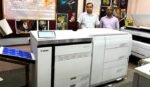
Delhi’s Shyam Electrostat gets a new Canon imagePRESS

Mumbai’s Riya Graphics’ digital journey with Ricoh

The Indian newspaper industry – strong recovery in FY 23-24

The financial journey of India’s five listed newspaper groups

Ricoh powers production upgrade at Delhi’s Dharam Reprographics

Delhi’s Megha Enterprise opts for Ricoh to up special capabilities
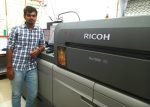
Bombay Enterprise powers productivity with Ricoh
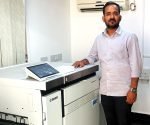
Bengaluru’s D2 Designs gets a Canon imagePRESS V700

Kolkata’s Shakti Printers enhances productivity with Canon
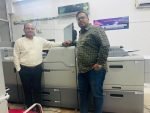
DD Enterprises invests in Ricoh to maximize output

Subh Rang Printers goes with Ricoh for perfect photo printing

Print adex is still in the race

Mumbai’s Just Print gets a new Canon imagePRESS V1000

Nagpur’s Saifi Screens powers up digital printing with Ricoh

Canon PostScript – a conversation with Peter Wolff

Hindustan Times marks 100 years with centenary edition and celebrations in the capital

Print Point Digital enhances productivity with Ricoh

Malayala Manorama’s Riyad Mathew elected ABC chairman

INMA unveils 30 Under 30 Award recipients
Shree Ram Printing & Stationery Hub upgrades color printing with new Ricoh Pro C7500

MG Digital Press enters digital printing with Ricoh Pro C7500

Vijayawada’s Nirmala Cards upgrades with Ricoh for luxury printing