News - search results

Calendars, UV and packaging driving ink market in India
India is among the fast-growing printing ink markets globally spurred by the rapid expansion of the domestic print market. Backed by a robust demand from key end user segments such as package

Media should embrace emerging technologies to tell stories
The forces of intolerance and oppression have been gradually rising across the globe with increasing violence in countries like Turkey, Mexico and even India. Although the countries and their circumstances are different, the theme remains the same
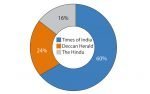
ToI’s strong hold over South India
According to some industry experts, the newspaper industry is witnessing an all-time low in circulation. However discouraging that may be, it is believed that the regional language newspapers from Southern

AIFMP builder Viren Chhabra 1927 – 2017
Viren Chhabra, the veteran print industry leader who worked for many years in The Statesman's printing department and as publisher, passed away on the morning of 14 September. Chhabra was the key builder

Conference highlights rapid growth of digital sphere
Hosting over 425 delegates from across 22 countries, the Wan-Ifra conference began on a high note at Chennai’s ITC Chola Hotel on 13 September 2017. The conference kicked off with a welcome

MWM presents Media 365 and Print 365 for media houses and printers
Sweden’s MWM Group, a software and consulting company, plans to showcase its smart software solutions for media houses and printing companies at the WAN-Ifra Expo 2017 from 10 to 12 October in Berlin.

Deccan Herald & Prajavani start using Content-X

The Hindu on the web – with character!
On speaking with the design team at ICD and from comments from the business team of the news daily, one gathers that the year-long and not-so-easy exercise of redesigning the The Hindu’s website is also an attempt to redefine the paper’s ethos in terms of the new media

DB Corp upgrades its web offset presses with QIPC-EAE
In the past year, the Dainik Bhaskar group, which publishes newspapers in English, Hindi, Urdu, Marathi and Gujarati, has upgraded its web offset presses around the country with color registration systems

WAN-IFRA India conference is back to Chennai after a gap of 6 years
WAN-IFRA India 2017 on 12-14 September in Chennai will discuss the trend in the news media industry and how the future is unfolding and will try to offer a balanced

Metal-backed blanket range in focus at WAN-IFRA 2017
At WAN-IFRA 2017, Trelleborg will inform the newspaper industry about the enhancements that have been made to its metal-backed blanket range. Since the last WAN IFRA

Paid digital content is in the cards at The Hindu
In the Indian newspaper market, which is dominated by an advertising-led approach, The Hindu is transforming its 138-year old organization by means of a reader-centric,

HT Media and ToI order UV curing systems
In the beginning of August, German UV curing system manufacturer IST METZ GmbH announced the sale of three UV curing systems to HT Media Ltd. for installation at their Greater Noida plant and six UV curing systems to The Times of India, for Installation at three of their plants.

Cutting-edge technology in print media
PrintExpo-Chennai 2017, the ninth edition of an exhibition-cum-conference dedicated to the design and print industry, came to a close on 20 August 2017.

Good journalism wins the heart and the purse of the readers
It’s a no-brainer that quality journalism and content are key elements to hold your readers. Readers expect that the stories are covered in detail with great journalistic presentation.

Deccan Herald & Prajavani using ppiMedia’s Content-X
In search of a suitable new editorial system for their content and production operations, The Printers Mysore chose ppi’s Content-X in February 2017 and have been installing and integrating the system at their main site in Bengaluru

‘Community’ and ‘engagement’ are not enough to save the legacy print media
At the recent INMA South Asia conference in New Delhi, a number of issues were skirted, mentioned peripherally or in passing without the substantial discussion that perhaps has to take place within news organizations themselves

200 years of Koenig & Bauer
In August 2017, Koenig & Bauer AG (KBA) in Würzburg is celebrating its 200th anniversary. The world’s first press-building workshop of 1817 has since blossomed into a globally

Technology is an important lever for creating unique solutions
At the recent INMA South Asia conference in New Delhi, Ashish Pherwani, who leads the media consulting practice of Ernst & Young in India, attempted to decode the puzzle of the new media

Frankfurt Buchmesse 2017 CEO Talk
The CEO Talk is part of Frankfurter Buchmesse’s Business Club program and will take place on Wednesday, 11 October 2017, from 2:00 pm to 3:00 pm at the Frankfurter

Evolution and adaptation of content and media
The first day of the INMA Conference in Aerocity near the Delhi Airport has been quite good so far. However, those who are more threatened by the future or touching low growth in the 3 to 5% range, such

EAE wins key Geoman retrofit order from Times of India
The Times of India, India’s largest English-language daily newspaper, has charged Engineering Automation Electronics (EAE) with the modernisation of a newspaper

WAN-IFRA Digital Content Monetisation Workshop
The WAN-IFRA Digital Content Monetisation Workshop 2017 will help participants build a data strategy to maximize revenue, diversify revenue streams, handle ad

Axélero acquires Atex Group for Euro 6.7 million
Axélero SpA signed a binding agreement for the acquisition of the venerable publishing systems software provider Atex Group for a sum of Euro 6.7 million on 22

Fly higher by proving your great color printing
For the first time since its launch in 1994, the WAN-IFRA’s International Color Quality Club now open to all newspapers and magazines. The worldwide quality printing

GST Council rationalizes taxation on print at 5 August 2017 meeting
The Government of India’s GST Council met for the 20th time on Saturday 5 August 2017 and revised the rates on thirteen categories including job work services for

INMA to host 11th Annual South Asia Conference
The International News Media Association (INMA), the world's leading provider of global best practices and marketing ideas, will host its 11th Annual South Asia News Media Conference on 10-11 August at Holiday Inn, Aerocity, New Delhi.

Awaiting the upturn
The mainstream media including the financial press have been writing about the net negative impact of 1 to 1.5% in November on the Indian FMCG industry as an

Magazine publishers gear up to revoke 12% GST on LWC paper
After firing a letter to the Union Revenue Secretary asking for the removal of 12% goods and services tax (GST) on lightweight coated paper (LWC), magazine publishers are gearing up for a long-drawn struggle with the government.

Naph Graphics’ engineering-based ship is steady
Delhi NCR-based Naph Graphics is known for building quality web offset presses designed for printing medium-sized editions of newspapers and periodicals.

From page making to content automation
On 12 July 2017, Quark Software based in Denver in the United States announced its acquisition by Parallax Capital Partners, LLC (Parallax), a Southern California based

TOI adds 4 x 1 towers in Chennai and Pune plants
According to its managing director Sudeep Bhattacharjee, manroland web systems completed three installations of Regioman 4 x 1 tower extensions last month at The Times of India’s Chennai and Pune plants.

Times Group and Nestle launch second edition of ‘Power of Print’
Print has long been the most powerful medium of advertising carrying some of the most impactful and compelling campaigns across nations.

Countdown begins for 25th WAN-IFRA Conference India 2017 in Chennai
This year’s WAN-IFRA Conference, to be held from 12 to 14 September 2017, is special as it is the 25th (Silver Jubilee) year of the event in India.

Sandesh adds Manugraph Hiline 2 x 1 press
Indian Printer and Publisher met Bharat Desai, assistant general manager of Sandesh at its Ahmedabad head office. While the daily’s six production plants are located in Ahmedabad, Surat, Baroda, Rajkot, Bhavnagar and Bhuj (Kutch district), its Mumbai edition is printed by a third-party printer there.
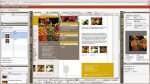
CHILI publisher to host webinar on best practices for online document editing
On 31 July 2017, from 2 until 3 p.m., CHILI publish will be hosting a dedicated webinar for the Indian marketplace, revealing the best practices for online document editing. During this one hour online session. . .

VDMA interview with Sandeep Saini of Boettcher India

In-line cold foiling – the fascination of metallic effects
We know that shiny, glittering, metallic and reflective objects and print are hugely attractive. We are often mesmerized by mirrors and shimmering diamonds, gold and silver jewellery—by light itself.

Why are South Indian language papers investing in 4 x 1 presses?
The divergent paths of Indian language newspapers
According to the Group M report published by Mint on 16 February 2017, ad spending in India including radio, cinema and OOH is expected to grow by 10% in 2017 to Rs. 61,204 crore (approximately US$ 9.7 billion). The same report states that digital advertising will record the fastest growth at 30% to reach Rs. 9,490 crore in 2017, albeit at a slower pace than the 47% growth in 2016. Television is the largest ad medium and is expected to reach Rs. 27,638 crore at a growth rate of 8%.
In 2017, print advertising is forecast to achieve a stable growth rate of 4.5% to Rs. 18,258 crore, which is a slight increase over the 4% ad revenue growth in the previous year according to the same report. The increased spends is expected from sectors like auto, banking, financial services and insurance and eWallets that are said to prefer print advertising.
The report further quotes Girish Agarwal, director of DB Corp., which publishes the Hindi daily Dainik Bhaskar and Gujarati and Marathi dailies both named Divya Bhaskar, “In the past few years, English dailies have grown around 1-2% while Indian language print publications have grown at around 8-9%.” Other research indicates that a part of the digital ad revenue is also coming to newspapers. At the same time, the Indian dailies are reducing their dependence on ad revenues by increasing their subscription revenues by as much as 4-5% annually.
Indian language dailies are growing much faster than the big English language dailies and they are also benefitting from subscription price rises and growing digital ad revenues. However, there seems to be an imbalance or difference in the quality of investment in productive assets between the North and South Indian language dailies.
Long-term trends
More than a decade ago, it became apparent that the major trends amongst Indian dailies were increased circulation, increase in the number of color pages, an increase in geographic reach and in some cases new launches in other Indian languages. Another established trend was that many of the Indian language dailies were highly localized with at least one broadsheet page being changed for each district that the newspaper covered. Even before the idea of big data, Indian language dailies were able to fine-tune print runs on a daily basis with quality feedback from their distribution system.
As runs became longer, with many Indian language dailies having multiple editions and production plants, combined circulations reached and exceeded a million copies. Since they were driven by color ad revenues, to produce significant quantities with high quality color pages and plate changes for localized coverage, the new technology 4x1 presses were a reasonably logical choice—at least for their main or major centers.
Simultaneously, 4x1 press design improved with better shaftless motors, spray dampening systems and slenderness ratios that allowed thinner diameter narrow gap plate cylinders to reliably perform at higher speeds. New CCD technology brought better registration and closed loop color control systems while improved electronics and software improved computerized integration and control systems.
4x2 and 4x1 presses for high volumes
To reiterate, a 4x1 web offset press has a four broadsheet newspaper page wide and single page circumference plate cylinder. Before the advent of the 4x1 web offset presses, in order to print 70,000 copies an hour and above, it was necessary to have a 4x2 press whereby the press essentially rotated at 35,000 RPM but there was a second set of plates that could double the output. Big English language groups such as Bennett-Coleman, HT Media as well ABP for its high circulation Bengali daily have been running 4x2 presses for many years.
Of course this also meant that for changing one page for as little as 5,000 or 10,000 copies, two plates need to be changed. In addition, 4x2 presses with four color towers (4-Hi stacks) occupied large press rooms with a separate floor for the reel-stand and auto-splicers.
The four operation levels included a basement, a ground floor for press towers and control console; a first level gallery for plating and inking the 3rd and 4th color plates; and, a second level gallery for the superstructure (web movement, splitting, turning and combining webs). This necessitated large pressrooms and infrastructure costs for 4x2 presses. (There was also the additional cost of a mailroom equipment to automate the evacuation of high volume output which remains a consideration even with 4x1 presses).
In contrast with the huge infrastructure capital costs for installing a 4x2 press, the 4x1 (single circumference plate cylinders) reduced the height and weight of press towers while also encouraging reel-stands to be mounted on the same floor as the more compact towers. The operational costs associated with running a 4x2 press were also high in terms of manpower and electricity—webbing up and restarting after web breaks took a lot of time and considerable newsprint waste.
Made for India 4x1 presses
The initial 4x1 presses imported were the manroland Web Systems Regiomans by Bennett-Coleman and HT Media. Kasturi and Sons who were convinced of the 4x1 design and configuration, and were running a Mitsubishi 4x2 press at their Chennai plant, approached Mitsubishi to design and build a 4x1 for them. Called the DiamondSpirit SA (for South Asia), this 4x1 was first installed in one of Kasturi and Sons’ out of state plants in South India and later in many of their plants including its new plant in Maraimalai Nagar near Chennai. Japanese newspapers came to India to see the new 4x1 press and purchased these for their own modernization.
Partly at the urging of some of the language dailies in South India, the web press manufacturers such as manroland, Mitsubishi and Manugraph came up with more economical ‘made for India’ 4x1 presses. While Dainik Bhaskar was the only Hindi daily to purchase 4x1 presses which consisted of several KBA Prisma lines in a joint purchase with the newly launched English daily DNA, in collaboration with the Zee Television group, most of the 4 x1 presses have come to South India.
The exceptions are TKS 4x1 presses purchased by HT Media for their Greater Noida plant and the manroland Cromoman 4x1 presses purchased by Bennett-Coleman for their Pune editions in both English and Marathi and another Cromoman 4x1 purchased for their new Bengali daily out of Kolkata. The Cromoman was the first ‘made for India’ 4x1 press—designed to fit into a 2x pressroom—and could handle electricity outages with a soft stop instead of web breaks and webwraps.

South Indian dailies dominate the 4x1 market
The largest base of 4x1 presses and the one with the greatest growth momentum is clearly amongst the South Indian language dailies. Malayalam daily Malayala Manorama has in several stages purchased more than a dozen 4x1 presses from both Manugraph and Mitsubishi. Its fierce competitor Mathrubhumi has purchased five TKS 4x1 presses over the past five years. Tamil daily Dinamalar installed a Manugraph Smartline 4x1 in its new Madurai plant and then purchased a pair of the Goss Uniliner S 4x1 presses that were initially installed by the Deccan Chronicle group. Tamil daily Dina Thanthi installed both a new Seikan 4x1 press and a second-hand Seikan 4x1. The Printers Mysore, publishers of Deccan Herald in English and Prajavani in Kannada, purchased and re-installed the KBA Prisma 4x1 that English daily DNA had installed in Bengaluru. The most recent installation is of a manroland Cromoman 4x1 press is by Telugu daily Namaste Telengana for its new plant in Hyderabad.
Economics?
Apart from the question of why it is the South Indian language dailies that are by and large interested in and investing in 4x1 presses, there is also the question of why some of the Hindi, Marathi and Gujarati dailies are reluctant to do so? In many cases, language dailies are buying 6- and 7-tower 2x1 presses at speeds of 35,000, 40,000 or 50,000 copies an hour to cope with increased color pagination and circulation. In many of the language dailies, there are now multiple centers with circulations above 250,000 and in some cases around the 400,000 level and even above this. To produce this number of copies of a 24-page broadsheet daily with even acceptable quality color pages and advertising would require a minimum of two 2x1 presses, each with 6 full-color towers.
While the cost of two locally manufactured 2x1 presses is less than that of an imported 3-tower 4x1 press (for 24 pages full-color broadsheet pages), there are significant operational economies in a 4x1 press in terms of space, manpower, newsprint wastage, electricity and even ink. Both webbing up and ink pumping are automated functions in a 4x1 press. This difference in cost is greater in the case of the imported 4x1 presses than would be the case of Manugraph’s Smartline 4x1, which is locally manufactured. It is true that the cost of an automated mailroom is significant but attempting to automate the evacuation of several high-speed 2x1 presses may be more challenging than a mailroom system for a single 4x1 press, let alone the facility of producing uniquely counted and wrapped bundles with on-line labelling for distribution.
Flexibility
Apart from the cost considerations, some newspaper publishers feel that they have more flexibility and ease of operation with a battery of 2x1 presses, as they can run a variety of products. In fact, this often means that when running the edition with the same pages and advertisements on several presses, color quality is compromised while wastage and other costs are much higher.
The operation of 4x1 presses with automatic register, remote ink pumping and other controls has become easier. Improved handling with slitting of the web on top of the tower for combining the two webs into a single-width folder makes it easier for operators trained on 2x1 presses.
As far as running more than one product, this flexibility is now available on 4x1 presses with several types of split runs, especially as these presses are truly shaftless and electronically controlled. Any number of press towers on either side of a double folder configuration can be configured as two presses with great flexibility in the pagination of each product.
The author is a G7 Expert and an offset printer with hands-on experience in running sheetfed and web offset presses. You can reach him at editor@ippgroup.in.

Call for registration: Training for the second batch starts 18 September
Under an agreement signed recently between All India Federation of Master Printers (AIFMP) and Beijing Institute of Graphic Communication (BIGC) to provide training in 3D printing and print electronics, a batch of seven trainees left for China on 20 May 2017. The highly subsidized training schedule has been specially fabricated for the members and other print entrepreneurs of the country.
The first batch of training is being conducted from 22 May to 18 August. Kamal Chopra, president AIFMP graced the send-off ceremony in Delhi. Chopra said it is for the first time ever that the AIFMP has brought such an opportunity for the print professionals in India as adequate training in both 3D printing and printed electronics is not available in the country.
The course studies include lecture, demonstrations and practical workshops on advance printing technologies relating to 3D printing and printed electronics as well as visit to a range of printing companies using these techniques will.
Registration opens for second batch
The next batch of the training is scheduled to commence from 18 September and registration is open only on first come first served basis. The admission is limited only for the persons sponsored by an institute/newspaper, printing or packaging unit. Students/Teachers engaged in printing education can also apply for the course. An independent board will select the candidate to be enrolled in the course. Each candidate will be issued an electronic admision letter by BIGC.
Total tuition fee for the three-month training is 10,000 yuan (US$ 1500), or approximately Rs. 1 lac. Hostel facilities are also available for the students at BIGC. Students will have to pay for visa, air-ticket and a non-refundable pre-deposit of 750 yuan (US$ 230) towards admission fees, health insurance, etc. AIFMP will also charge Rs. 5,000 as non-refundable registration charges. No formal qualification is essential; however, experience at a printing or packaging unit or basic knowledge of printing industry is essential. The course will be delivered in English and so an ability to communicate and understand in English language is required.

Ricoh achieves Ghent Workgroup PDF Preflight Certification
On 7 June 2017, the Ghent Workgroup announced that Ricoh has successfully achieved GWG PDF preflight certification, addressing the highest level of preflight capability for reliable PDF processing. Simon Tapley, Workflow Solutions Manager, Ricoh Europe, explains that as an active member of the Ghent Workgroup (GWG), Ricoh is now well placed to give input to and help promote this valuable standards activity, which is designed to help ease the transmission of PDF content between creative professionals and print service providers.
Tapley expands, “This certification also allows us to develop and integrate tools within our TotalFlow software solutions to help our clients adopt and work with PDF standards (like PDF/X-4) and automate the checking and correction of files against these standards.” He explained that the integration of the Enfocus Pitstop Library within Ricoh’s TotalFlow solutions (TotalFlow Production Manager and TotalFlow BatchBuilder) allows users to configure PDF preflight as an integrated and automated workflow step.
It also provides support for the latest GWG preflight standards enabling users to take advantage of this directly within our solutions and ensure files comply with these standards. This has allowed Ricoh to receive GWG certification for the very latest GWG preflight profiles and demonstrates our commitment to providing easy to use, automated solutions that allow print service providers to produce high quality output with integrity to the original designer’s intent.
Andrew Bailes-Collins, co-chair of the GWG specifications committee and senior product manager for the PitStop product family at Enfocus, comments, “It is great to see Ricoh’s solutions passed Ghent Workgroup compliancy. This is a real benefit for their customers, taking away a lot of the guesswork and manual effort out of the system configuration. Customers can be assured that 'out-of-the-box' they are conforming to a known and proven standard.
“In addition as the senior product manager responsible for the PitStop product family at Enfocus, I am pleased to see Ricoh taking advantage of the GWG compliant preflight profiles, features and functionality offered by PitStop, which are integrated in TotalFlow Production Manager and TotalFlow Batch Builder.”
Didier Haazen, chair of the GWG compliance subcommittee and senior innovation advisor at VIGC, adds, “Ricoh has proven that preflight certification is important. Implementing OEM solutions helps Ricoh and the industry to quickly adopt the newest PDF standards and ensures predictability in the entire digital production chain.”
The GWG preflight certification is a validation of the prepress quality control specification developed by the GWG. It contains 14 different ‘variants’ aimed at different print market segments and output methods, all based on the ISO PDF/X-4 standard, but with additional conditions and restrictions relevant to each segment. The variants cover the majority of common print applications and include web- and sheetfed CMYK and/or spot color, plus magazine and newspaper advertisements. Because the certification is based on the PDF/X-4 standard, it also includes variants which allow the use of RGB colors within artwork files as well as ‘live’ transparency to support the most sophisticated and up-to-date graphic arts workflows.
The test suite used in the certification process comprises 260 test files that cover aspects such as correct detection of minimum image resolution, use of correct color spaces, white and black overprint settings, ink coverage, spot color usage and naming, and more. File content that does not meet the necessary conditions is either flagged with an error message or with a warning, depending on the importance of the issue and how it could affect output.
For more information on the GWG preflight certification procedure and test files, please visit: http://www.gwg.org/compliancy-testing-procedure. Information on the GWG PDF/X workflow specification which underpins the preflight certification can be found here: http://www.gwg.org/gwg-2015-pdfx-workflow/.

Nita Bhalla of Thomson Reuters Foundation is SOPA Journalist of the Year

South Asian Digital Media Awards 2017

Michael Golden is the new president of WAN-IFRA

An introduction to workflow technology

Print and packaging matures in India

Naph Graphics innovates its web offset presses

Samvada plans to go pan India

Sakata India to consolidate gains in 2017