For decades, perfect binding has remained one of the most widely adopted bookbinding processes across the printing industry. Yet, as publishers demand shorter print runs, faster turnarounds, and greater consistency across diverse substrates, printers are increasingly rethinking how binding operations can evolve to keep pace.
Challenges such as first-page and last-page opening, inconsistent adhesive application, glue wastage, and difficulties in handling newer cover materials continue to affect productivity and quality outcomes on the shop floor.

According to Sajith Pallipuram of Bindwel, the changing dynamics of print production have significantly altered expectations from binding systems. “Today we are talking about shorter and shorter runs, and it becomes more and more important for us to be economical in doing the process of binding,” he says, explaining the rationale behind the latest developments in perfect binding technology.
While automation and digital workflows have transformed printing over the years, binding has often remained dependent on operator experience and process consistency. However, evolving production demands are now pushing finishing departments to adopt more precise and controlled approaches.
Among the most persistent challenges in perfect binding is the first-page and last-page opening (FPLP) issue, a problem familiar to most book manufacturers. The issue can arise because of multiple factors, ranging from cover material and paper stock to adhesive quality, machine settings, or operational inconsistencies.
Pallipuram notes that the challenge has intensified as newer and more difficult substrates have entered the market. “Historically, this problem has evolved. Some solutions were found, but with more and more difficult substrates coming into the market, this problem has only gone up. It has not been solved,” he explains.
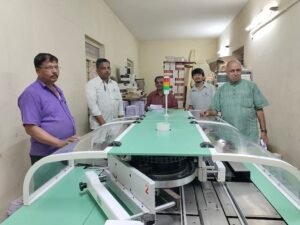
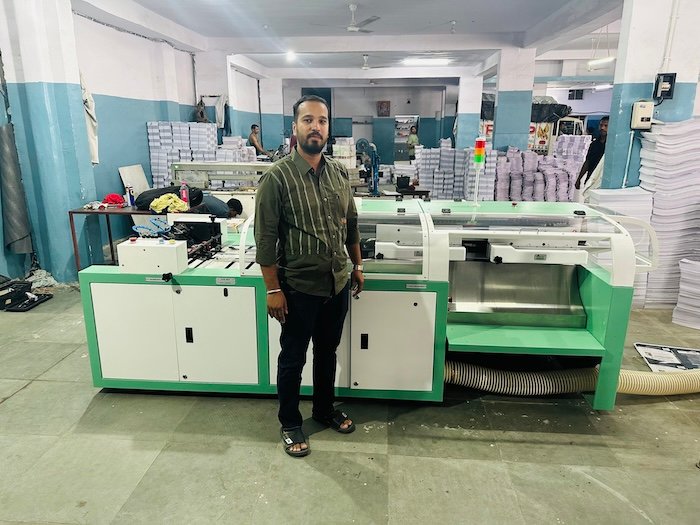
To address this, new-generation binding systems are introducing dedicated mechanisms to improve binding integrity. In Bindwel’s BW@2500 V24, for instance, an FPLP device has been developed to help ensure stronger adhesion between the cover and book block, provided the appropriate adhesive and substrate combinations are used. According to Pallipuram, the device has been designed to minimize the chance of page-opening failures during production.
The impact of such advancements is already being experienced at the production level. As mentioned in a previously published article, at Bengaluru-based Vidya Bharati Press, the BW@2500 V24 addressed a recurring first-page and last-page opening issue. According to the press, the machine’s FPLP gadget resolved one of the major operational bottlenecks affecting bound book quality while significantly improving production efficiency.
Importance of adhesive efficiency
Another area receiving increasing attention in perfect binding is adhesive optimization. In conventional binding setups, excessive glue application often goes unnoticed, leading to higher operating costs, while insufficient coating risks weak bonding and product failures.

Pallipuram points out that the challenge lies not in applying more adhesive but in applying the right amount. “Beyond a level, coating more adhesive is only going to marginally increase the page pull value or longevity of the product,” he explains, adding that the ideal adhesive quantity depends on factors such as spine preparation, paper type, and book thickness.
To improve process control, modern perfect binding systems are beginning to incorporate adhesive monitoring technologies. Bindwel’s Adhesive Consumption Controller (ACC), for example, is designed to regulate glue application based on job specifications and maintain consistency throughout production.
According to Pallipuram, such systems help printers avoid both overconsumption and under-application, reducing costs while ensuring reliable bonding performance.
Meerut-based SK Offset, a long-established book printer and publisher, says consistency and user-friendliness were among the key reasons behind its continued confidence in the BW@2500 platform. As mentioned previously, Priyanshu Agarwal, director of SK Offset, said, “The BW@2500 from Bindwel is extremely user-friendly and consistent. We are completely satisfied with its performance and have been using this product for the last 15 years. Bindwel is a trusted brand with a brand value. Extremely delighted with the service support.”
Cleaner operations and substrate flexibility
Apart from quality and adhesive concerns, printers are also seeking improvements in operational cleanliness and versatility. Adhesive tailing, the formation of glue strings between the glue tank and cover feeder, is one such issue that often increases maintenance requirements and material wastage.
Pallipuram explains that newer systems are attempting to address this challenge through dedicated mechanisms designed to melt adhesive at critical points and prevent string formation. This, he says, keeps production areas cleaner while reducing adhesive waste and contamination in the cover feeding section.
For printers such as Jaipur-based Pancholi Binding House, investments in newer binding technologies are translating into measurable operational gains. Hari Pancholi says the company has seen improvements in “speed, efficiency, and overall quality,” adding that convenience in binding and operational efficiency stand out among the machine’s most valuable advantages. He also commended the company’s technical support, responsiveness, and expertise.
A shift toward process-driven binding
As book manufacturing shifts toward shorter runs and increasingly varied production requirements, the role of binding is becoming more process-driven than ever before. Features aimed at controlling adhesive consumption, improving spine preparation, reducing defects, and increasing substrate flexibility are no longer viewed as optional enhancements but as operational necessities.
For bindery departments navigating tighter margins and rising quality expectations, advancements in perfect binding technology are gradually moving the conversation away from speed alone toward precision, repeatability, and cost efficiency—factors that could define the future of book finishing in India.