Apart from falling revenue streams and waning reader interest in news, India’s print media industry is grappling with increasing distribution and circulation challenges, raising questions about the long-term sustainability of one of the most traditional and trusted mediums.
According to the recent Ficci–EY Media & Entertainment Report 2026 and other related studies, the sector is experiencing a structural shift as rising costs, evolving consumer habits, and logistical hurdles reshape its foundation.

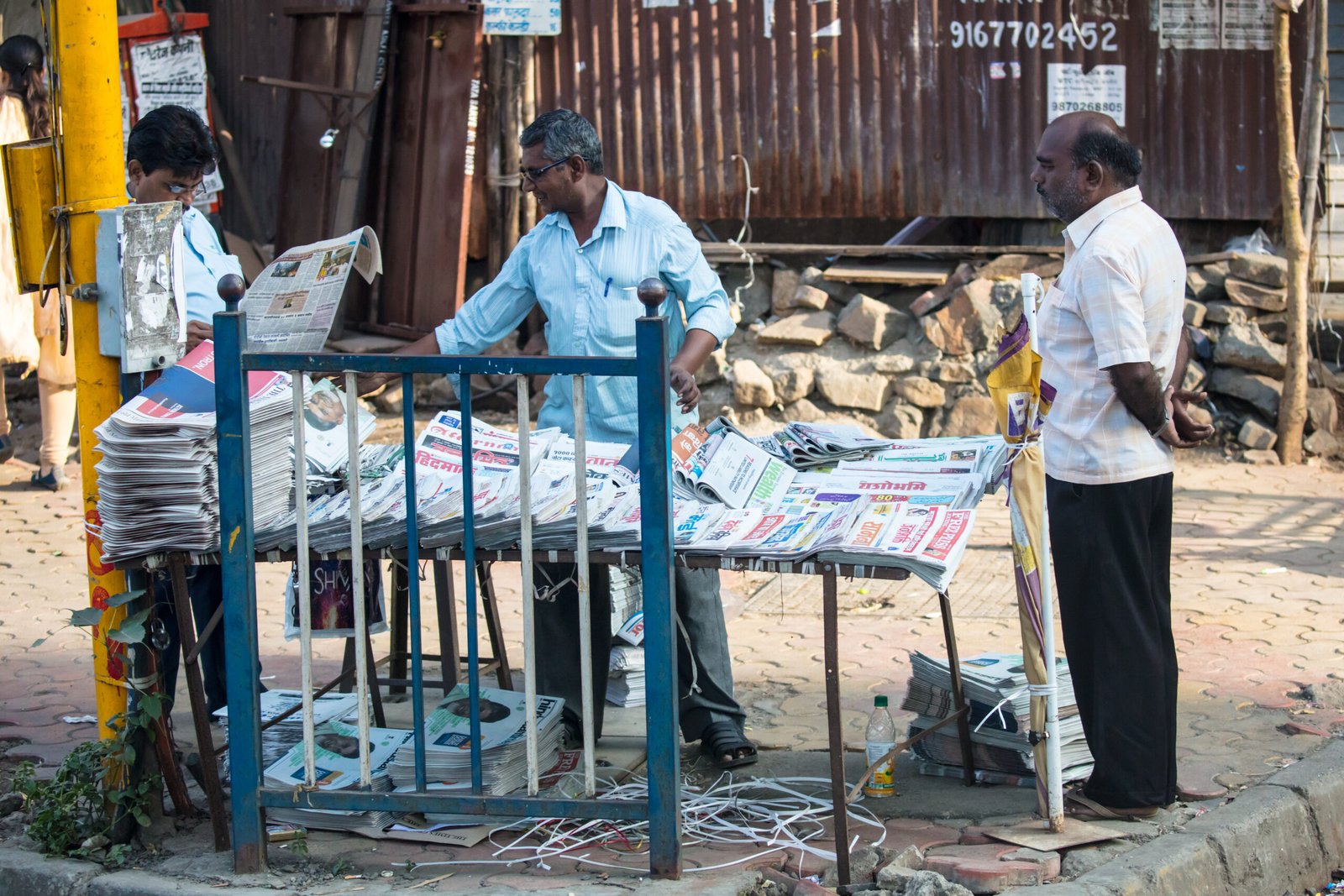
One of the key challenges is the complexity of physical distribution. Newspapers rely heavily on an extensive last-mile delivery network that ensures copies reach readers early each morning – a system that is becoming increasingly difficult to maintain.
Rising fuel prices, higher labor costs, and urban congestion are driving up distribution expenses, while the fragmented nature of vendor networks adds further inefficiencies. As circulation volumes decline, these costs are spread across fewer copies, weakening the overall economics of print operations.
Circulation itself is under stress – falling by 1% in 2025, marking the second consecutive year of decline, the Ficci-EY report suggests. (Our sister organization IppStar.org estimates that combined daily circulation has fallen to about 60 million copies, less than half of its highest numbers a decade ago.) Younger audiences, in particular, are moving away from print in favor of digital platforms that offer real-time updates, personalized content, and mobile accessibility.
This generational shift is leading to a steady erosion of print readership, especially in urban areas. While print continues to retain a loyal base among older and more affluent readers, the loss of mass readership is making it harder for publishers to sustain large-scale print runs.
As mentioned earlier, a critical challenge is maintaining early morning delivery—a long-standing strength of the print industry. Timely distribution is essential to preserving reader habits and trust, but operational disruptions and rising logistical complexities are making consistency harder to achieve. Any delays or inconsistencies risk accelerating the shift of readers toward digital alternatives.
The Ficci-EY report says that the press-to-door distribution network is under pressure due to the unavailability of delivery agents, who are now finding alternative sources of income, such as the gig economy, financially more viable. This is forcing the industry to re-evaluate the business model.
Print’s transition mode
Despite these challenges, the report suggests the print industry is not in decline but in transition. One of the key recommendations is a strategic shift toward efficiency-driven distribution. Publishers are being encouraged to optimize their delivery networks by consolidating vendors, reducing redundancies, and leveraging technology for route planning and demand forecasting. By aligning supply more closely with actual demand, companies can minimize wastage and control costs more effectively.
To bypass the challenges of the traditional distribution network, magazine publishers have pivoted to new retail channels. Partnerships with quick-commerce platforms and ONDC, Zepto, Blinkit and Prasar Bharti’s Waves platform have expanded, with availability scaling to over 10 cities. These alternative channels, along with direct-to-consumer eCommerce sales, now contribute approximately 9% of total copy sales for leading magazine publishers.
Equally important is the move toward premiumization. Rather than focusing on mass circulation, the industry is targeting high-value readers and advertisers. Premium formats, curated content, and a focus on affluent audiences can help maintain strong advertising revenues even as circulation declines. This approach positions print as a high-impact, trusted medium rather than a volume-driven one.
Looking beyond traditional
The report also highlights the need for diversification beyond traditional revenue streams. Many print players are expanding into events, branded content, and integrated media offerings to offset declining subscription and circulation revenues. By leveraging their credibility and brand equity, publishers can create new engagement opportunities that extend beyond the printed page.
The future of print media in India is one of stabilization rather than rapid growth, in which the sector is expected to remain relevant, but in a more specialized role. Its strengths—credibility, depth of content, and strong engagement with certain segments—will continue to differentiate it from digital platforms.
However, success will depend on how effectively the industry adapts to changing realities. A hybrid model where print serves as a premium, trust-based product, while digital channels provide scale, immediacy, and interactivity is seen as the future.
Distribution and circulation challenges may be reshaping the print landscape but at the same time are driving much-needed innovation. By focusing on efficiency, premiumization, and diversified revenue streams, print can navigate this transition and secure a sustainable and more niche place.
As Sanjay Gupta of Jagran Prakashan sums up in the EY report, “Print’s future lies in evolving into a high-reach, high-impact credibility platform where trust, depth, and precision converge to drive reader engagement, while delivering the attention quality and measurable outcomes advertisers increasingly demand.”