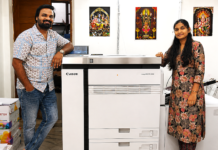
On 13 January 2022, HP Large Format Printing held a virtual but live demonstration of its Latex 700 and 800 series inkjet wide format printers. The demonstrators showed how these printers could meet the market demands with their high media versatility, productivity, and sustainable technology. The idea was to show how these latex series could boost business and be more profitable for the print service providers.
In a live demonstration, HP expert Jeremy Brew Large Format Solutions & PrintOS expert, HP Worldwide discussed the details about the HP latex 700 W printer and how its water-based inks gives the best color consistency, is easy to handle, and is environment-friendly. Then, Kevin Gregory, application specialist at HP Large Format Printing, showed the white ink system option and how it works on the Latex 800W. They talked about the safety and health aspect for the operators also.

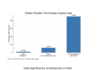
The HP latex 700W and 800W provide vibrant color output at high speed and further improve printing productivity by using polypropylene or synthetic papers of substance weights as low as 110 gsm. The technology is designed for sustainable impact through the entire system and workflow of the printer, cartridge materials, ink chemistry, printer operation and production, the print itself, its display, and the end-of-life disposal of the product.
The operations of these printers can be controlled virtually anytime and anywhere with HP’s PrintOS tools. The latest water-based inks offer a more comfortable and welcoming operation to sustainability goals and differentiate printing businesses. No manual maintenance is required on each head of the printer, no wiping or excess jetting is needed to keep them running.
HP white ink workflow
This was the first time that HP showed its white ink for 64-inch wide printers, and in the webinar, Gregory described the different methods for adding white to prints or once can say about the white printing workflow. There are four categories for this workflow which include the underflooded mode and full-page coverage, overflooded mode and full-page coverage, sandwich mode and full-page coverage, and spot mode.
- Underflooded mode and full-page coverage – In this, the white ink is printed on the substrate, enabling it to print color on a wide range of substrates. It can be used in printing on non-white or transparent substrates.
- Overflooded mode and full-page coverage – Here a white layer is printed on top of the color layer allowing the creation of new colors by playing with white ink translucency. For instance, it is used for printing on a transparent substrate for window decoration.
- Sandwich mode and full-page coverage – In the sandwich mode, a white layer is embedded between two different images, allowing a different image to be seen on each side of the substrates. An application example is flipping signs.
- Spot mode – For spot printing in some cases, white ink is printed in a particular area in the same way as any other color. Also, spot color information is required in the file. It is used to print on transparent substrates while keeping some areas transparent.
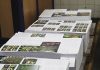
Gregory also demonstrated several large-format print applications that can help print and signage businesses grow both volume and value. The webinar ended with more discussion on sustainability and decreasing operational costs by using the HP latex 700W and 800W.