In the narrow, bustling lanes of Basti, an emerging urban center in eastern Uttar Pradesh, a quiet transformation has unfolded over the last decade, accelerating over the last couple of years. While locals credit the city’s rapid modernization to widening roads, newly installed street lamps, and a school network that has tripled since the pandemic, an unsung catalyst sits at the heart of this growth — the local print industry.
As shopping malls, movie theaters, restaurants, cafes, and doorstep delivery systems reshape Basti’s commercial ecosystem, the printing trade has also evolved, showcasing how modern technology is successfully penetrating India’s Tier-2 and Tier-3 cities.

Roughly 64 km west of Gorakhpur and about 216 km east of UP capital Lucknow, Basti is a major non-terminal halt on the Lucknow–Gorakhpur main line, specifically the Gorakhpur–Barabanki broad-gauge route, which extends all the way to the Northeastern states
For generations, Basti’s printing needs—ranging from intricate wedding invitations to official government ledgers—were met by labor-intensive offset and manual letterpress shops. Ram Tiwari, a banker-turned-printer, explains that these legacy, family-owned establishments relied heavily on physical labor and substantial turnaround times.
In the old letterpress days, every single character had to be hand-picked from a font case and assembled backward, line by line. If a single letter was misplaced, the entire page was ruined, stretching turnaround times into weeks.
Today, that mechanical clatter of treadle machines has been replaced by quiet, high-speed digital production machines from Xerox, Canon, and Konica Minolta’s Bizhub series.
A walk through Basti’s contemporary print landscape reveals a striking transitional era. Traditional printers, who have long sustained themselves by manufacturing temple merchandise such as diaries, postcards, calendars, and pictures of deities, operate out of small workspaces with bulk orders.
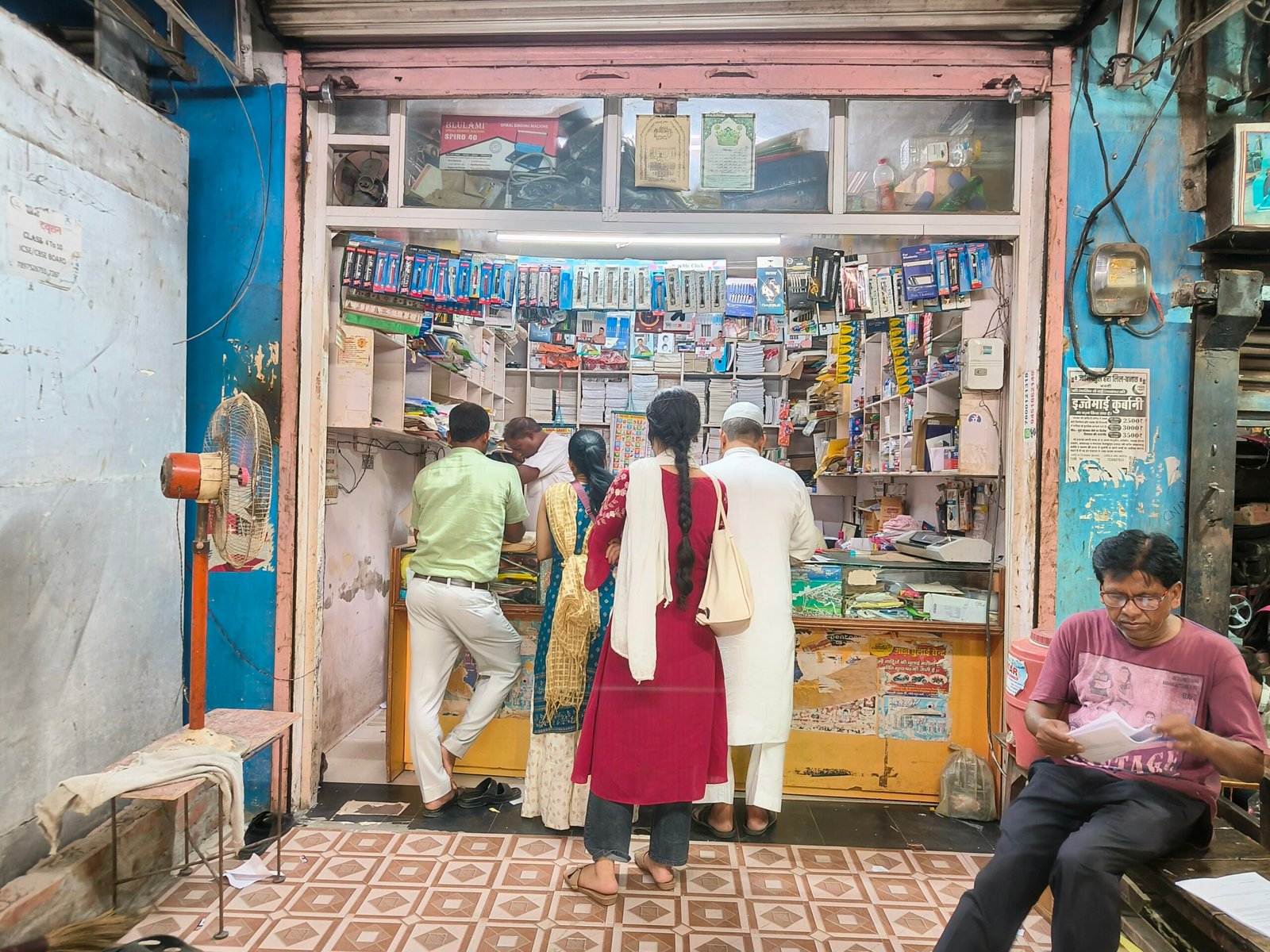
The storefronts are chaotic and brightly lit, offering multi-color printing, binding, and lamination all under one roof. While counters are still piled high with sheets of paper, manual cutting tools, and packed stationery shelves, these legacy businesses have smoothly integrated digital job management platforms to keep up with modern demand.
Where traditional offset printing required minimum economical orders in the thousands to justify setup costs, these digital-first centers can output a single page or a small run of custom digital stickers while the customer waits.
The Basti District and Sessions Court serves as the judicial anchor for the entire district. Because it is also the administrative headquarters of the Basti division (encompassing Basti, Siddharthnagar, and Sant Kabir Nagar districts), the city features a robust legal ecosystem, making legal documents, affidavits, and case filings a massive driver of the local commercial printing and photocopying economy.
Signage in infancy
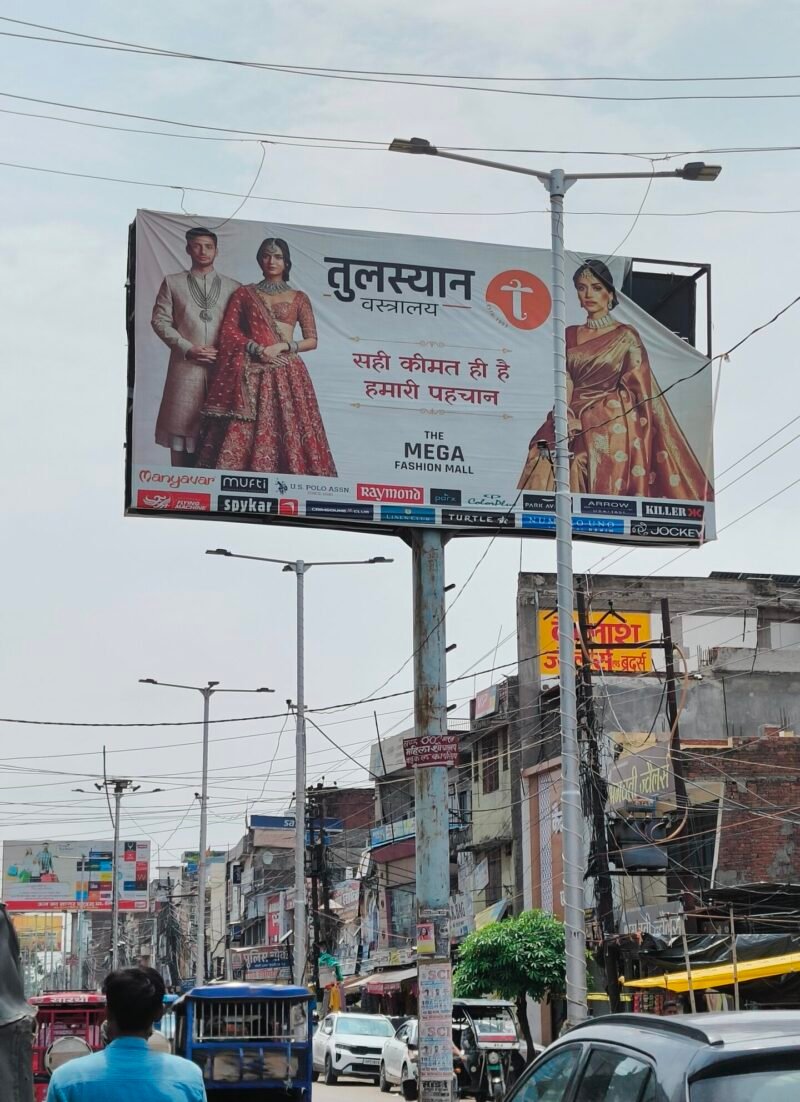
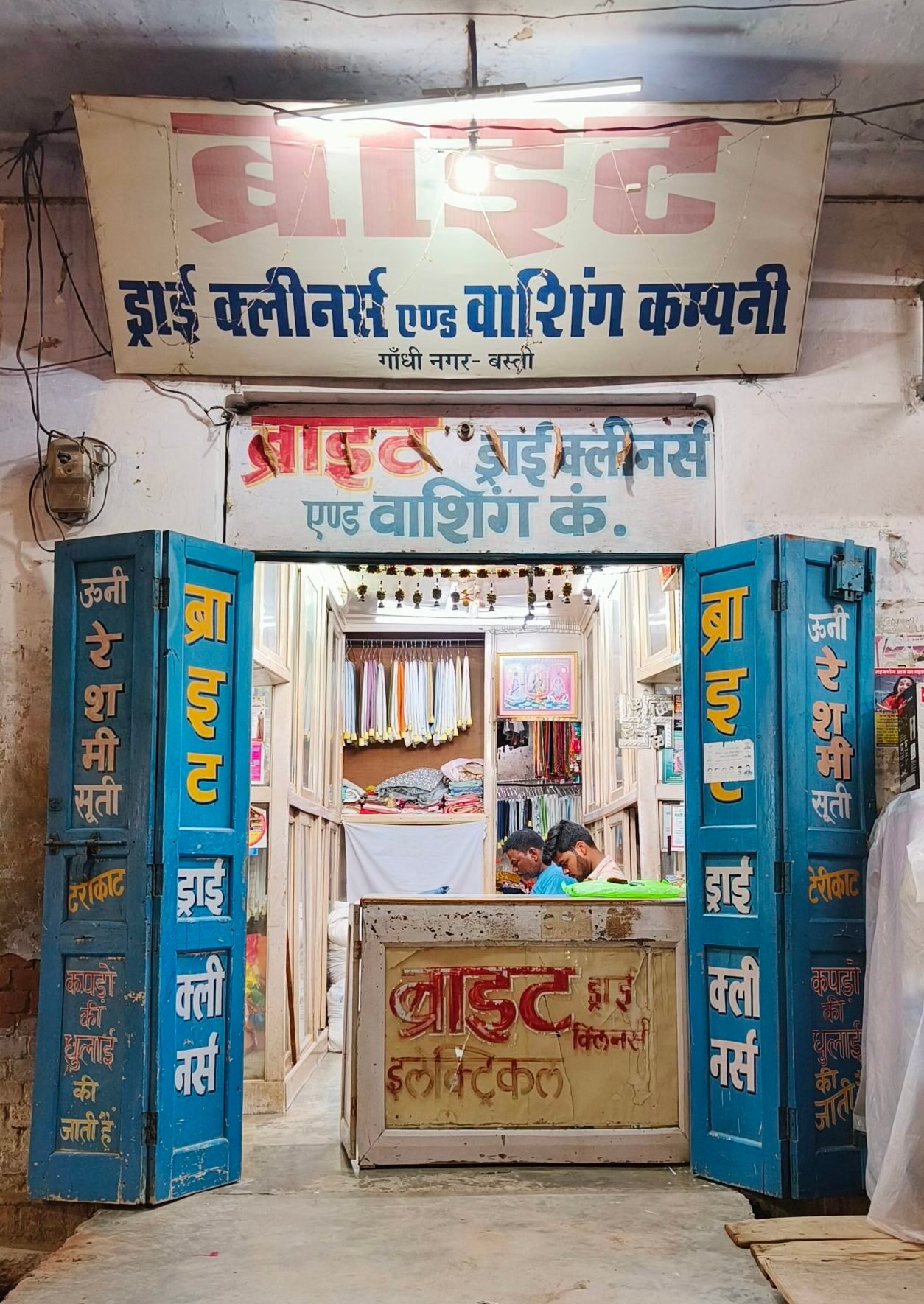
This shift is equally visible in the local landscape’s visual identity, marked by a transition from hand-painted to printed signage. Hand-printed boards, a staple of the city for decades, are quickly fading away. Threatened by the rise of digital doorstep delivery systems, several older businesses have aggressively renovated their brick-and-mortar shops, dressing their interiors with neatly printed wallpaper and placing visually striking printed signboards and heavy-framed standees along the roadside.
For these business owners, the standees serve a dual purpose — they provide a vital visual cue to passing motorists long before they reach the shop, and once placed, act as physical parking dividers to prevent neighboring crowds from blocking their storefronts.
However, the local advertising signage market—currently driven by real estate, jewelry, schools, and FMCG marketing—is still in its infancy compared to the wedding card and diary-making businesses.
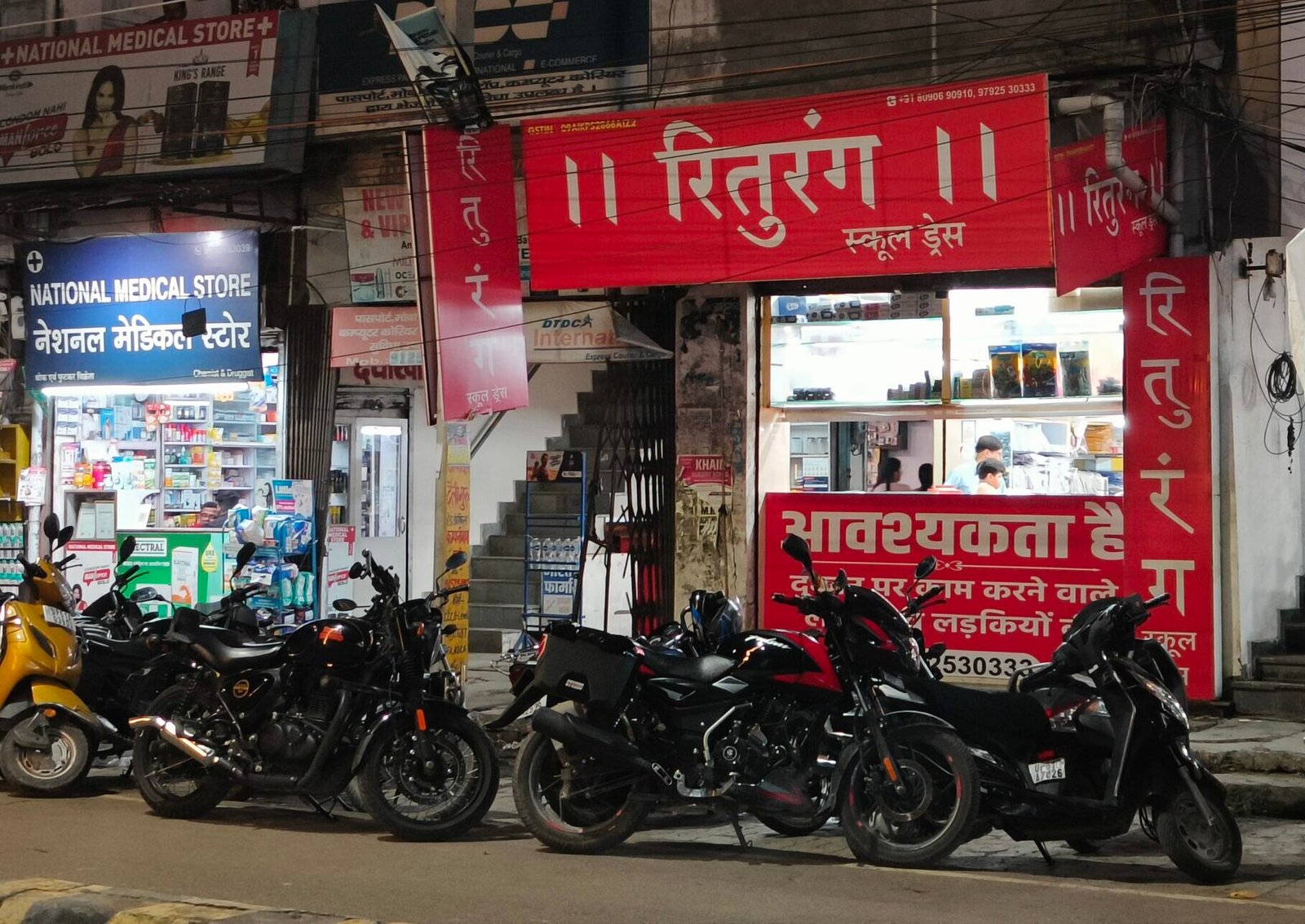
With local signage printers still numbering in the single digits, major commercial demands are routinely outsourced to nearby hubs such as Gorakhpur and Khalilabad, and occasionally as far as Kanpur and Delhi’s Patparganj industrial area.
Furthermore, the city’s digital efficiency still faces local bottlenecks, notably a distinct lack of advanced post-press automation. Binding at these storefronts remains a manual affair, which occasionally slows down the otherwise rapid digital workflow. The sole exception is spiral binding; local printers have heavily invested in manual punching equipment to meet the surge in demand from students following the post-summer break reopening of schools.
Basti features dozens of higher education facilities. Prominent legacy institutions include the Amabika Pratap Narain Postgraduate (APN PG) College, alongside several government-run polytechnics and industrial training institutes.
While it does not host a major central university within its immediate municipal borders, its colleges are traditionally affiliated with larger regional universities based in Gorakhpur (Deen Dayal Upadhyaya Gorakhpur University) and Siddharthnagar (Siddharth University).
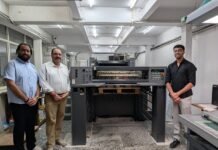
Ultimately, the story of printing in Basti is not one of total digital displacement, but of a hybrid blending. Large offset presses still anchor heavy industrial and bulk corporate jobs, while digital storefronts have democratized instant access for the everyday consumer.
By embracing this dual-track ecosystem, Basti’s printing sector has not only survived the digital age but actively fueled the city’s commercial awakening. As one new local printer said, “The machinery changed, and the speed changed, but the fundamental need for ink on paper in Basti remains as strong as ever.”