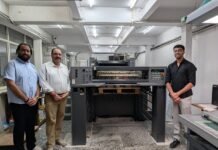
Chandra Prabhu Offset Printing Works was established in 2011 in a 20,000-square-foot plant in Noida’s Sector 8. In December 2024, the company shifted operations to a 70,000-square-foot facility in Greater Noida’s Ecotech area. During our recent visit to the company’s new facility, director Abhishek Jain explained that the main reason behind the shift was severe space constraints in the previous plant, along with plans to increase production capacity. The new facility has ample parking space along with improved connectivity to the highway.
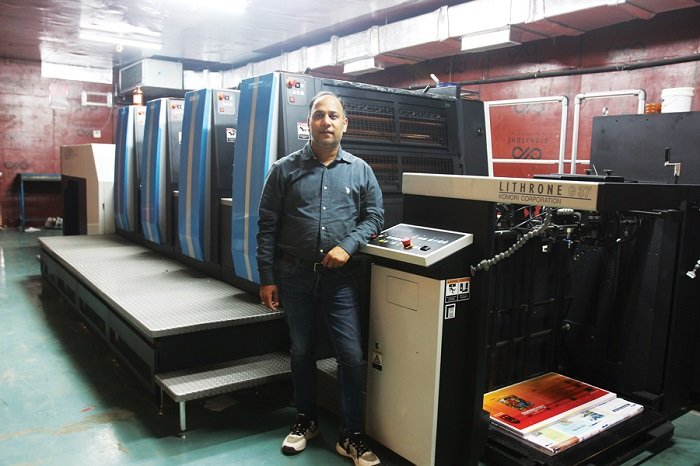
An old user of refurbished Heidelberg presses, Jain has bought a brand new Komori GL-437 4-color offset press. He said its high-end features, cost-effectiveness and good after-sales service prompted the decision. The lean time of the machine was also less compared to other presses, Jain said.

Tender-based government jobs such as books, annual reports, and magazines form 90% of its orders. The remaining 10% is from private publishers and diary and calendar work.
The commercial and book printer has four 4-color Heidelberg offset presses apart from the new Komori that arrived in January 2026. Chandra Prabhu has one 4-color and two single-color web offset presses from Rotta Print India and Naph Graphics, respectively. It prints three lakh sheets per day.
For the prepress department, Chandra Prabhu has a Kodak CtP, Epson and Canon proofers along with Canon scanners. The printer has an in-house design section for editing and designing.
Chandra Prabhu has a full postpress and bindery setup with two 6-clamp perfect binders, three Stahl folding machines, a three-knife cutter from SDY1, Polar cutting machines, and six pinning machines.
Jain said they supply to clients across the country. Some products are delivered by their own vehicles, and the remaining via postage services and private transport. While 60% of its market is in Delhi-NCR, they have serviced clients in Maharashtra, Gujarat and Tamil Nadu.
According to Jain, hyper-competition is the biggest challenge, which can be addressed through new machines and faster production cycles. Another issue is the increased prices of raw materials, inks, chemicals, and paper.
Jain said margins declined in tender-based jobs after the price hike following the US-Israel war on Iran. The labor agitation in Noida and Haryana also led to higher wages. “While the input costs are increasing, the market is reluctant to hike the prices of final printed products,” he said.
Tender-based government jobs have to meet strict conditions based on print quality and time frames, which can become challenging at times, he said.
Jain plans to get an 8-color perfector in the next 2-3 years.