In modern packaging environments, regulatory compliance and product traceability have become essential. Industries such as food, medical, and consumer goods are required to display accurate information, including production dates, expiration dates, batch numbers, and identification codes. However, in many conventional production lines, printing and packaging are still handled as separate processes, which can create inefficiencies and operational risks.
When printing is not integrated into the packaging process, manufacturers typically rely on standalone coding systems or post-packaging labeling. This separation introduces challenges such as misalignment between printed information and packaging position, increased labor requirements, and additional equipment on the production floor. In high-speed environments, even minor inconsistencies can lead to compliance issues or product waste.
Advancements in automation over the past decade have led to more integrated approaches. One of the key developments is the combination of packaging machinery with inline printing systems, allowing both functions to operate in a synchronized workflow. This reduces the need for manual handling and improves overall production consistency.
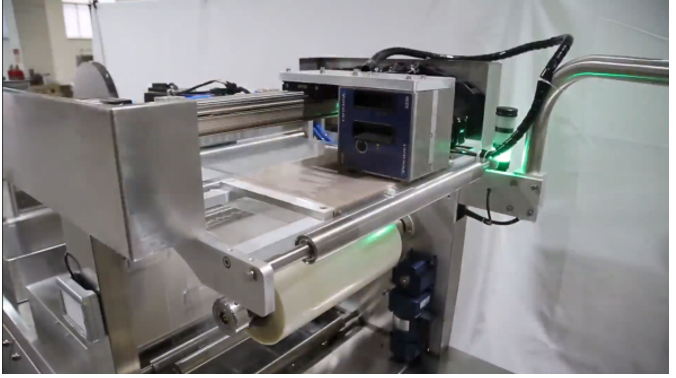
Thermoforming packaging technology provides a clear example of this trend. Traditionally, printed film would be prepared in advance or coding would be applied after sealing. More recently, inline printing modules have been incorporated into thermoforming systems. In these configurations, printing occurs during the film feeding stage, and the printed film is immediately used for forming and sealing within the same production cycle.
This type of integration has been implemented through collaborations between packaging equipment manufacturers and industrial coding solution providers such as Markem-Imaje. Equipment suppliers, including Utien Pack, have adopted similar approaches, integrating printing systems into thermoforming machines to enable continuous processing without intermediate steps.
From an operational standpoint, inline printing reduces the risk of positioning errors and eliminates the need for separate coding stations. It also supports more stable production at higher speeds, as printing and packaging are controlled within a unified system. These developments reflect a broader shift toward simplifying production lines while maintaining compliance with labeling requirements.
Tray sealing systems offer another perspective on the integration of printing technology. In large-scale automatic tray sealers, inline printing has been widely used for some time, as the machine structure allows relatively straightforward incorporation of coding devices. These systems are typically deployed in high-volume production environments where consistency and throughput are priorities.
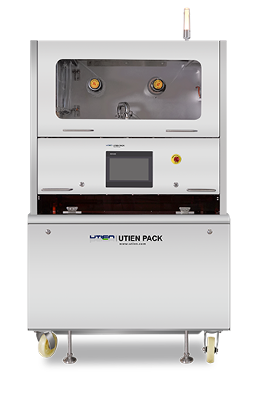
In contrast, semi-automatic tray sealers have historically lacked integrated printing capabilities. These machines are often selected for their compact footprint and operational flexibility, particularly in small to medium-scale production. Incorporating printing technology into such systems without increasing complexity has been a technical challenge.
Recent developments indicate a gradual shift in this area. Some semi-automatic tray sealing systems are now designed with optional or integrated printing modules, allowing operators to perform sealing and coding within a single workflow. Manufacturers, including Utien Pack, have introduced configurations that extend inline printing capabilities to smaller production setups.
In conclusion, the integration of printing and packaging processes represents a significant step in the evolution of automated packaging systems. By combining these functions, manufacturers can reduce operational complexity, improve consistency, and better meet regulatory requirements. As automation continues to advance, inline printing is expected to become increasingly