Softwood markets across Latin America and the Asia-Pacific are approaching a turning point. Some of the world’s lowest-cost plantation producers are increasingly linked to major importing markets where domestic supply growth is limited.
With harvests expected to decline in key exporting regions, China remaining structurally dependent on imports, and Japan nearing peak production, the regional supply balance is likely to tighten through 2035 – creating new risks and opportunities for producers, investors, traders, and wood consumers.

A latest outlook report, Global Softwood Roundwood Supply – Latin America & Asia-Pacific, examines the contrasting market conditions and long-term outlooks of Latin America, Asia, and Oceania. It is the third and final report in a three-part series analyzing the outlook for global softwood roundwood supply and pricing. The series covers North America, Europe, Russia, Latin America, Asia, and Oceania.
Latin America remains a highly competitive source of softwood roundwood. Brazil, Chile, Argentina, and Uruguay account for nearly all regional softwood supply, supported by large-scale plantation forestry and investment by integrated forest-product companies and institutional owners. The region currently produces about 95 million cubic meters of softwood roundwood annually. Softwood plantation development has been limited as investment has shifted toward faster-growing hardwood species, particularly eucalyptus. Even so, advances in genetics, forest management, harvesting, and logistics have enabled softwood production to grow faster than the planted area.
Latin American producers also benefit from relatively low forestry and transport costs, supporting log prices that are generally below global averages. By 2035, regional softwood supply is expected to increase modestly, accompanied by moderate real price growth.
Oceania, particularly New Zealand and Australia, remains a major plantation-based softwood region. New Zealand is strongly export-oriented, while Australia supplies a larger share of its domestic market. Institutional investors play an important role in plantation ownership across both countries.
Oceania’s harvest has expanded as plantations reached maturity, but this trend is expected to reverse. New Zealand’s harvest is forecast to decline through the mid-2030s because of the age structure of its forests, while Australia’s harvest is expected to increase gradually. Overall, Oceania’s softwood supply may fall by about three million cubic meters by 2035.
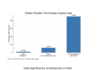
China has a substantial plantation resource, but domestic softwood supply is expected to remain broadly stable. Investment has increasingly favored hardwoods, leaving China dependent on imported softwood logs, particularly from New Zealand (see chart). Although greater self-sufficiency and weaker construction demand have reduced import requirements, imports will remain structurally important.
Japan’s softwood harvest is near a peak as post-war plantations reach maturity. Domestic supply and self-sufficiency have increased, but forest growth is slowing and harvest utilization is already high. Production is therefore expected to decline after the current surge.
Lower supply from Oceania, stable Chinese production, and declining Japanese harvests are expected to tighten the regional market and support higher softwood log prices through 2035.
The studies are conducted by Glen O’Kelly, O’Kelly Acumen (Stockholm, Sweden), and Håkan Ekström, Global Wood Trends (Seattle, USA).
(By Håkan Ekström, Global Wood Trends (Seattle, USA), and Glen O’Kelly, O’Kelly Acumen (Stockholm, Sweden) )