May is a curious month; we can almost feel the summer and the promise of better things to come. But for those of us in Europe, that weather arrived with a sting as a heat dome brought record-breaking temperatures that have so far claimed 15 lives in the UK.
The month has ended with an uneasy sense that some kind of storm might be about to break, either actual or political. For now, Keir Starmer is insisting that he is still prime minister of UK and still in charge but no one expects that to last for long. All eyes are on a by-election in Makerfield, just west of Manchester, and the efforts by Andy Burnham, currently mayor of Manchester, to win a ticket to Parliament and challenge Starmer for the top job.
In an effort to save her own job, the chancellor Rachel Reeves has urged government departments to spend their procurement budgets on British suppliers but without explaining why this was not already automatic government policy. Instead, Britain and the EU are still clinging to a free-market model that is no longer fit for purpose. This is leaving individual companies and entire market sectors, including printing, to compete against Chinese companies, which are operating under a hybrid model with some free-market elements grafted onto a centrally commanded economy. And that’s before we factor in the effect of the US tariffs and America’s generally more protectionist stance.

The European Union is attempting to fight back and has fined the Chinese online retailer Temu €200 million for allowing dangerous goods to be sold on its platform, including poor quality electrical chargers and unsafe baby toys. Temu is also required to present an action plan to address what the European Commission described as a failure “to diligently identify, analyze and assess the systemic risks” of these products.”
Also in May, the Chinese premier Xi Jinping hosted separate visits from both Trump and Putin. Neither appear to have gained any significant concessions from Xi, though Xi did press home China’s claim over Taiwan to the Americans and Trump does appear to have paused some arms shipments to Taiwan. Taken together, these visits suggest that China increasingly sees itself not as equal to the US or Russia but as the power broker that they and other leaders must court. And indeed, China does look like a dominant global power. It has become the leading EV automotive producer, has the largest population and biggest military, and is likely to win the new space race to colonize the moon, following the rapid unscheduled dismantling of Blue Origin’s New Glenn rocket last week.
Elsewhere, the geopolitical temperatures continue to rise as the American President Donald Trump holds the world hostage to his own ego while he looks for a face-saving way out of the war he has started with Iran. He still insists it’s the only way to stop Iran acquiring nuclear weapons, though the imperfect Joint Comprehensive Plan of Action that Obama signed in 2015 was doing a better job at that.
The war has resulted in an ongoing double blockade of shipping from the Strait of Hormuz, which has pushed up the price of oil, leading to rising inflation in many countries. It has also led to shortages of several products, from fertilizer to naphtha, a liquid hydrocarbon mixture that comes from refining crude oil. It’s used as a solvent in some inks and is also present in the cleaning fluids used on some printing presses.
In Japan, this shortage has forced a large snack food brand – Calbee Inc – to redesign some of its packaging for products such as crisps and prawn crackers by switching to monochrome printing. Japan imports roughly 40 percent of the naphtha it uses from the Middle East, leaving many Japanese ink manufacturers scrambling to reorganize their supply lines. You can find a longer analysis of the geo-economic news filed under Letter from Lincoln, and of the geopolitical events under Return to Sender.

Sticking with the packaging theme, a German court has ruled that shrinkflation of chocolate bars cheats consumers and breaks competition law. Mondelez had cut the weight of its Alpenmilch bar from 100g to 90g but kept the same packaging, making it hard for consumers to notice the difference, though they did notice the price going up. The company has a month to appeal the decision. Rising chocolate prices are due to crop failures, which some see as a direct result of climate change.
An interim review in the UK, carried out by the former health secretary Alan Milburn for the government, has found that opportunities for young people to find jobs and careers are shrinking, leaving more people dependent on the welfare system. Many employers have cited changes to minimum wage regulations and employer national insurance contributions as a major reason for not taking on younger, less experienced staff.
This has to be weighed against the many printing equipment vendors telling us that young people don’t want to work in print so printers should buy more automated equipment. Yet the Milburn report paints a picture of young people who are desperate to find any work at all, suggesting that many printing companies might be better off revising their recruitment policies rather than paying to borrow more money to invest in equipment they might not need.
A chemical explosion at the Nippon Dynawave Packaging paper mill in Longview, Washington, in the US has killed two people with around nine more missing. This was caused by the failure of a storage tank containing white liquor, which is used in making paper from wood chips. The mill produces around 280,000 tons of paperboard and wood pulp per year.
Soyang Europe has announced a 5 percent increase across all Soyang products, along with price adjustments on selected additional ranges, starting from 1st June. The company has said that it had absorbed increases where possible but that continued pressure on manufacturing, raw materials, and supply chains had forced its hand.
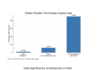
Environmental Impact Measurement, an organization that measures the environmental impact of garment finishing, has issued its annual report, Denim Industry Progress & Insights 2025. This found that 66 percent of processes are already classified as low impact, mainly due to process optimization and the adoption of more efficient technologies. There has been progress on energy use, but efforts to reduce water consumption have stalled at around 30 liters per garment. The report states that chemical impact remains the industry’s main challenge, with 27% of processes still classified as high impact.
Factors such as the use of generic chemicals, lack of transparency in formulations, and the persistence of legacy practices, such as pumice stones or potassium permanganate, continue to limit progress, despite the availability of more sustainable alternatives. Begoña García, creator of EIM and co-author of the report, commented, “The industry has proven that it can improve when it measures its impact, but the next step requires accelerating the adoption of technologies and leaving behind practices that are no longer sustainable.”

Kodak is now offering its Sonora UltraXR process-free plates in Europe, Africa, and the Middle East regions. The Ultra XR plates are rated for up to 400,000 impressions with heatset/coldset web presses, 250,000 impressions with sheetfed presses, and 115,000 impressions for UV-ink applications. They are said to offer 5x better white light exposure tolerance and image stability lasting up to six weeks when stored in the dark. These plates are manufactured at Kodak’s facility in Osterode, Germany. They replace the Sonora Xtra-2 and Xtra-2 for Newspapers, which will no longer be produced in Europe.
Jim Continenza, Kodak’s executive chairman and CEO, commented, “Kodak has invested millions in R&D to foster continuous innovation and provide the highest performing process-free plates available on the market. Sonora UltraXR Plates are the latest product of these efforts, from which sheetfed and web offset printers in EAMER can now benefit. And best of all, our print customers receive these further improved plates at no additional cost.”
Installations
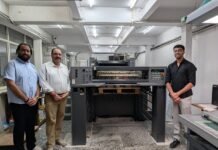
Moderna Printing, a commercial printer based in Belgium, has installed a continuous web-to-sheet line, which it claims as the first configuration of its kind in Europe. The new line is based on a Heidelberg Speedmaster XL 106 equipped with a CutStar reel sheeter and a Contiweb CB-N Non-Stop Unwinder, enabling web-fed production within a sheetfed press line. This set up means that the press can be kept running, with paper supplied continuously and no need to change either pallets or reels.
Previously, Moderna Printing used its sheetfed press primarily for covers, while inside pages were produced on heatset web offset lines. But many magazines are now seeing falling print runs so the company needed an option for those customers. The new configuration enables the production of complete magazines on the sheetfed press for shorter runs, while higher-volume work continues to run efficiently on its heatset web offset.
Plant Manager Marijn Poelmans explained, “With this investment, we have strategically expanded our portfolio. We want to continue serving our customers, which also means remaining competitive for shorter runs. That is why we chose a modern sheetfed press configuration.”
Rob Bosman, sales director at Contiweb, commented, “Following the first installation in the United States, this project with Moderna Printing confirms the growing interest in combining web-fed efficiency with sheetfed flexibility and we expect to see similar configurations in the future.”

Apolo Convert, a new flexible packaging business based in Portugal, has ordered a Fujifilm Jet Press FP790 press that is scheduled to be installed in September 2026. The press prints water-based inks to flexible film for packaging applications.
The company has been set up by Ricardo da Palma, who has spent a decade experimenting with digitally printed flexible film packaging. He explained: “We’ve built a new factory from scratch in the space of a year – and the Jet Press FP790 is going to sit at the heart of that factory, allowing us to produce work far more rapidly and far more sustainably than ever before. No more solvents, no more fossil fuels – and 85 percent of the energy powering the factory we will generate ourselves, using solar and battery power. All waste will be recycled or reused.”
He added, “With the Jet Press FP790, we’re anticipating a range of benefits for our customers: firstly, we’ll cut wait times in half for clients – from four-to-six weeks – to two-to-three weeks. Secondly, we’ll be able to offer personalisation and customization solutions that simply would not have been possible previously. Thirdly, the quality we can now offer for specialist short run work will be far beyond anything we’ve been able to produce before. And, finally, all of this will be produced in such a sustainable way that it will give our clients a truly credible sustainability message to give to their customers.”
Appointments
Hybrid Software has taken on Chris Carr as our new UK sales manager to look after the North of the UK. Chris has worked in the print industry for nearly thirty years, from field service engineer through to print production specialist. He has service experience in all aspects of pre-press, including design, networking, workstation management, large format printers, CTP and CTF systems, color management, variable data and workflows.
At the same time, Ralph Boer has joined Hybrid Software in the US as Northwest Territory sales manager, where he will cover the Northern California, the Pacific Northwest, and Western Canada region. He has more than 20 years of experience in the print and label sector, spanning print production, prepress technologies, and capital equipment sales. This includes 14 years at Mark Andy and the last five and a half years with Durst Image Technology.

Pete Kincaid, vice president of sales for North America at Hybrid Software, commented, “His experience and relationships in the western North American market will help us continue growing our presence and supporting customers as they modernize their production workflows.”
Inkcups has appointed Sarah Fenna as sales manager and Keith Apps as field service engineer, both covering the UK and Ireland. Fenna has more than 30 years of experience in the print industry, having most recently spent six years as business development manager and sales director at Soyang Hardware Ltd. Apps also has around 30 years experience, having previously worked at SwissQPrint, Spandex UK, and HP, and most recently for Mimaki’s UK distributors Hybrid Services.
Fiona Lam, who is currently chief financial officer and member of the Executive Committee for the Agfa-Gevaert Group, is to leave this role at the end of August to take up a new opportunity as CFO for the Proximus Group. Pascal Juéry, Agfa’s CEO, commented, “I would like to sincerely thank Fiona for her commitment and valuable contributions to Agfa over the past period. She has been a strong partner to the business and a respected member of our leadership team.”
Separately, Michel Govaert has also resigned from the Agfa board of directors, citing personal reasons.
Upcoming events
There are a number of events coming up in June, starting with TCT 360 at the NEC in the UK, which covers additive manufacturing. Dscoop is running its European Edge conference in Slovenia, starting on 10 June. The Drupa team has organized the Print Digital Convention at Messe Düsseldorf. You can find further details on all these on the Events page.