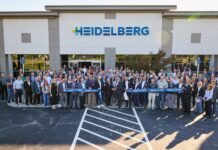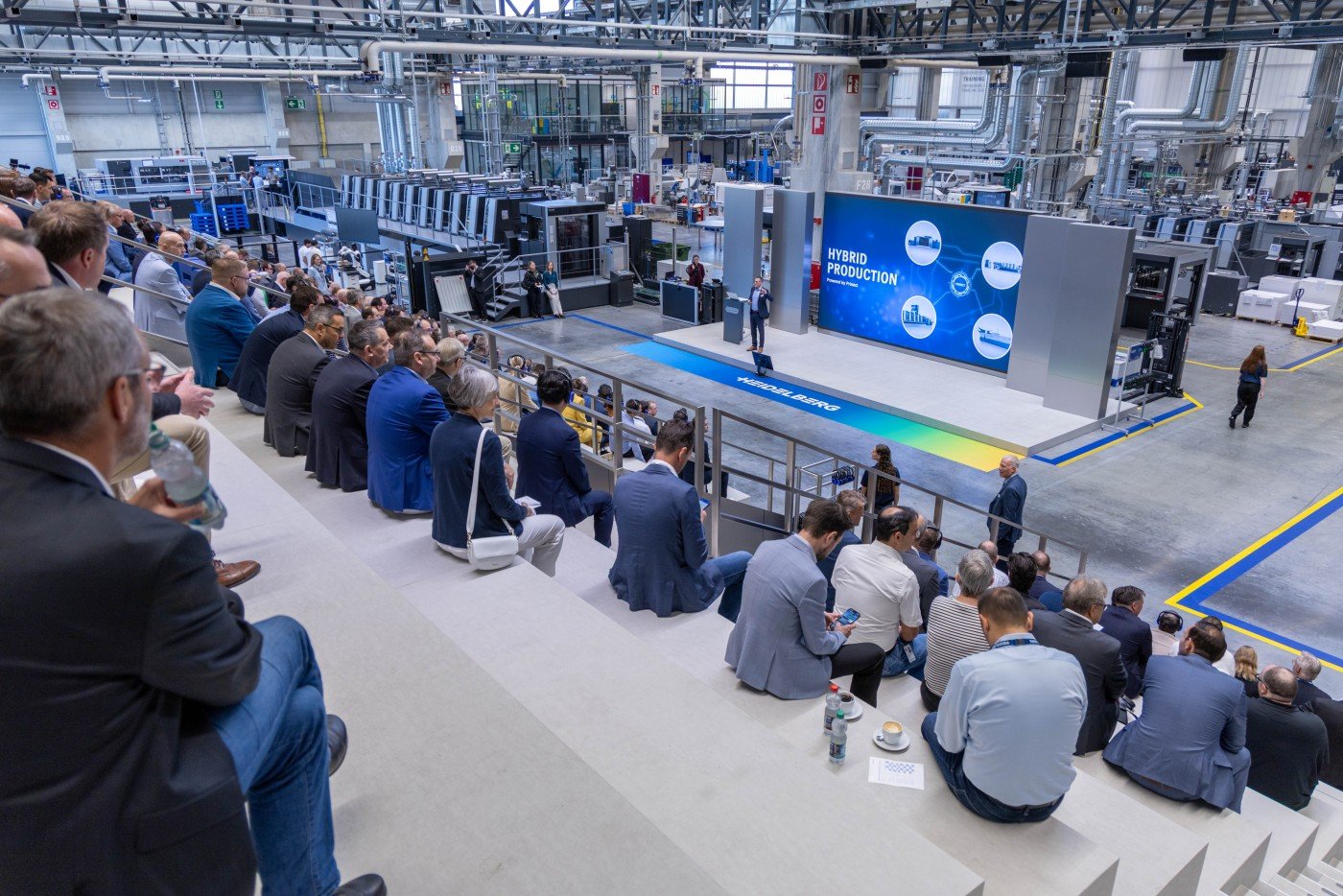
Digitalization is the key to the future of the printing industry. At Shift 2026, the international summit hosted by Heidelberg on process digitization and hybrid print production using digital and offset technology, more than 300 specialists and executives, customers, technology partners, and industry experts from nearly 30 countries discussed the future of the industry through the use of artificial intelligence (AI), software solutions, automation, and robotics.
In addition, real-world examples demonstrated the potential of comprehensive digitization and data-driven system integration for ensuring the future viability of print shops. With a significant increase in attendance compared to the previous year, the event has firmly established itself and underscored its relevance as a platform for the international printing industry. “The high level of interest in Shift this year shows just how strongly the topics of digitalization and AI are shaping the industry. The need for information and exchange regarding current trends and solutions among market participants in this field is growing continuously. And Heidelberg supports its customers as a reliable partner on their journey into the digital future,” says Dr. David Schmedding, CSO at Heidelberg.
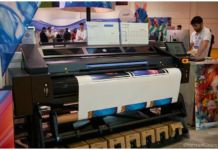
The two-day event provided concrete examples of how printing companies worldwide are driving digital transformation and further increasing their competitiveness through intelligently networked production processes. The focus was on topics such as AI-supported production planning, autonomous workflows, data ecosystems, the Jetfire 50 industrial digital printing system, robotics, and the increasing integration of AI agents into business and production processes.
Real-world examples as blueprints for a successful future for print shops
Matthias Schmid of the Swiss company Schmid-Fehr AG provided a particularly vivid insight into the economic benefits of digitization. The company has been consistently driving the automation of its processes for several decades and today uses the AI-controlled Prinect Touch Free workflow in conjunction with the Jetfire 50 industrial inkjet system and a Speedmaster XL 75 to remain competitive even as market demands change.
“While the value of an average print job was still around 2,800 euros in 2015, it is now only 800 euros. To continue producing profitably, we had to compensate for this gap by digitizing our processes. Hybrid production controlled by Prinect Touch Free is the solution,” said Schmid. The opportunities that artificial intelligence opens up, particularly for medium-sized print shops, were also the subject of several presentations. The increasing automation driven by AI is creating significantly more options in the industry. Thanks to AI and the automation it enables, many print shops today can compete with the efficiency of online printers. To achieve long-term success, however, they must opt for an automated business model: for example, as a platform provider, a niche specialist, or a local service provider.
Jürgen Grimm, Head of the Prinect Business Unit and AI Coordinator at Heidelberg, explained which tools Heidelberg uses to support its customers on this journey. The new Prinect Touch Free workflow plays a key role, largely automating production planning and manufacturing through clearly defined data and target values.
Building on many years of experience with intelligent control mechanisms in the printing press, Heidelberg is now applying these principles to complete production workflows. AI-supported applications range from the AI chatbot on the Heidelberg Portal, which provides quick assistance with workflow questions, to automated job bundling and the selection of the most cost-effective production path in hybrid printing environments. Especially in light of rising order volumes coupled with declining print runs, this form of automation opens up new potential for productivity, efficiency, and growth for print shops. “For Heidelberg, the primary focus when using artificial intelligence is on tangible customer benefits. The goal is to reduce the workload on employees, make processes more predictable, and significantly increase the level of automation in print shops,” said Grimm.
Furthermore, Shift 2026 demonstrated that robotics is increasingly finding its way into industrial print production. Andreas Reichert from the startup Lunes Robotics offered a glimpse into the future. He emphasized the potential of new robotics technologies in light of the growing shortage of skilled workers: “The development of so-called humanoid robots is still in its infancy. However, the fact that there will be a shortage of 6.1 million workers in the U.S. and as many as 7 million in Europe over the next few years is driving progress forward.”
As a system integrator, Heidelberg presents digitization solutions at the Home of Print
On the second day of Shift 2026 at the Home of Print in Wiesloch-Walldorf, Heidelberg demonstrated how offset and digital printing technologies, such as the Jetfire 50, can be integrated into a unified hybrid production environment based on intelligent data management. With its digital ecosystem, centered on the AI-powered Prinect Touch Free workflow, the company supports print shops in implementing seamless end-to-end processes. As a system integrator, Heidelberg combines software, presses, data management, automation, and robotics into a connected production environment that boosts efficiency and lays the foundation for future AI applications.