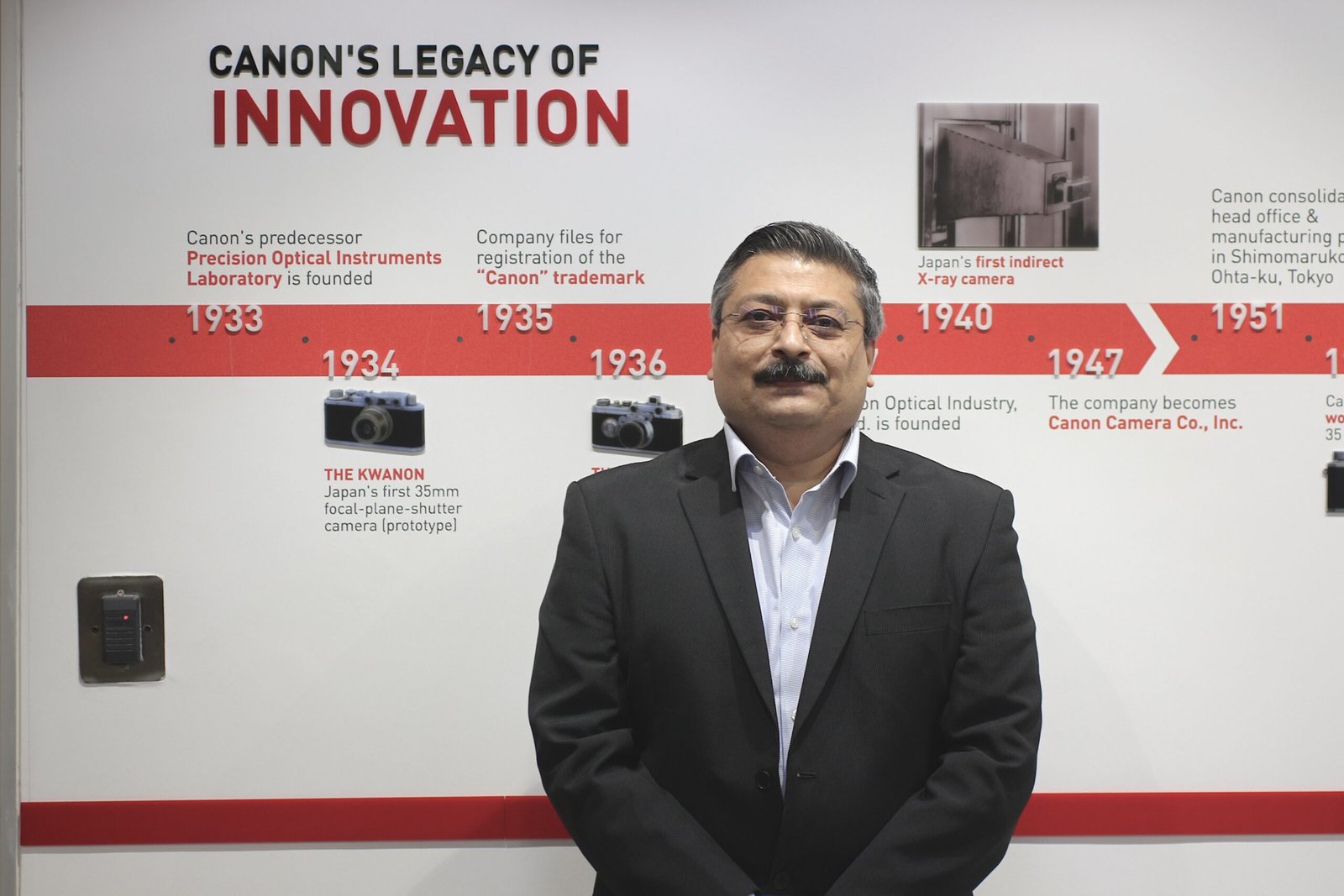
India’s production printing market is entering a phase where the traditional boundaries between offset and digital are blurring. While offset still accounts for the largest share of print volumes, digital printing is gaining momentum as printers respond to shorter runs, faster turnaround requirements, distributed production, and changing customer expectations. Puneet Dutta, senior director – commercial & industrial printing, Canon India shares his insights on the fast evolvng market and the company’s strategy.
Dutta expects the overall production printing industry to grow by approximately 8% to 10%. Canon India, however, is targeting more than double-digit growth in placements this financial year. According to him, Canon is not simply betting on the market growing, it is attempting to capture a larger share of that growth.

Digital takes the lead
India’s commercial and production printing industry remains highly fragmented, particularly on the traditional offset side. While overall print volumes grow, the growth rate in offset placements is relatively modest, with much of the industry’s momentum now moving towards digital.
Digital itself is evolving across multiple technologies, with toner-based cut-sheet systems continuing to play an important role while inkjet is beginning to establish a stronger presence.
Dutta sees digital printing as a consistently high-growth segment, describing its growth over the past 10-15 years as being in the double digits, with the expectation that this momentum will continue over the next three to five years.
For Canon India, the immediate opportunity remains particularly strong in cut-sheet digital production. The company expects this segment to continue growing at more than double-digit rates and has set a clear objective of growing faster than the industry and capturing market share.
Canon’s Made for India
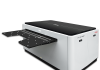
A key part of Canon India’s current growth story is the imagePress V770, launched in India in mid-May and subsequently displayed at Print Expo.
The product is particularly significant because Canon positions it as a ‘Made-for-India’ solution. Rather than simply adapting a global product for the Indian market, Canon’s development process incorporated direct feedback from Indian printers.
Dutta says the exercise began in 2024, when Canon’s R&D team travelled to India and visited customers across all four regions. The objective was to understand the problems printers were facing and determine what they wanted from a light-production digital press.
In the conversation, Dutta highlighted some of the V770’s features that illustrate how local requirements can influence seemingly small but commercially important aspects of a digital press.
Mentioning color to be one of the major examples, he explained that while European and Japanese markets may often favor more subtle color palettes, Indian print applications frequently demand stronger and more vibrant colors. Canon, therefore, introduced an inbuilt Indian Vivid Profile (IV Profile) to deliver the kind of vivid output commonly required by Indian customers.
For printers, floor space represents a fixed cost regardless of whether the business operates in a metro or a smaller city, he explained. Conventional paper-deck configurations can add significantly to the footprint of a digital press. Canon addressed this through its integrated air assist paper feeding module. Designed to provide air-assisted sheet separation without requiring a conventional paper deck, the system allows the machine to handle media in a way suited to the requirements identified in the Indian market while keeping the footprint under control.
The machine incorporates Prisma Sync Lite, a workflow designed to simplify operator interaction. A large touchscreen integrated with the press allows operators to make color corrections directly at the machine rather than depending entirely on a separate workstation.
Power fluctuations and the perceived risk associated with leaving equipment running mean that some Indian printers prefer to switch their machines off at the end of the day. Canon has, therefore, incorporated automatic calibration into the start-up process, reducing the amount of operator intervention required when the machine is switched on again.
Smaller cities’ growth
According to Dutta, the largest cities continue to account for the highest absolute print volumes. However, tier 2 and 3 markets are recording stronger percentage growth because they are developing from smaller bases. Smaller cities may see more rapid increases in the number of installations without overtaking the major metros in absolute print volumes.
For Canon, this creates opportunities across the market rather than only at the top end. The company continues to see demand for light-production equipment even in major markets. At the same time, the increasing number of local printing hubs is supporting digital adoption outside the traditional printing centres.
Labels, packaging and books
Traditional commercial applications such as visiting cards and letterheads are not disappearing, but their relative importance is changing. Digital printers are increasingly finding opportunities in labels, customized short runs, packaging proofs and book printing.
He said labels and packaging are particularly attractive growth areas, supported by the expansion of eCommerce and the increasing number of small businesses entering the market.
Book printing is another area where Canon sees sustained opportunity. India’s young population, the expanding education ecosystem and the continued demand create a long-term requirement for printed books. These applications also align well with the broader shift towards shorter and more customised production.
Inkjet closer to mainstream
While toner-based digital production remains a major part of Canon India’s current business, inkjet represents a significant part of its longer-term technology roadmap.
Dutta describes inkjet as a mature technology globally, although its Indian adoption is still developing. The challenge is not simply installing an inkjet press; the surrounding ecosystem—including media and environmental controls—must also be ready.
Inkjet media is particularly important because the ink must interact with the substrate rather than simply being transferred onto it. Humidity and temperature can also influence ink behaviour, making the production environment more demanding.
This explains why inkjet adoption in India is likely to develop differently from mature European markets, where paper manufacturers have already developed a broader ecosystem of inkjet-optimized media.
Canon is nevertheless building experience in the segment, supported by its global expertise and media-testing capabilities. The company already has installations across transactional and book-printing applications and is continuing to evaluate opportunities for wider adoption.
For India, the next step will be developing an ecosystem in which the technology, media availability, infrastructure and economics work together.
Beyond conventional production print
Canon’s strategy extends beyond toner and conventional cut-sheet production.
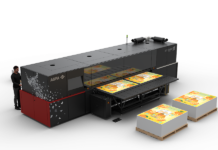
Globally, the company has developed a broad portfolio covering wide-format UV gel, flatbed and hybrid systems, high-speed inkjet, B3 cut-sheet and continuous-feed presses, including solutions capable of roll-to-roll and roll-to-cut production.
Canon is also moving into labels and packaging, with its LabelStream platform forming part of that broader portfolio.
Some of these technologies are already commercially available globally, while their introduction into India is being evaluated.
The next phase
In the concluding statements, Dutta mentioned that the next phase of production printing is likely to involve high-speed digital technologies expanding into applications that traditionally relied heavily on conventional production methods. Inkjet, UV and other digital technologies will increasingly find their way into labels, packaging, corrugated and other industrial applications.
Canon is already positioning itself for that transition. Its global portfolio provides access to technologies across these segments, while its India strategy is focused on determining where those technologies can create a viable business case locally.
The company is not approaching India’s digital transformation as a simple exercise in bringing more global machines into the market. The V770 demonstrates an attempt to develop around Indian customer requirements, while the company’s wider inkjet and industrial portfolio provides a pathway towards the next phase of digital production.