Xerox has signed a partnership agreement with Xeikon that will see it rebadge at least one of the Xeikon presses as Xerox models. Some readers may experience a sense of deja vu since Xerox previously rebadged Xeikon’s first dry toner press, the DCP 32, back in the 1990s.
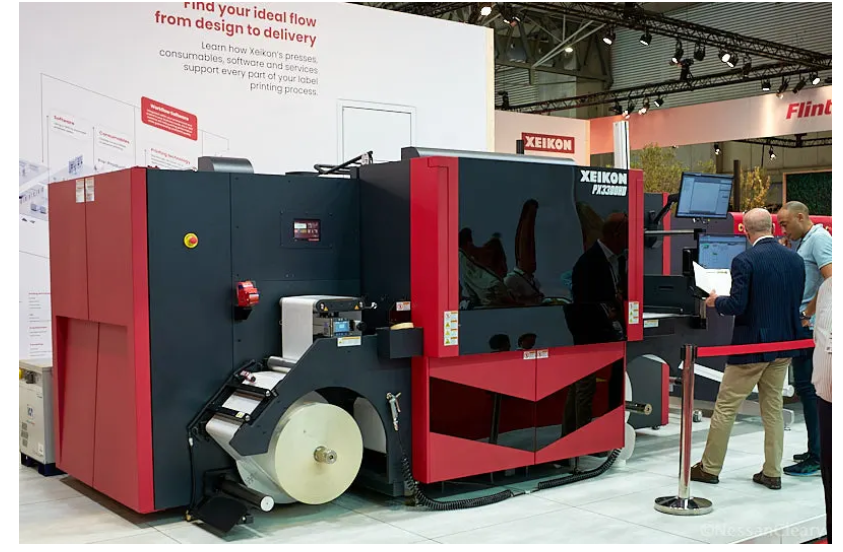
Neither company has yet revealed which of the Xeikon models Xerox will take on, but the most likely candidate is the Panther PX3300HD label press. That would fit with a product roadmap that Xerox unveiled back in February that included a 70mpm inkjet label press. For this press, Xeikon redesigned the print engine from its earlier Panther models and switched to using Xerox W1 printheads. That is likely where the relationship between the two companies began and also gives Xerox a more compelling sales story than a simple rebadge.

Walter Benz, president at Flint Group Digital Xeikon, commented, “Partnering with Xerox both validates the quality of our solutions and allows us to expand the global reach of our Flint Group Digital Xeikon press technology, delivering greater value to customers worldwide.”
More to the point, this would be a significant expansion of Xerox’s portfolio, making good on an earlier promise from Terry Antinora, president, Global Production Print Services at Xerox, to target the packaging and labels markets as part of Xerox’s growth strategy. Antinora called this latest announcement “an important milestone in the evolution of the Xerox production print business” adding, “By combining Flint Group Digital Xeikon digital press technology with the Xerox Production Ecosystem, we are delivering a complete production platform that helps print providers increase productivity, unlock new applications, and drive profitable growth.”
However, Xerox has not traditionally played in these markets, certainly not recently, so there’s an obvious question as to how Xerox will expand its channel sales without encroaching into Xeikon’s market. That will depend on how aggressively Xerox chases market share, regardless of what agreements the two companies think they have.
Any Xeikon press is likely to come with Xeikon’s proven X-800 digital front end, and presumably this would also be rebadged for Xerox. But Xerox will also add its own workflow automation software finishing solutions, remote services, and global support infrastructure.
These ecosystem holds the Xerox portfolio together, which so far consists of the Iridesse production press, based on a Fujifilm engine, the Proficio PX300/ 500 printers, which are both rebadged Fujifilm Revorias, and the IPJ900 cut sheet inkjet press, which is a rebadged Kyocera TaskAlfa plus the PrimeLink printers that are also manufactured by Fujifilm. So the partnership with Xeikon also has the advantage that it makes Xerox less dependent on Fujifilm for its print engines.
The Xerox roadmap also includes three further presses that have yet to be announced: a 300ppm B3 inkjet, a 150ppm 1200 dpi inkjet and a 160mpm continuous feed press.
Xerox recently released its financial results for its second quarter of this year, which showed revenue up 22% to US$1.92 billion. Net income, according to generally accepted accounting practices, was up US$119 million to US$13 million.
You can find further details on the Xerox ecosystem from xerox.com and on the Xeikon presses from xeikon.com.