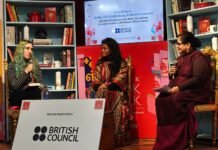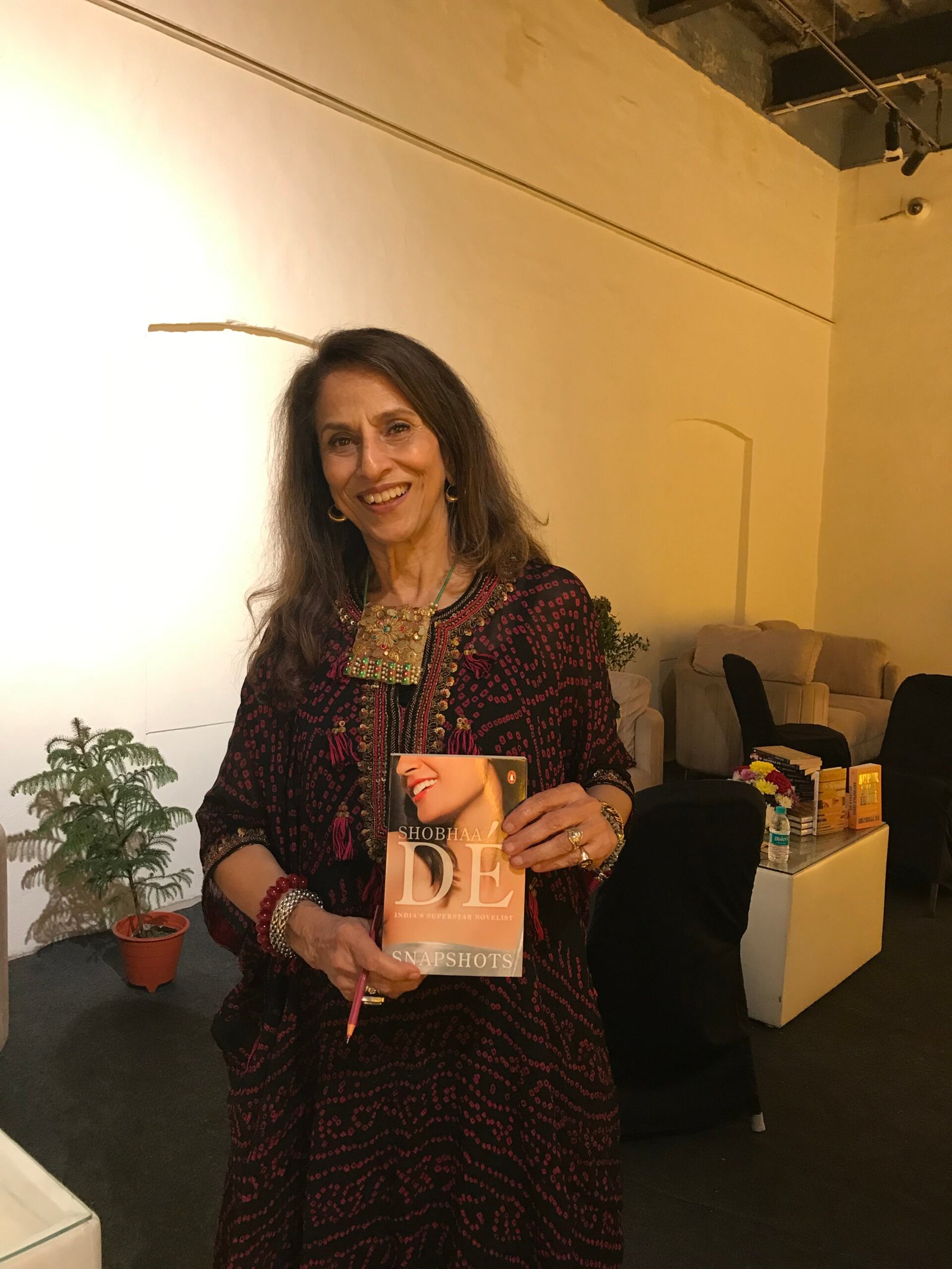
Correspondent Priyanka Tanwar interviewed Shobha De at the Kolkata Literary Meet 2026 in January. The conversation revolved around De’s writing career, her writing style and themes, writing during the pandemic, embracing modern global trends and preserving traditional Indian culture, and Indian society’s perspectives on topics such as relationships, sex, and aging, and much more.
Edited excerpts:

Indian Printer & Publisher (IPP) – What inspired you to become a writer, especially given your start in modelling?
Shobha De – Modelling has a shelf life. You can’t be a model forever. You can be a model for five years, maybe 10 years, not even 10 years. Your career span is between two and five years.
I’ve always wanted to write. I’ve always written, even as a child. I enjoyed my modelling as it gave me confidence. I travelled, which taught me a lot. The next best thing to do was to use my writing skills. So, I got a job as a copywriter. From copywriter to editor to columnist to novelist. That’s the arc.
IPP – How has your writing style and the themes you cover evolved since your early days with Stardust magazine to your recent books?
Shobha De – Stardust was commercial film journalism. It’s a very distinct genre. I think Stardust was a game-changer. It broke all the rules. It created a new language and that was great. I’ve written so many books, 28, and they’re not similar at all – from fiction to non-fiction to anthologies to short stories to scripting for TV. For me, writing is writing. It’s self-expression. You can use your skill as a writer to experiment and write in whichever format you like.
IPP – You have written scripts for popular soap operas on Indian television such as Swabhimaan. How does writing for television differ from writing for a book?
Shobha De – It’s a different skill set. The structure and discipline are different. You have to create your story arc and your characters. You have to follow the lives of your characters. Swabhimaan was over 500 episodes. It was like living with so many characters. It’s a different ball game. But writing for me is really writing, and I enjoy every format and every form.
IPP – Your writing often involves sharp opinions and has sometimes been controversial. Do you ever worry about backlash or do you believe inviting sharp reactions is a necessary part of social commentary?
Shobha De – There’s no question in my mind that for a writer, you have to be able to provoke debate, even dissent. Controversy does not scare me. I’ve lived with it for decades. I’m not in the PR business, so I don’t have to please anyone. I’m a non-aligned person. I’m not aligned with any political party. I’ve never been. So in a way, I’m very lucky that I’m free to express my opinion in whichever manner I choose.
IPP – How do you navigate between embracing modern global trends and preserving traditional Indian culture in your personal life and observations?
Shobha De – It’s not difficult at all because your framework is very strong within you. Your value systems and aesthetics are strong. You know what you enjoy and what you don’t. You know what suits you and what doesn’t. Then it’s not tough to navigate at all. You take the best from other cultures, from the West, from the East. But you never lose your own identity and yourself in the bargain.
IPP – In your opinion, how have urban Indian society’s perspectives on topics such as relationships, sex, and aging changed over the decades?
Shobha De – It hasn’t changed at the speed at which I would have wanted or anticipated. It’s still changing rapidly. In some ways, not so rapidly. In other ways, the position of women remains depressingly where it probably was 20 years ago. Women are taking charge of their own lives. They have more agency over their own lives. And that in itself is very encouraging.
IPP – You have written collections of short stories, Lockdown Liaisons, during the Covid-19 pandemic. Tell us about that. Did you have any difficulties writing during the pandemic?
Shobha De – It did very well. Lillete Dubey has made a play, a theater production out of it. She’s performed it across the world and all over India. It’s very gratifying to see how it actually translated across – Not just merely being in a book, but being performed.
I didn’t face any difficulty at all writing during the pandemic. It was therapy for me.
IPP – How do you deal with writer’s block and what keeps you motivated to consistently produce new work?
Shobha De – I’ve never had writer’s block, so I don’t know. I’m a professional writer. I don’t make excuses for myself. If I have a deadline, I keep it. And fortunately, thus far, I’ve never experienced writer’s block. Well, if you’re a creative person, that in itself is a trigger. You’re always observing and listening. You’re always sensitized to the environment around you. It’s not something that you work at. It’s a part of your life.
IPP – How do you balance the roles of author, columnist and social commentator, and which do you find most fulfilling?
Shobha De – I don’t have to choose. I enjoy all my roles, and I try to give my best to everything that I do with as much involvement and passion. Fortunately, I’ve never had to choose.
IPP – What role does your Mumbai upbringing and psychology background play in shaping your characters and observations?
Shobha De – Mumbai has shaped me in every possible way because it is a city that accepts differences and encourages self-expression. I’m lucky that I’m a product of Mumbai.
IPP – You mention Indian society’s refusal to prepare young people for intimacy in The Sensual Self. What are the biggest gaps in sex education and cultural conversation you observed?
Shobha De – Mainly, there is no conversation around it. No one wants to discuss it. It seems very threatening for society to accept the taboos or the social constraints and inhibitions that define our society. I’m glad I’ve written The Sensual Self to break through some of that.
IPP – What advice would you give to aspiring writers and columnists in India today?
Shobha De – You have to read a lot. You have to read every day of your life. Most importantly, you have to write every day of your life. Start by reading the classics. Read other contemporary voices. Learn from other writers, and have confidence in your own voice. Most importantly, you have to love writing. You have to love words. You have to have that love affair with the creative process.