GelatoConnect, a software company, has released its State of Intelligent Print Production 2026, based on a global survey of print service providers conducted in January and February 2026. The report shows the industry entering a new phase: automation is now table stakes — and the competitive advantage is shifting to intelligence.
In this report, “intelligence” means operational systems that learn from data and improve decisions over time — across estimating and quoting, workflow, procurement, and logistics. It is not a collection of standalone AI features.

“Automation was the first wave. Intelligence is the advantage. The operators pulling ahead are learning from every quote, every job, and every shipment — and that learning compounds. The question isn’t whether to adopt intelligence. It’s how fast you can start, and where you start so the learning compounds quickly,” says Henrik Müller-Hansen, founder and CEO of Gelato
Key findings
Modernization has become urgent: 78% say they must modernize within 12 months (35% say immediately). Only 9% report no urgency.
Most operations are still stuck in a “hybrid” reality: 70% describe production as a mix of manual and automated processes; only 9% say they have reached a highly optimized state. 39% have automated less than a quarter of their end-to-end workflow from order intake through dispatch.
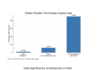
A confidence gap is opening — and widening: Among the most operationally intelligent providers surveyed, 100% are confident about growth in 2026. Among those earlier in the journey, only 44% say the same.
Expertise beats budget as the biggest barrier: 65% cite lack of expertise as the top barrier to AI adoption — nearly twice as common as unclear ROI (30%). Integration challenges follow at 44%, reflecting the fragmented technology landscape many PSPs operate in.
Investment priorities are shifting from “more tools” to “connected systems”: 83% plan to invest in workflow automation this year. Intelligent estimation and order intake each attract 48% of investment intent — signaling growing demand for faster quoting and better customer-facing experiences.
“Intelligence debt” is real — and it compounds: Every quarter without intelligent systems is a quarter where competitors are learning and pulling further ahead. Unlike traditional automation, which delivers fixed efficiency gains, intelligence compounds over time — widening the competitive gap if you wait.
The report also finds that intelligent quoting is the most common entry point for PSPs building intelligence into their operations. Automated estimation is the most widely deployed AI capability today (22%), and 48% plan to invest in intelligent estimation in 2026. The report recommends an incremental adoption approach, where early wins build confidence and learning accumulates gradually, rather than requiring a full operational overhaul.
The State of Intelligent Print Production 2026 is based on a global survey of print service providers conducted between January and February 2026. Respondents represent a range of company sizes, regions, production models, and levels of operational maturity.
The survey focused on operational practices across quoting, workflow, procurement, and logistics, as well as self-reported outcomes related to speed, accuracy, reliability, and growth confidence. All data has been anonymized and aggregated to protect individual respondents.