For Epson India, 2025 marked a clear inflection point for the printing industry, with inkjet technology gaining momentum across office, commercial, and industrial applications. At the industrial level, digital printing is transforming label and textile printing by replacing traditional analog processes. It enables shorter production runs, on-demand printing, faster turnaround times, and significantly reduced waste and resource usage.
In office environments, inkjet is increasingly replacing laser printers, driven by its lower energy consumption, reduced environmental impact, improved reliability, and long-term cost efficiency.

According to Satyajeet Satpathy, director- sales and marketing, Epson India, “As we move into 2026, the focus will be on scalable, sustainable, and flexible inkjet printing solutions that help businesses improve productivity while responding quickly to evolving customer and market requirements.”
Focus on the Inkjet market
Inkjet technology has evolved rapidly, emerging as a core printing solution across commercial and industrial applications. “One of the most significant advancements has been the shift toward heat-free inkjet technology, which eliminates the need for fusing heat, resulting in lower power consumption, faster first-page output, reduced wear and tear, and improved overall reliability,” Satpathy said.
Micro Piezo and PrecisionCore technologies have further enabled higher print speeds, enhanced durability, and improved color accuracy across a wide range of media. As a result, inkjet printers today deliver consistent, high-quality output not only for everyday documents, but also for demanding applications such as labels, packaging, textiles, and large-format printing.
In industrial and commercial print environments, inkjet technology is enabling short-run, on-demand production with minimal waste, supporting greater customization and faster turnaround times. Collectively, these developments are strengthening inkjet’s position as a preferred printing technology across office, commercial, and industrial environments.
Commercial and industrial applications
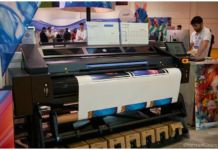
Epson’s commercial and industrial printers are powered by PrecisionCore printhead technology, delivering industrial-grade reliability, scalability, and consistent print quality. Engineered for demanding production environments, these solutions help businesses optimize operating costs through reduced consumables, minimal maintenance, and stable long-term performance, enabling more efficient and responsible production.
Across applications such as signage, textiles, packaging, labels, and manufacturing, Epson’s inkjet printers support faster turnaround times, greater customization, and dependable output. By enabling digital, on-demand printing and replacing traditional analogue processes, they help reduce material waste, minimise overproduction, and support more sustainable manufacturing practices.
Upgrades in the revamped SureColor series
As reported by Indian Printer & Publisher, the revamped SureColor series combines higher productivity and enhanced color reproduction to meet the evolving needs of print service providers. Key upgrades include a large single PrecisionCore printhead, which improves print quality, consistency, and overall performance, along with advanced UltraChrome pigment inks that deliver a wider color gamut and improved print longevity.
Together with improved workflow efficiency, these enhancements allow print service providers to achieve sharper detail, consistent results across jobs, and reliable performance, while optimizing productivity and controlling running costs.
Trends in signage and large-format printing
The signage and large-format printing segment continues to see strong momentum, driven by demand for short-run, high-impact visuals and faster turnaround times across retail, exhibitions, events, and décor applications. As brands seek greater flexibility and speed, digital signage printing is increasingly becoming the preferred choice.
Satpathy explains that sustainability has also emerged as a key decision driver, with customers favoring water-based, low-VOC inks and energy-efficient printing solutions that reduce environmental impact without compromising output quality.
He says, “At the same time, expectations around print quality have risen sharply, with brands demanding high color accuracy, durability, and consistency. In this environment, advanced signage printers such as the Epson series are playing a critical role in helping print businesses scale, differentiate, and deliver consistent brand output.”
Consumer behavior across regions
From a regional perspective, demand for printing solutions is expanding beyond metro cities, driven by entrepreneurship, retail growth, education, and local manufacturing. Small businesses, print service providers, and institutions in these markets are increasingly adopting digital printing technologies that offer scalability, ease of use, and predictable operating costs.
“Consumers are becoming more value-driven, placing greater emphasis on reliability, cost efficiency, and sustainability rather than upfront pricing alone,” Satpathy said. “There is a growing preference for printers that deliver consistent output, lower power consumption, and minimal maintenance, particularly in regions with limited infrastructure and skilled manpower.”
“Key industry challenges include rising input and energy costs, skill gaps, and the need for ongoing technology upgradation. In this environment, energy-efficient, easy-to-deploy solutions backed by strong service networks, such as Epson’s inkjet-based printers, are well positioned to address both operational and business needs across regions,” he continues.
Impact of digital adoption on the printing market
The growing adoption of digital technologies is transforming the printing and packaging landscape in India, particularly in the labels and packaging segment. Digital printing is enabling faster turnaround times, greater flexibility, variable data printing (VDP), and reduced waste, critical requirements for brand owners facing shorter product lifecycles, frequent design changes, and increasing SKU complexity.
In this context, Epson’s digital label presses are helping packaging converters support short and mid-run production, quick job changeovers, and consistent print quality across batches. These capabilities are especially valuable for food, FMCG, pharmaceuticals, and specialty packaging, where speed, accuracy, compliance, and repeatability are essential.
At the same time, digital adoption in other segments such as textiles and on-demand garment printing is reinforcing the broader shift toward agile, waste-reducing production models. “Together, these trends are expected to further accelerate digital printing adoption across packaging and allied print segments through 2026,” he concludes.