Rave India, the commercial printing arm of Rave Scan, started in 1993 as a rapidly growing prepress house in Delhi that eventually had five high-end scanners and five imagesetters. Since September 2005, with the installation of a new 5-color SpeedMaster 74 press it has been one of the fastest growing printers in the country. The company now has three plants in the Naraina Industrial Area and has recently diversified by becoming a printer converter of monocartons.
Decentralization went wrong
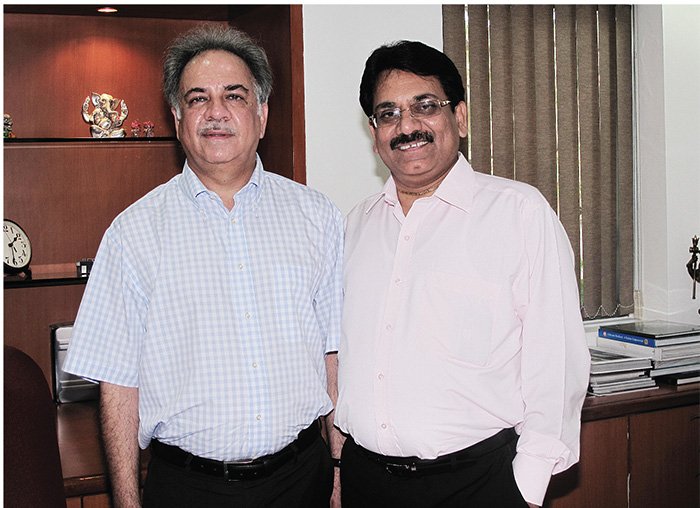
Fast growth has compelled Rave India to experiment with several levels of professionalization. However, speaking with the benefit of experience, Rakesh Bhatnagar, managing director of Rave India, says, “In a service industry like print, 100% decentralization cannot work. It should be the combination of both centralization and decentralization. Managerial and technical staff have to be technically sound. Unfortunately, in the print industry, people who have good experience are not very literate even today. So absolute professionalism cannot come in the print industry so soon.”

A potential disadvantage of decentralization is that the organization may become fragmented. Departments that once worked well together in a centralized structure may lose their sense of team spirit and cooperation.
Decentralized units may put their own best interests first instead of those of the company as a whole. Areas such as productivity and customer service may
suffer as a result. Innovative ideas that once spread quickly throughout the company may now remain within individual units. “A few years ago, we gave out responsibilities to our managers and supervisors. However, we started getting complaints from our clients that work was not being delivered on time. At that time our [top management] interference was required or else we would have been at a loss,” says Bhatnagar. “Now managers are still there but our interference has started.”
Offset versus digital
On being asked whether Rave has plans to start digital printing, Bhatnagar says that they don’t have any such plan. “The makeready time on our multicolour offset presses is just 11 to 13 minutes. After that it only takes 2 to 3 minutes to print 100 copies. So in another 15 minutes we can print about 2,000 copies — such is the speed of the machines. Even for printing 100 copies, offset is economically more feasible. Digital printing is profitable only when you are printing less than 70 copies.” However, for fulfilling in-house requirements, Bhatnagar may buy a digital press in the future. This machine will also be used to print sample books for clients who ask for 2 or 3 copies in advance.
EPCG and indirect exports
Rave tried its hand at book printing export but in vain, says Bhatnagar, “In exports the rates were too low and there were already too many competitors in the market and we could not succeed. However, we supply to many publishers in India who export and we do get the export promotion capital goods (EPCG) benefit.” The EPCG scheme allows import of capital goods including spares for pre-production, production and post-production at zero duty for specified sectors and at a concessional rate of 3% customs duty for all sectors, subject to an export obligation ranging from 6 to 8 times the duty saved on capital goods imported under the scheme, to be fulfilled in 6 to 8 years determined from the authorization issue-date. “Because we purchased our machines under EPCG, we are under obligation and commitment to the Government of India to export within a prescribed period and we have been meeting that target by indirect exports. Our exporter clients after getting their work done at our company put our EPCG number on their bill and this way we fulfil our (indirect) export commitment to the Government of India,” explains Bhatnagar.
Getting into packaging
Rave has built a new packaging plant in Gurgaon on a 3,450 square yard plot with an as yet minimal covered
area of 20,000 square feet. “In India the printing industry is slowing down, and if you look at the European and the Australian markets, the industry is almost dying out there. The Indian printing industry has almost reached a stage where no more buying of new machinery is required because supply is exceeding demand. The decline in commercial printing has put the industry through a very bad phase. The situation has made us think seriously about the future and we have decided to enter the packaging industry,” says Bhatnagar.
With a new stable government at the centre, Bhatnagar is quite hopeful about the future. “All of us should have patience now and with the change in the entire scenario with a pro-industry government setting up at the centre — it is a very good signal to small as well as big companies. Even those who have installed extra machines and who have gone overboard, should be comfortable within the next 6 to 12 months,” concludes Bhatnagar.