Diversity in media and under-representation of marginalized caste groups in Indian newsrooms was a major topic of discussion at the sixth edition of the news media forum, The Media Rumble, held as an in-person event at the India Habitat Centre, New Delhi, on 14 and 15 October 2022.
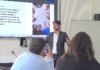
Starting a panel discussion, Amitabh Behar, CEO of Oxfam India, a non-profit organization, stressed the importance of inclusivity in newsrooms. On the occasion, Oxfam India released a report titled ‘Who tells our stories matters – Representation of marginalized caste groups in Indian media’.

Meena Kotwal, the founding editor of The Mooknayak, an award-winning YouTube channel and web portal, who moderated the session, asked Behar about the need to come out with a research-based report on a subject whose findings she said are fairly known to all – the under-representation of marginalized groups in media.
Behar, while admitting that the findings are neither shocking nor revealing, said that at a time when India is celebrating the 75th year of Independence, it is our responsibility to find out how we are faring on a key goal and dream of a liberal democracy – social equality, social justice, social freedom.
The report dwells on the representation of marginalized groups in leadership and editorial positions and news coverage. It says of 218 surveyed leadership positions across print, TV, and digital media outlets, 191 were occupied by people from the general category. Barring two alternative media platforms, no mainstream houses had people from the SC/ST categories in leadership roles.
In the print media, both Hindi and English, more than 60% articles with bylines were written by people from the general category, less than 5% from SC/ST groups, and 10% of the writers belonged to the OBC community. More than 50% journalists who write on caste and tribal issues are from dominant castes, the Oxfam study, conducted between April 2021 and March 2022, said.
In the electronic media, about 56% and 57% of the anchors in English and Hindi prime shows, respectively, were from the dominant groups. No channel had SC/ST anchors hosting debates. Over 60% of the panelists were also from the dominant castes.
In the mainstream digital media, more than 50% of the writers were from the general category.
Behar said the numbers indicate how the dream of a multi-colored society that includes all groups and castes will never be realized unless social equality is achieved. An atmosphere of authoritarianism and majoritarianism prevails and the media is failing in its role in helping to create an inclusive society. The numbers and the report, he said, will help show the mirror to the media.
To a question from Kotwal on why Dalits and Adivasis do not find representation in newsrooms, Supriya Sharma, executive editor of Scroll, explained how the mainstream media landscape is upper-caste dominated. There is a need to change this not just for social justice and equality but also to make the media more representative and diverse, to make news coverage stronger and wider, and so that issues and problems of all the groups are addressed.
Taking the example of Scroll, Sharma said the hiring process in media needs to be more inclusive. In Scroll and many other alternative media outlets, people from marginalized groups are encouraged to apply. Scroll has also started a fellowship for such Adivasi journalists. Translation desks, she suggested, will go a long way in hiring vernacular language journalists from underprivileged groups in English and Hindi language media houses.
Kotwal then highlighted the lack of inclusivity even in alternative media houses, to which Atul Chaurasia, executive editor of Newslaundry, said even though the internet and online media are a strong platform for deprived groups to voice their concerns, this is only the half-truth.
Chaurasia listed a barrage of platforms on social media and YouTube representing the marginalized groups, which indicates the appetite for such content and which helps in the diversification of the media. However, the entry of mainstream giants into the digital space and their dominance somewhat thwarted and overshadowed the growth of the alternative media.
The US media, Chaurasia explained, started including a diversity report from 1978, understanding its responsibility to include all sections such as Asians, the Black community, and other groups. The reports acted as a pressure agent on all media houses to rethink their hiring. The Washington Post, he said, has 30% people from non-White groups, including Asians and Blacks. Such kind of initiatives, he said, is needed in India and the alternative media can take a lead in this regard to make the media houses more inclusive.
Sharad Sood, a physically challenged delegate, talked about the need to talk about the inclusion of disabled people, saying how the community feels invisible despite being visible to all.
Best practices in making a newsroom more inclusive include promoting SC, ST, and OBC candidates in leadership positions, diverse hiring in media, removal of pay diversity, the establishment of hyper-local media outlets, laws against discrimination at the workplace, and redressal mechanisms.