Several parts of the Indian media are aware that the Pegasus hack of Indian citizens, journalists, activists, and politicians is a serious threat to their very existence. However, most of the media are asleep on the issue and wish it would go away, especially since the Indian component of the 17-organization international media group that investigated and first published the expose of the Israeli NSO group and the respective governments of their countries, was the digital media non-profit – thewire.in.
The Indian mainstream media by and large firstly does not want to offend the Modi government and secondly, sees upstarts like thewire.in as some kind of radical grouping that will disintegrate over time like the bad news that they have historically ignored. Secondly, the Indian print news media cannot face the fact that it has not been able (with notable exceptions) to differentiate its content and charge money for subscriptions from its readers. Lastly, the Indian news media, in the main (again with notable exceptions) does not want to grapple with its business model and increase its investment in good (serious, significant, investigative) journalism. It is content to let Facebook and Google sponsor its conferences and training programs. On the business research side, it is content to let minimally financed projects create a marketing confusion for media planners that mixes up real numbers with concepts such as “average readership over a month.”

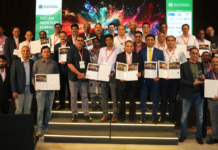
Asian College of Journalism – Journalism in the Age of Surveillance
Nevertheless, the Indian media or sections of it have tried to build up institutions such as the Asian College of Journalism in Chennai. A report in The Hindu on 13 November 2021 by the paper’s special correspondent describes a virtual session, ‘Journalism in the Age of Surveillance’ held the day before. It described Bradley Hope, a veteran UK-based journalist and Pegasus target who took part in the conversation saying, “It’s a simple temptation for governments, people in charge to use these spyware to surveil their enemies, political opponents, people, journalists, anyone at all.”
Significantly Hope said that journalists in India and many other countries had to deal with these challenges of security as they don’t enjoy the same level of protection unlike in the UK where he is based. Organizations must also look at the ways of protecting their journalists, he said, adding, “It is an important moment in journalism for journalists to retrench from technology. Sometimes we need to leave the phone behind [while meeting sources], I have started to look at my phone as a risk that I carry around all the time.”
“Turning the sealed cover into a fine art”
Meanwhile, Pamela Philipose the ombudsperson of thewire.in wrote on 6 November in her fortnightly column that the supreme court should take a page out of Bombay high court chief justice MC Chagla’s book and make the Pegasus inquiry a public inquiry. She cites the meticulous documentation by the supreme court of the Modi government’s stonewalling the investigation in its 27 October observations that an expert committee be set up to inquire into whether the Pegasus spyware was used to access the data of Indian citizens and whether it was acquired by the Government of India or any central/state agency for use against the citizen, among other important terms of reference.
Philipose cites three points of significance for journalists and then suggests justice Chagla’s example of making the Mundhra inquiry proceedings public (by installing loudspeakers near a window of the hall) as a fit course to follow for the Pegasus inquiry. “This intervention by Justice Chagla was driven by the idea that ordinary people have a stake in issues of financial impropriety at the highest levels of their government although they may not be familiar with the nuances of the case. There may have been many within the power elite of his day who maintained that the Mundhra scam is a matter of little consequence for the ordinary person; that the untutored public would not be able to follow the complicated aspects of high finance. But a jurist like Chagla found such an argument beneath contempt. He saw the public conduct of the proceedings of his Commission as an exercise in democracy, educating people while at the same time making the wielders of power realize that their actions could be subjected to public scrutiny. The large crowds that turned up to hear the proceedings more than proved him right.” Philipose also condemns the legacy of the sealed cover by the previous supreme court chief justice Gogoi who had “made it into a fine art.”