Rahul Print O Pack specializes in printing children’s books, activity-based learning kits for pre-primary and primary levels, as well as book kits for secondary and higher secondary classes. Over the past eight years, the Okhla-based printer, which mainly produces textbooks and books for domestic consumption, has installed three Heidelberg CS92 4-color presses as well as a Heidelberg 8-color SX102 perfector.
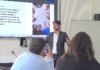
During our recent visit, Rahul Soni of Rahul Print O Pack shared the lessons he learned on his visit to the Bologna Children’s Book Fair, held from 31 March to 3 April 2025 in Bologna, Italy. According to him, in Indian printed books, “we (as the printing sector) are nowhere” to the work done in Italy, which is mostly sourced from China.

Creativity in children’s books
“The creative elements I came across in board books, such as die-cut inserts and pop-outs in the same book, and even wheels attached to books, are interesting – those books are like toys. They are not just like ink on paper; it’s a whole different dimension altogether. They engage you, and that is one thing Indian printers and even publishers need to harness. Indian publishers in children’s books are mostly producing plain-vanilla board books. The bells and whistles of the international children’s books depend on what the content demands. If Indian publishers design such books and ask us, as printers, to deliver, we will start investing in machines that help us produce such books,” he said.
Relevance of physical books
Soni said there is a lot of noise around print books becoming obsolete since digital machines came into play in the early 2010s. “I can now vouch that AI or no AI, digital or no digital, textbook-based learning is still the most sustainable, scientifically most effective and the most affordable medium of education. It is the most widespread form of educating and informing students,” he said.
Though physical books will never be replaced, digital media will complement them in the form of additional supplements, video-based learning through augmented reality (AR), and QR codes. Books will be a mainstay, even in trade publishing, he said. Although many people have a Kindle, they use it only when traveling due to baggage constraints. “It is a scientifically recorded fact that digital cannot replace the tactile experience of physical books.”
“In the US and Europe, there was a time when school print volumes went down due to digital curriculum and laptop- and tablet-based learning. However, physical textbooks have come back as they have realized that digital media doesn’t necessarily lead to effective learning outcomes. Digital study, in fact, hinders learning as it limits the attention span,” he added.
Exports – the best growth frontier
According to Soni, he realized the need to tap into the vast export market and steadily build a base of international publishers. “Export is a massive market, and they are at a whole different level of book printing. There is no seasonality in exports and publishers plan purchase orders for the whole year at one go. Exports are the best growth frontier in the long term.”