The Indian publishing and printing industries are large and fairly resilient despite the overall sense that, reflecting the general cultural and economic environment, there are at times setbacks in the implementation of a constitution that embodies principles of equity and freedom. To a large extent, our constitution is quite advanced and almost futuristic and overly optimistic in its attempts to impose a level of homogenization and modernity on a large populace with many geographical, cultural, and economic disparities.
Every type of minority in India, whether in terms of ideology, beliefs, sexual orientation, or social and economic practice, is large in numbers. Not only does every minority, including taxpayers, feel that it is discriminated against, but even the religious majority feels aggrieved, that despite its numbers, it cannot dominate and ride roughshod over every activity and institution. The constitution and the experience of innumerable central and state elections, in which the majority of the population and enfranchised voters participate, are key to the framework of a resilient democracy.

However, no democracy is static; in each village, city, state, and country, it generally evolves and changes – the constitutional framework and its practice inch forward and backward, by legislative improvements, dilutions, and even regressive amendments. The enforcement of laws and social order can bring various improvements, and these are generally reinforced by the courts and their judgments, whose legal interpretations may be seen by citizens as the guardrails that align contemporary society with constitutional intentions, freedoms, and limitations.
At times, there are setbacks, such as the unnecessary attacks and jailing of authors, journalists, historians, public intellectuals, and activists. The harassment and censorship of especially women and language journalists, as stated in our article in this issue about the 8th March Press Club of India webinar, concerns us.
As writers about the publishing and printing industries that are based on the dissemination of knowledge, technology, and information, these ongoing struggles also concern us, as does the expansion of the constitutional right to education that is touched on by other articles in this issue. The not-so-secret ingredient of our industries is better education and skilling.
Initial effects of war on the publishing and printing industry
Our industries and the economy in general also have to contend with wartime. While in the last 78 years several wars have been simultaneously raging in one place or another at any given time, the most recent manifestation caused by the illegal attack by Israel and the USA on Iran (according to long-forgotten international covenants) is likely to impact our economy. Even as our industries are generally robust, as I write this after three weeks of death and destruction, it is still too early to estimate its overall or eventual impact on these industries, according to those with whom I have spoken.
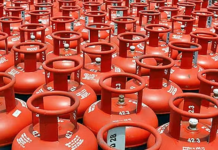
Nevertheless, one printer points out that while input suppliers in Asia seem resilient, and have not raised the price of their materials notwithstanding some logistical issues, domestic suppliers have been quick to at least nominally raise prices, in what is described as a “knee-jerk reaction.” There is already an increase in the local price of pressroom chemicals, and ink prices have been raised by some global manufacturers. Commercial gas supply is constricted, and prices have risen. This is directly affecting the operation of generators, logistical equipment, and adhesive drying systems for book binding. Energy costs are bound to affect the cost of paper production, although apart from imported newsprint, market prices are not yet showing this in general.
For book-printing exporters, there is also a significant rise in the cost of air-freighting books, with fewer cargo-bearing flights that normally transit the Middle East. The Indian contingent of book-printing exporters at the recent London Book Fair seems to have found customer interactions quite positive, showing no disruptive effects of the war.
For various reasons, our country and economy are resilient, with numerous social systems, and our experience of natural and man-made disasters, floods, and famines. However, there are areas where our national self-sufficiency needs to increase, such as the supply of newsprint and some publication papers for a country that still demands printed newspapers and is a large consumer and reasonable exporter of books.
We also need more self-sufficiency in energy since it seems that no matter how high our per capita income or GDP, the cost of imported inputs for the energy sector remains at 4.8% to 5% of the GDP. This may rise significantly as every US$ 10 rise in oil prices will add US$ 15 to 18 billion to our imports, even as the Rupee devalues.