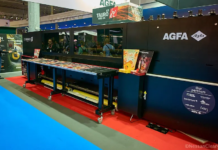
According to a Market Research Engine study released in April 2020, the global inkjet printing technologies market is forecast to grow at a CAGR of 10.18% from 2018 to 2024. While the press release selling the study does not reveal the magnitude of the combined global inkjet printing market, our rough estimate at IppStar www.ippstar.org is that it was perhaps in the region of US$ 100 billion in 2019. (Please keep in mind that all the market studies quoted in this article were released pre-Covid-19.)

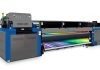
The high demand for large format inkjet printers is due to their extensive use for every application from a home to office to industry for 3D prototyping and manufacture. Vehicle wrapping, textile printing, and outdoor and indoor advertising signage are globally ubiquitous. They are used industrially for labels, carton, flexible packaging, commercial, and book printing. Photographers also use these to replace chemical processes. New technologies using hotmelt inks and additive manufacturing using 3D inkjet printers attract new applications, including food, medical device, and pharma industries.

The global inkjet print technologies market is broadly segregated into two technologies — the continuous inkjet (CIJ) and the drop on demand (DOD) markets. Based on their application from home, commercial offices to the industrial, the actual devices are segmented — as desktop, multifunctional, large format, grand format, inkjet presses — both sheet and web-fed, and finally digital textile printers.
Major manufacturers include Aeoon Technologies, Brother International, Canon, Colorjet, d.gen, Domino, Durst, Epson, Fujifilm, HP, Hollanders Printing Systems, Kodak, Konica Minolta, Kornit, Mutoh, EFI, Mimaki, Miyakoshi, Monotech, Mouvent, Mutoh, Ricoh, Roland DG, SPG and Xerox. Producing devices for sale to the above segments, they generally procure the inkjet heads from vendors such as Dymatix, Seiko-Epson, Kodak, Kyocera, Memjet and Xaar.
Some printer manufacturers make their heads, and integrate the inkjet heads in their arrays and heads (either stationary or scanning) with their own or outsourced RIP software. The arrangements of nozzle density, heads and arrays, and transports and the types of inks and curing units are each are generally unique to each substrate and solution.
Digital textile printing market outlook – 2027
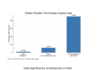
Within the digital inkjet market, the global digital textile printing market is still relatively small and estimated at US$ 2.2 billion in 2019 by a recent research study, which also projected this market to reach US$ 8.8 billion by 2027, outgrowing the overall inkjet market at a CAGR of 19.1% from 2020 to 2027. Another research company values the digital textile printing market at US$ 1.67 Billion in 2017 while expecting it to reach US$ 2.31 billion by 2023, at a CAGR of 5.59% in the five years between 2018 and 2023. Expert informants tell us that digital textile printing has doubled its share of the overall textile printing market in the past three years.
Digital textile printing is an inkjet-based method that allows the print of designs on any fabric and even on ready-made garments. Of the two types of digital textile printing, the first and most affordable is dye sublimation used for T-shirts. This technology prints on a paper from which the images are transferred to the textile or garment surface. The second is a more industrial technology where the inkjet heads print directly on an appropriately primed textile surface and cured and finished using heat or steam.

The fabric is fed into the digital printing device using a transport or traction roller for ink jetting. The material is then finished using either or steam or heat treatment. Additionally, some inks need washing and drying. Due to the environmental issues of dying and printing textiles using conventional textile printing, which requires large amounts of water and discharges of wastewater, garment manufacturers are showing more interest in digital printing than dyed fabrics. Design customization and short-run digital textile printing are also factors.
Global digital textile printing ink market – 16.3% CAGR through 2026
The inks used in digital textile printing depend on the type of fiber, such as cotton, silk, or polyester. Based on the fabric, the various types of inks are described as reactive, acid, direct disperse, sublimation, pigment, and others.
In a recent study report by Allied Market Research www.alliedmarketresearch.com the global digital textile printing ink industry was valued approximately US$ 1 billion in 2018 and is expected to grow at a CAGR of more than 16.3% over the forecast period 2019-2026.
According to the press release, the digital textile printing ink market report provides a comprehensive analysis of the digital textile printing ink market segments, including their dynamics, size, growth, competitive landscape, and emerging opportunities of the global industry. Major market players covered in the report include SPG Prints, DuPont, KIIAN Group, and Sawgrass.
Inputs from https://www.marketsandmarkets.com/