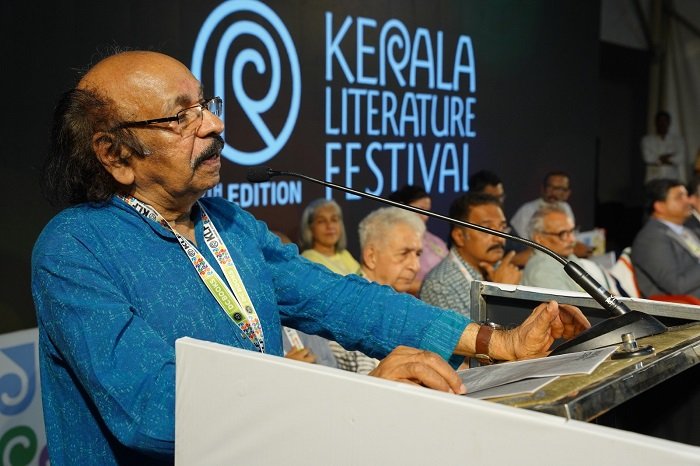
Indian Printer & Publisher’s Priyanka Tanwar had a conversation with K Satchidanandan, renowned Malayalam poet and the director of the Kerala Literature Festival, on his body of work, major themes in his writing, recent works, Malayalam translations, his relationship with DC Books, and the festival and much more.
Edited excerpts:

Indian Printer & Publisher (IPP) – You have written a lot of poetry and have done anthologies. Tell us about your body of work.
K Satchidanandan – Yeah, including the edited works, it must be more than 200 or so. My own poetry collections would be more than 30, including some selections and collections. Some six years ago, I wrote my first short story. I’ve been writing short stories. I’ve been writing poetry for children for 10 years now. I keep writing articles on social issues and even political issues.
IPP – What major themes do you explore in your poetry and writing?
K Satchidanandan – I believe poetry is a kind of conversation with oneself, others, with nature and a with what you call the cosmos or the whole universe. I have a collection of travel poems as I’ve traveled to six continents. I have written about meeting people. I’ve written poems about Malayalam poets whom I revere and respect, and to whose tradition I belong. I’ve written poems about my friends who are no more. The themes are varied and the range is wide.
IPP – You have edited anthologies and short story collections. Would you like to tell us about that?
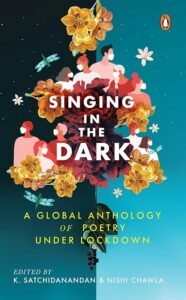
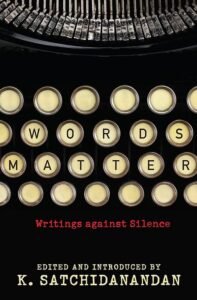
K Satchidanandan – In fact, the last two collections I edited were with a poet writing from America, Nishi Chawla. Both were published by Penguin. The first book, Singing in the Dark, talks about the dark Covid days. But I wanted to balance it with optimistic and hopeful poems. So, we brought out another anthology called Greening the Earth, which mainly carries poetry about the environment, greenery, trees, and all that is beautiful. I edited a collection of what I call resistance articles called Words Matter, published by Penguin. That was in the backdrop of the murder of major writers and journalists some years ago, including Gauri Lankesh. I had articles about them, by them, and articles generally about the atmosphere of repression and suppression growing around us.
IPP – You are a poet, you write and edit anthologies and short stories. Which medium is your favorite and why?
K Satchidanandan – I am primarily a poet. It is with great surprise that people found me writing stories, even though they welcomed it. I have three collections of stories, and I may write more if I get enough time. For me, poetry is an apt and adequate medium for expression. It may not be, for telling stories, even though we have had epics where stories were told. There are very few who write narrative poems these days. I have also written a few. In Malayalam, we have a tradition of narrative poetry.
Poetry is also a language art because it becomes poetry by the way you use language, images, and metaphors. You don’t often speak directly, but there is an indirectness in the way you express yourself. I enjoy that indirectness, it is often called the suggestiveness of poetry. It has hidden and indirect meanings and very unusual ways of expression. I innovate and use different kinds of styles. I keep changing the way I look at things and the way I express things.
IPP – You have written a play Guru on one of the greatest social reformers of Kerala. Tell us about it.
K Satchidanandan – It is based on the life, poetry and philosophy of Sri Narayana Guru, who is considered a major guru, social reformer and poet, one of the major forces behind the Kerala Renaissance.
I wrote a play on Guru, even though I don’t consider myself a playwright (though I had written one full-length play on Gandhi’s last days, and three adapted one-acts earlier, besides translating a few plays by Brecht, Yeats, Ben Caldwell, among others) I used a lot of poetry and many of Guru’s poems in the play. I used poems written about the Guru by some of our great poets like Kumaranasan and others. It is a very poetic kind of play. It begins with the childhood of the Guru and his meditation, his growing up and becoming a Sanyasi.
There are a few books in English about the Guru, which can help non-Malayalis understand him and quite a few books in Malayalam collecting, and commenting on his works. I read about 27-28 books to write this play. Not that I used all of them. The play may be of one-and-a-half to two hours, but I try to communicate the message of the Guru – that of equality and humanism. It has been staged twice and I keep revising it after each staging.
IPP – Tell us about your association with DC books.
K Satchidanandan – Most of my important collections of poetry, critical writings, and essays on other subjects have been published by DC Books. When they thought of a literary festival, the first in Kerala, they asked me to be its director.
I had planned the first two editions of the Kerala Literature Festival entirely. I chose the people to be invited from inside and outside Kerala. I chose the topics. It was taking a lot of my time as a writer, so now I am only helping them as I have given them two very good samples they can follow and make their own programs. As the KLF director, I am indebted and connected to them. It’s a very deep and profound kind of relationship.
IPP – Tell us about your experience as the director of the Kerala Literature Festival
K Satchidanandan – I am still its director, but I also do some programs around my own poetry books and short story collections.
The Kerala Literature Festival is a great opportunity for its audience – a very large number-to meet people from outside Kerala or outside India. For me, it’s a kind of opportunity to connect, socialize and to discuss new ideas and trends in literature. I enjoy being here. I have been here every time since 2016 when we started the KLF, except during the Covid year when we had a virtual festival.
IPP – KLF introduced the Children’s KLF last year. Would you like to share something about that?
K Satchidanandan – We always had sessions for children, or it was like a kind of offstage festival. In the 2025 edition, we had a proper children’s festival. We had a lot of children’s writers coming and talking to children. We thought it should be a proper parallel festival and not just some marginal sessions.
Calicut is the best place for a festival of this kind, because we have a lot of schools, colleges, a major university and a medical college here. A lot of our audience consists of curious students who study literature. We discuss not only literature; we discuss medicine, social issues, genetics, AI, history, politics, and many sciences.
IPP – Poetry is not that popular in India as a genre. What steps can be taken to promote poetry?
K Satchidanandan – Kerala is an exception. We have a very good readership for poetry, though not as much as for novels. Many of my own books run into several editions. This is true about highly established poets.
Now that it has become easier to publish, you can start a blog or publish on Facebook or Instagram. You can compose it on a laptop or a tablet and just give it to a publisher. Many publishers are ready to publish poetry if you provide them with the little money they need for printing. I am not very pessimistic about the future of poetry because now we have the new media, eBooks, and social media.
We have hundreds of poets in Kerala. Poets are considered heroes. This happens perhaps only in Kerala and Bengal, and to some extent in Karnataka and Maharashtra, but I am not so sure about other states. Hindi, for example, has had very great poets from the beginning. But, publishers are, however, reluctant to publish, or they take money to publish them. Very few copies are sold. This is true about most of the Indian languages. So, perhaps poetry is taking a kind of turn. One, the language is changing. The young poets in Kerala are writing about everyday life in everyday language. Second, performance poetry is becoming important in foreign languages and, slowly, in India. This may make poetry more popular and bring it closer to the people.
IPP – Tell us about some books, originally published in Malayalam, and translated into English that you would like to recommend to our readers.
K Satchidanandan – There are quite a few translations in English. One is Hangwoman (Arachar) by K R Meera, which is about a woman appointed to hang people. Another popular book in Malayalam is Aadujeevitham by Benyamin. In English, it is called The Goat Life. There is a classic novel by O V Vijayan called The Legends of Khasak, which was translated by the author himself and published by Penguin. Recently, a novel by V J James has been translated. It is called The Atheist (Nireeshwaran) one who does not believe in God. There is one translation by Jayasree Kalathil called The Moustache, of a novel Meeesha written by S Hareesh, which became very controversial in Malayalam.
If you go farther into the past, some of M T Vasudevan Nair’s novels have been translated into English, mostly by Geetha Krishnankutty. Some novels by Basheer have been translated by British linguist and scholar Ronald E Asher.
In Malayalam, we have a tradition of translation. Even some of the youngest novelists such as Sheela Tomy, Jisa James and Haritha Savithri have been translated. Now, we have some good translators. We have J Devika, Jayasree Kalathil, Fathima E V who lives close to Calicut and teaches English, and Kabani Chandran, an IAS officer. These are very good translators, and so we are getting good translations.
Malayalam is getting a lot of attention internationally now with all these translations into English.