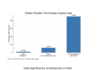
The Indian digital press story reflects a cooling in the past two years, with perhaps a resumption of earlier trajectories in the current year. The installation forecast for the past financial year did not materialize fully. Instead of 2,800 new digital presses, the number of installations was close to 2,500, which would include 60% light production and 20% monochrome engines. This implies that about 20% of the machines are the faster and more complex color production engines, sometimes with more than four colors and heavier duty cycles.
However, in the first half of FY 2025-26, growth to earlier levels seems to have come back, and the earlier target of 2,800 new engines is likely to be achieved and may even be exceeded. According to our industry sources, the current year, from April, is witnessing a growth of around 12% in the first six months, and some of the OEMs are optimistic that the forecast will be achieved in the current financial year.

Experts suggest that there is a general growth in print, which includes both offset and digital presses. However, despite the overall growth, there is also a tendency in certain projects in particular markets for hypercompetition amongst digital printers that greatly erodes viable margins.
Light print production machines are presses designed for businesses that need to handle moderate print volumes, bridging the gap between basic office printers and large commercial digital presses. Several manufacturers have indicated that the entry-level market has immense potential, and that is where a majority of them are focused.
These machines, offered by brands such as Konica Minolta, Fujifilm, Canon, and Xerox, often have advanced features such as print speeds up to 66 ppm, professional-grade image quality, and media versatility for jobs like printing brochures, marketing materials, and internal reports.
On the heavier-duty digital presses, embellishment with UV and metallic effects has become important. Printers with more than one or two color production presses buy either inline options for quality and color control and foiling, or off-line embellishment machines such as the MGI or the Indian made dSpark range by Monotech.
Growth in smaller towns
The penetration and growth of digital presses in smaller towns is still gradual despite valiant outreach and awareness efforts thus far. It is not economical just to sell a single press into a small town. It is also important for the new players to generate sufficient volumes to support the entire ecosystem, which includes servicing and consumables such as toner supplies.
The cost of servicing and engineers is high, perhaps requiring a cluster of a dozen or fifteen machines in a proximate area for maintaining the engineers and the toner supply chain. The outreach to smaller towns with drum and toner digital presses has not yet delivered sustainable returns for the digital press manufacturers. There could also be the challenge of used digital presses coming into the market.
Webfed inkjet
The high forecasts for the influx of webfed inkjet presses into our market have also not reached some of the more optimistic numbers that were forecast. Apparently, the performance of inkjet book printing is not always up to the quality required by some of the book printing specialists. Additionally, there is considerable interest in numerous Chinese manufacturers using relatively inexpensive heads that are challenging the earlier influx of inkjet printers.