Over the years, the book printing landscape has undergone significant technological transitions. Notably, Inkjet technology has emerged as the future, showcasing remarkable advancements in resolutions, speed, quality, and the economic feasibility of print processes.
Inkjet printing is a non-impact printing technology where droplets of ink are propelled onto the paper. While traditional offset printing remains faster for large print runs, inkjet printing has seen speed improvements and can now produce books at rates that make them competitive for many applications.

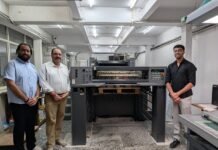
According to Tejinder Singh GM Sales at Monotech Systems, previously confined to short runs, inkjet is now a viable solution for medium to large print runs, introducing value-added features such as variable data, personalization, and the inclusion of multiple SKUs in prints. He said “This technological evolution has substantially increased overall print editions, marking a transformative era in book printing. Currently, book printing predominantly relies on the conventional offset method. However, this approach presents notable challenges for printers.”
In an interaction Singh talks about the challenges, he said “The return on investment (ROI) for conventional printing is optimized at around 1000 copies, making the cost per unit significantly higher for smaller print runs. The conventional method is time-consuming as it requires a substantial duration to produce the initial copy, impeding the efficiency of on-demand printing. However, conventional technologies struggle with VDP, posing a significant challenge for printers seeking to personalize content.”

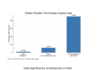
To address these challenges effectively, printers are increasingly transitioning to digital platforms. Digital printing offers solutions for short runs, facilitates quicker turnaround times for print-on-demand, and enables seamless integration of variable data printing. This technological shift not only mitigates existing challenges but also positions digital printing as a leading technology in terms of Return on Investment (ROI) in the dynamic landscape of book printing.
“Beyond the aforementioned printing challenges”, he adds “the commercial aspects of this market segment present additional considerations related to space, inventory management, and environmental impact. Conventional methods necessitate substantial space for inventory storage due to print run requirements and varying demand. Furthermore, the use of certain chemicals poses a threat to the environment.”
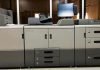
In response to these multifaceted challenges, Monotech’s project has been focused on transforming the printing environment. “We have achieved this by adopting water-based inks, mitigating environmental concerns, and simultaneously reducing printing costs, all without compromising on printing speed. This strategic approach not only addresses the immediate challenges faced by the industry but also aligns with sustainable and cost-effective practices for the future. To date, we have successfully sold five machines, with an additional three orders currently in progress, scheduled for completion before March 2024. Notably, two customers have placed repeat orders, attesting to their satisfaction with our products and services”, Singh said.
The trajectory for the book printing segment indicates a pivotal shift towards digital platforms, with inkjet technology emerging as a key driver for enhanced ROI and speed. While conventional offset methods may experience a reduction, they are expected to endure in the market, particularly for long print runs.
While inkjet printing has made significant strides, it’s important to note that the choice of printing technology depends on specific project requirements. Large-scale commercial printing may still rely on offset printing for its cost efficiency in high-volume production. However, for the dynamic and evolving landscape of book publishing, inkjet printing holds considerable promise, particularly in meeting the demands of shorter print runs and diverse content.