For any industry there is room for two to three players to grow profitably for a sustained period of time. In today’s capital-intensive and price-sensitive print market, consolidation by way of strategic alliances, joint ventures, takeovers and minority stakes is the way ahead for the industry to grow and face the competition from digital and electronic media. In metropolitan cities like Mumbai, circulation of Hindi dailies has become stagnant as the majority of readers prefer English news dailies.
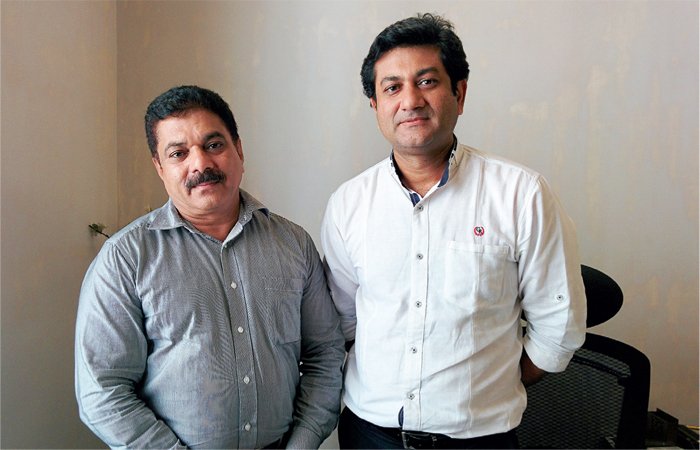
Sanjay Desai, general manager at Dainik Dakshin Mumbai, spoke to Indian Printer & Publisher about the challenges in circulation, “Dainik Dakshin Mumbai is a 12-page four color printed broadsheet circulated in Mumbai Metropolitan Region for the past five years. In the initial phase, we published the title as Dakshin Mumbai and as the name suggests, readers guessed the news daily comprised information about South Mumbai which became an obstacle for the growth of readership and circulation. So, the management decided to reduce the size of the Dakshin logo and added Dainik with a larger font to the title as Dainik Dakshin Mumbai.”

“Initially, we bore the loss due to the consumption of glazed newsprint. Today, we use 46 gsm NR Newsprint, in order to bear the additional expenses. However, the quality of print is maintained like in other leading Hindi dailies. In order to increase readership, we distributed free copies which have helped us achieve moderate circulation. Presently, Dainik Dakshin Mumbai distributes copies to government officials, businessmen and the working class residing in different sections of Mumbai Metropolitan Region,” adds Desai.
Walking down the memory lane regaling us with anecdotes about his days in Mid-Day, Desai says, “To reach out and introduce Mid-Day among the masses, the dailies were distributed at traffic signals, trains and buses. It was done for the first time and helped us sell 8,000 copies at traffic signals and nearly 18,000 copies through local trains. Apart from this, the Bollywood Lunch Contest and Navratri events were effective marketing campaigns for enhancing the readership of Mid-Day. In the near future, we may implement similar productive methods at Dainik Dakshin Mumbai.”
Based on youth-oriented entertainment and lifestyle topics, Dainik Dakshin Mumbai plans to publish four-page supplements. Similarly, Rashtriya Adhikar is another Hindi news daily which plans to launch new editions for Thane, Pune and Nashik districts. Mahesh Kushalkar, owner of Rashtriya Adhikar says, “As of today, we bring out a single edition 12-page broadsheet with 4-color pages. Our plan is to gradually launch more variants for different regions of Maharashtra. Presently, our existing subscription schemes make it hard to recover the selling cost due to which the news dailies take time to reach the break-even point.”
Within a couple of years we are confident of getting returns on investments as newspapers are sold through vendors. Being a fresh entrant in the newsprint industry, we outsource the printing requirement through an agency. “In the newsprint industry, the initial three to four years are difficult for consolidation. We have plans for expanding our marketing and circulation team,” adds Kushalkar.
As the competition has become fierce, non-English dailies have been keeping their prices down. Both Dainik Dakshin Mumbai and Rashtriya Adhikar are priced at Rs 3 and cash in on real estate and government advertising. These news dailies constantly upgrade their offerings in terms of content, quality, packaging and sales promotions.