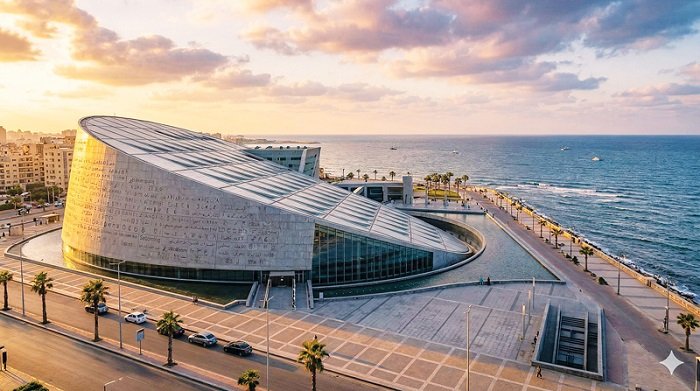
The Bibliotheca Alexandrina is located in the Chatby district of Alexandria, Egypt, near the site of the ancient library Alexander built in the eleven years from 334 to 323 BC as both a center of universal knowledge and a shrine. It is said to have been inadvertently destroyed by the blaze that spread to the city as Ceaser set fire to the Ptolemaic fleet in 48 BC.
Opened to the public on 16 October 2002, the Bibliotheca Alexandrina is a modern library and cultural complex designed by the Norwegian architectural firm Snøhetta, which won the open international design competition held by UNESCO and the Egyptian government in 1988-1989.
On a visit this September, the library’s main structure, a massive 160-meter-wide tilted circular skylight, drew my immediate attention. The structure appears to rise out of the earth and dip below water level, an ancient Egyptian sun disc ascending over the Mediterranean Sea.
The sun disc symbolizes Ra, the ancient Egyptian sun god, considered one of the most significant deities in Egyptian mythology and revered as the creator of the universe and source of all light, warmth, and life. Snøhetta’s modern structure represents the dawn of knowledge illuminating the world from Alexandria once again.
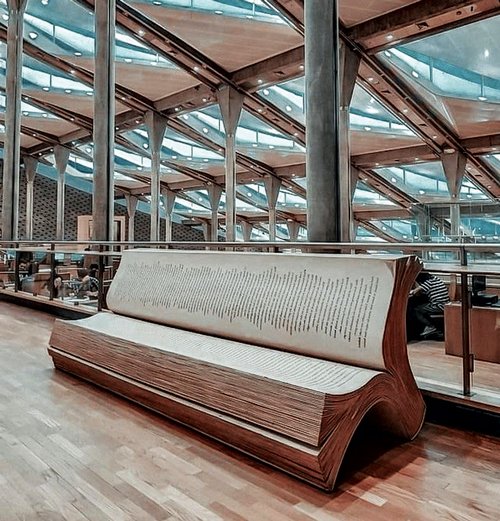
Photo://www.reddit.com
The circular roof skylight of the structure tilts northwards at a 16-degree angle facing the Mediterranean, bringing in indirect northern sunlight through hundreds of aluminum-framed glass panels. It floods the main reading room with natural illumination without harsh direct sunlight damaging the books.
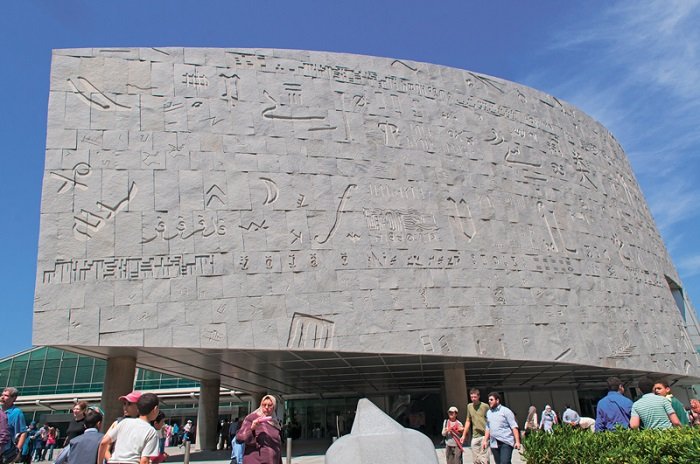
The curved southern exterior granite wall and the angled roof evoke a monumental open book, physically anchoring the building. The Aswan gray granite is sculptured with letters, glyphs, hieroglyphs, musical notes, and symbols from over 120 ancient and modern, known and extinct human writing systems. It celebrates the raw building blocks of human communication before they become typography and text on a page.
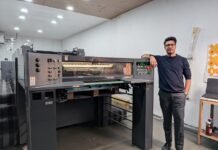
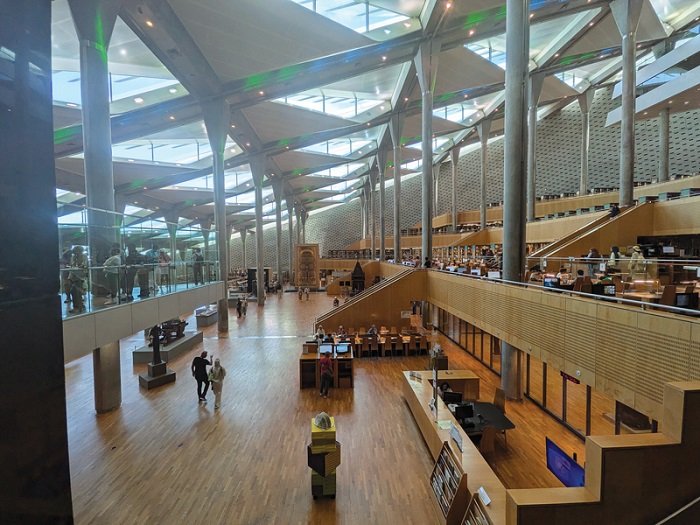
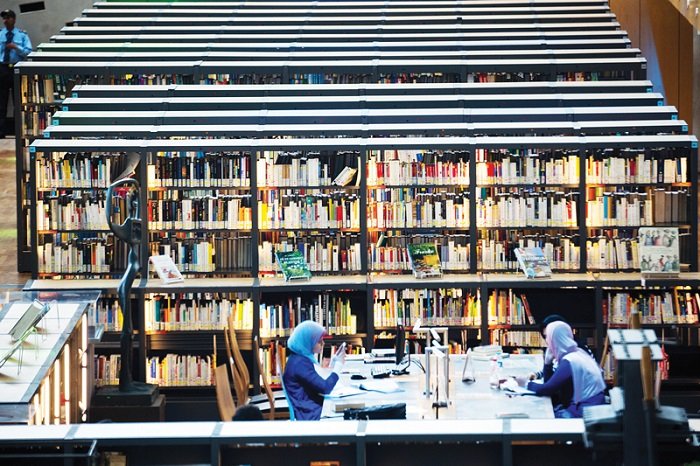
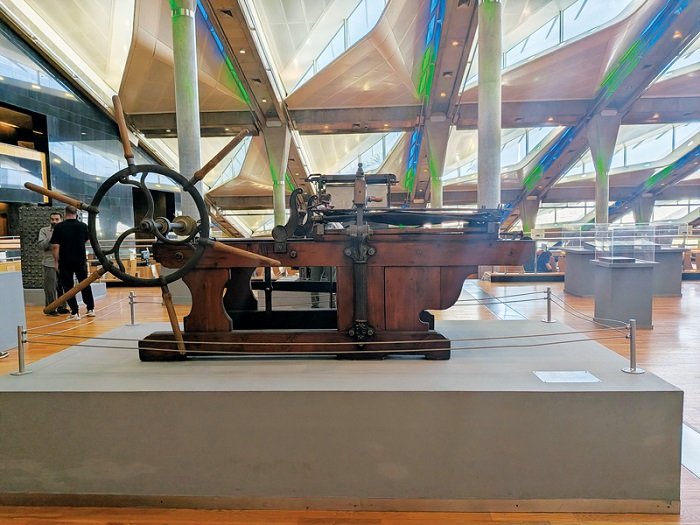
The main interior space is a reading hall, a cascade of stepped terraces containing terraced book stacks and reading tables. Similar to the ancient universal library and Mouseion, the Bibliotheca Alexandrina houses books and permanent exhibitions. An exhibition on the history of printing comprises antique printing presses, movable typecases, and lithographic stones that trace Egypt’s print evolution.
Original lead typefaces, composing sticks, and wooden typefaces tied to Cairo’s historic Bulaq Press demonstrate the craft of typesetting Arabic letterforms by hand. The exhibition displays limestone lithographic slabs, copper plates, and woodblocks used for printing early maps, illustrations, and calligraphic titles before the onset of hot metal typesetting and offset lithography. Platen presses used during the early days of Egyptian publishing are shown. Typesetting equipment that revolutionized newspaper and book production across Egypt and the Arab world in the late 19th and 20th centuries is also displayed.
The Bibliotheca Alexandrina houses a permanent exhibition and special collection dedicated to Egyptian Nobel laureate in literature, Naguib Mahfouz. The corner houses nearly 2,400 books from Mahfouz’s personal library, including rare first editions of his own works, international translations in dozens of languages, reference encyclopedias and dictionaries, and some of his personal memorabilia.
The Bibliotheca contains four major museums – the Anwar el Sadat Museum, dedicated to the memory of the third president of Egypt; the Antiquities Museum; the Manuscripts Museum; and the History of Science Museum.