As the Indian economy grows, layers of consumption increase beyond the simplified categories of rural and urban. In measuring prosperity and aspirational growth, educational enrollment and outcomes could be good benchmarks of growth. While the total number of schools in the country has stagnated in the past decade, government and government-aided schools have continued to decline to 10,85,000 (less than 74% of the total), while private schools have increased to approximately 342,000 (or less than 24%).
According to government data (ministry of education USISE+ report 2025-26), children enrolled in schools number 247.22 million across pre-primary and higher secondary levels (classes 11 and 12). The potential number of Indian school-going children (ages 5 to 17) is, according to our estimate, 340 million children, which implies an out-of-school population of 93 million, roughly double the government’s estimate of 47 million.
The trend of private schools increasing and government schools closing was well established in IppStar’s study of book production and consumption in India and Bangladesh in 2019 and 2020. It is partly a reflection of the decline in government education budgets and consumer preferences for private schooling. A recent ASER study indicates that “Foundational literacy and numeracy” has improved government education outcomes in the past five or six years, particularly in some of the northern states. In explanation, experts point to better use of limited resources and the positive influences of increasing wealth and mothers’ education on these improved outcomes.
The effect of this privatization trend on school books has been fairly positive. For instance, private schools increased in number by .62% and enrollment by 2.94% in FY 2025-26. These schools tend to better retain students toward graduation and consume better-quality books in higher numbers. General trade book production has also grown, both in the number of titles and overall volumes, as this niche layer with regional characteristics, content variety, and accessibility has also grown.
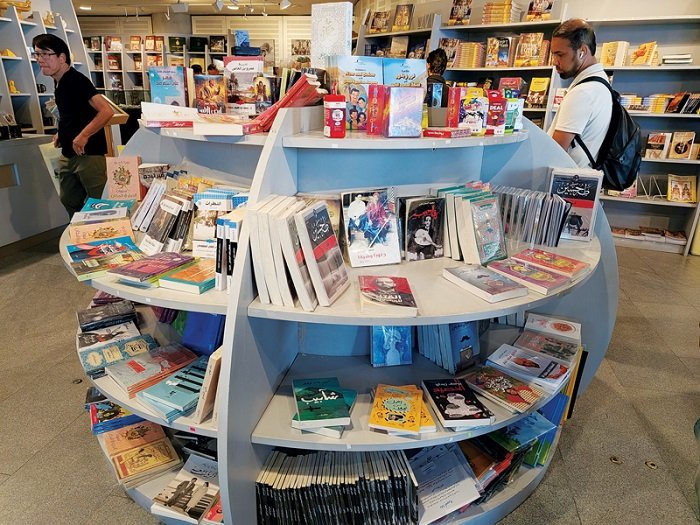
Photo: IPP
Book production growth
Government textbook production received a slight push from the central government’s desire in October 2024, with its new social science ‘21st century’ curricula entrusted to NCERT and the planned tripling of production to 150 million copies in the 2025-26 academic year. NCERT also tied up with Amazon for the availability and ease of delivery of these books at the maximum retail price.
There have been several hiccups in this project, which in any case would have added a small percentage to the textbooks produced in the country. Nevertheless, government textbooks contracted by state education boards and private textbook production have continued to grow significantly, particularly in line with the increase in private school enrollment.
Exports flat
However, book printing exports have faltered because of supply chain and logistics disruptions caused by the most recent wars in Europe and the Middle East. There is a shortage of containers and ships docking at Indian ports while raw material and energy costs have risen.
The annual turnovers of the 10 leading Indian book printers have been flat in the last reporting year, with one or two exceptions. Profits have been flat with similar exceptions. For the three largest book printers and exporters, profits have declined. Indian book exports, which ranked seventh globally just a couple of years ago, are said to have recently declined in rank to 21.
New and second-hand 8-color perfectors and bindery automation
In view of demand growth expectations for educational and general books and the eventual return of exports, we observe a long-term structural trend in the country in terms of its infrastructure and capacity building for book production. It is hoped that the wars and tariffs will eventually end, bringing down the raw material and energy costs, as well as improving book export logistics.
In the past few years, the annual induction of new sheetfed 8-color perfecting presses has gained traction. In what is now an established trend, at least a pair of new 8-color perfectors and perhaps as many as 4 to 6 good-quality used ones are being imported and installed. The number of brand-new such perfectors is now more than a dozen, and good-quality refurbished machines number more than two dozen.
As we have previously written, the two new machines installed this financial year are from Heidelberg and Komori. Both manufacturers, as well as RMGT, which already has 6 installations of new 8-color perfectors, anticipate further orders that are likely to be installed in the next financial year.
Significantly, in addition to the 8-color perfectors, a good number of new 2-color or 1 + 1 sheetfed offset perfectors are also being imported. Perhaps as many as 4 or 5 of these Komori machines will be installed at book printers by the end of the financial year. These purchases are reestablishing the requirement and necessity of buying new monochrome offset presses, which a couple of years ago faced extinction in the face of digital monochrome inkjet presses.
The demand by publishers for quicker turnarounds and throughput in book production with reduced handling and work in progress has driven the growth of 8-color perfectors and simultaneously created demand for automation in the bindery, typically a cost center. The domestically manufactured Bindline, which provides inline automated book production up to 5,000 volumes an hour, has gained traction with about 10 installations in each of the past two years, domestically, with export demand also picking up.
As the book production infrastructure in the country aligns with the overall quality demands and the need to reduce wastage and work in progress, a significant increase in installations of these automated lines is expected in the 2027-28 financial year.