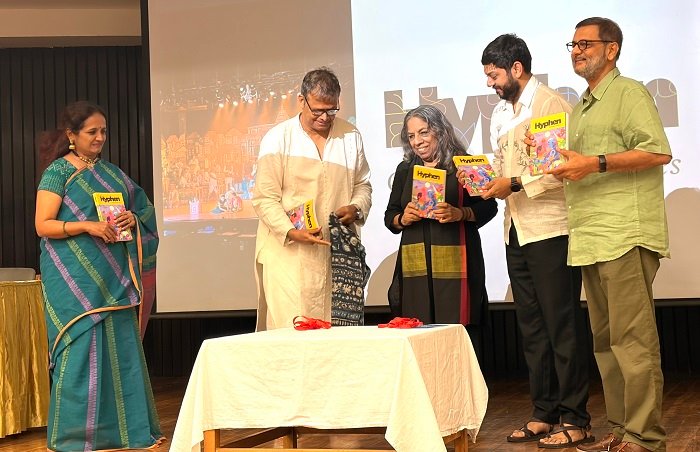
Literature and translations were the focal point of discussions at the Delhi launch of a new journal, Hyphen, dedicated to Indian language literature, held in August 2026 at the India International Centre. Hyphen is published under the Bahuvachana Trust and founded by Kannada author Vivek Shanbhag and edited by Deepa Ganesh.
Hyphen envisions learning from the distinct voices of India’s many languages, carrying them across borders of state, of language, of infrastructure, and connecting them with readers through the act of translation. Hyphen aspires to be more than a journal – a cultural movement that celebrates India’s multilingual literary wealth.

The event was addressed by author and translator, Jerry Pinto, feminist publisher and author Urvashi Butalia and Carnatic musician Rithvik Raja.
For Hyphen’s first issue, Pinto translated Pradnya Daya Pawar’s essay A Diamond is Forever from the collection Ambedkari Aai (Ambedkarite Mother).
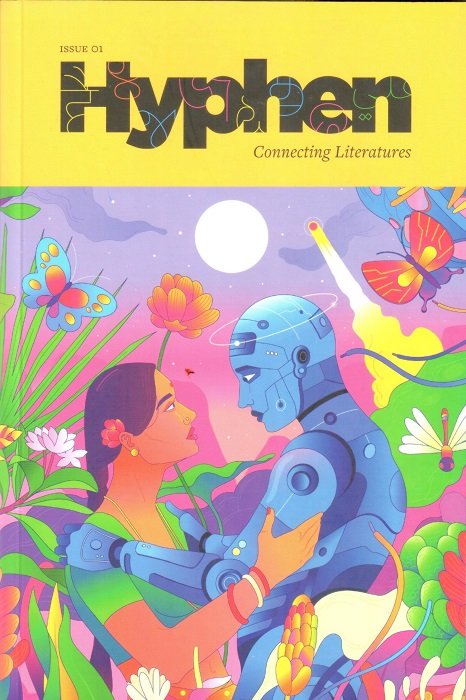
According to Vivek Shanbhag, founder and publisher of Hyphen, the idea behind the journal was to bring to the fore the discussions about books and, especially, criticism. “I feel modern Indian literature, to find its rightful place in global literary conversations, it must be supported by an ecosystem. The vision of Hyphen is to create this ecosystem.”
Hyphen, at 250-plus pages in royal size (6¼ × 9¾ inches), will be published biannually. Every issue will put a spotlight on one language so that it can be discussed in depth and detail. The focus of the inaugural issue was Marathi.
The website (www.thehyphen.in) has been created with care and with equal attention to its selection and editing process and is aimed at engaging readers between the two issues. While 20% of the content will be from the journal, 80% will be new content. The website is updated twice a week.
Shanbhag said there will be an online bookshop for translations. “We hope that in about two to three years, it will become a one-stop shop for all translations from Indian languages into English.”
The second initiative Shanbhag talked about is a student outreach program, Hyphen Connects. A pilot was done in Karnataka with 18 universities and colleges in Bangalore, Shimoga, Channarayapatna, Mysore, and Udupi.
“We were taken by surprise when we went to these places. The hunger they (the students) have to connect with Indian literature was amazing. About 500 of them have signed up to join hands with Hyphen,” Shanbhag said.
They intend to continue these conversations and engagements via Hyphen clubs in those places, with regular interactions with writers at their universities, he added.
Hyphen will be transported to every nook and corner of the country by DTDC. It will be printed and distributed in the US and UK by STCK.
Explaining the name Hyphen, Shanbhag said, “A hyphen can bring together seemingly unconnected things. We have set out to bring together and present diverse literary traditions through our journal, website and publishing house. It’s a tribute to the celebrated Kannadiga poet and translator A K Ramanujan – A figure who inhabited and connected two worlds and famously described himself as the ‘hyphen’ in Indo-American.”
Jerry Pinto said, “Indian language literature has arrived at a remarkable crossroads. Never before have so many voices been writing, publishing, translating and circulating across regions. Translation stands at the center of this search, reshaping how Indian language writing travels across borders and enters the global literary economy.”
“Is it possible for a literary initiative of our times to be shaped by a different set of questions – Which voices remain untranslated? Which languages are absent from national conversations? Which communities continue to speak yet remain unheard?” Pinto continued.
Conversations are a method of discovery at Hyphen, he said, adding that it’s through conversations with readers, writers, academics, publishers, and artists that one encounters the overlooked book, the forgotten writer, or the extraordinary story that has quietly slipped through the cracks of literary fashion.
“Marathi emerged with enormous force as we looked for our bearings and, therefore, it became the language of focus for the first issue. Here was a literature deeply rooted in its own traditions yet unafraid of experimentation. A literary culture standing at the threshold of new possibilities and new forms of engagement,” Pinto said.
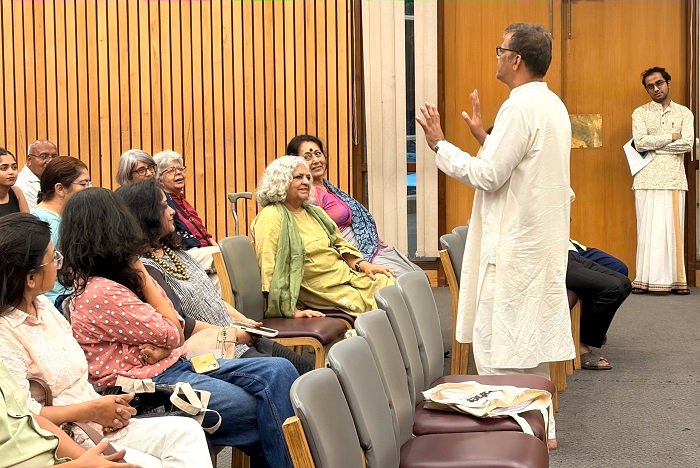
According to Pinto, as reading habits shift in the digital age and the younger generation encounters literature through their phones, social media and translation, the question before us is not merely how literature survives but how it continues to matter. “A vibrant literary culture depends on acts of reading that move in both directions. Readers who remain committed in their own languages and readers willing to encounter other linguistic worlds through translation.”
Urvashi Butalia said, “Translation gives us access to a much more capacious world in which we can hold different literature and different languages. I was reminded of a conversation I recently had with a friend, where we were talking about punctuation, and the hyphen. We were talking about whether the hyphen is something that connects, or that separates, or that splits, or that is a pause in language.”
Rithvik Raja said, “I think the great thing about what Hyphen does is it brings conversations, it puts collaborations together, and it gives way for new ideas.”