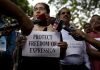
UNESCO’s flagship report on global trends in freedom of expression and journalism points to a historic 10% decline in freedom of expression globally between 2012 and 2024 – a consequence of the alarming rise in self-censorship by journalists and the attacks they face, both in real life and online.
“Freedom of expression and information is not an option: it is the very condition for lasting peace. Faced with a historic regression, we must act to protect and defend everyone’s right to think, write and inform. UNESCO will continue leading global efforts to strengthen pluralism and ensure that diversity is not only protected but actively fostered,” Khaled El-Enany, UNESCO’s director-general, said.

The World Trends in Freedom of Expression and Media Development Report 2022-2025 reveals a 10% decline in freedom of expression worldwide since 2012 – a level not seen in decades. The report also sounds the alarm that in the same period, self-censorship increased significantly among journalists, rising 63%, at a rate of about 5% per year.
Attacks on the rise
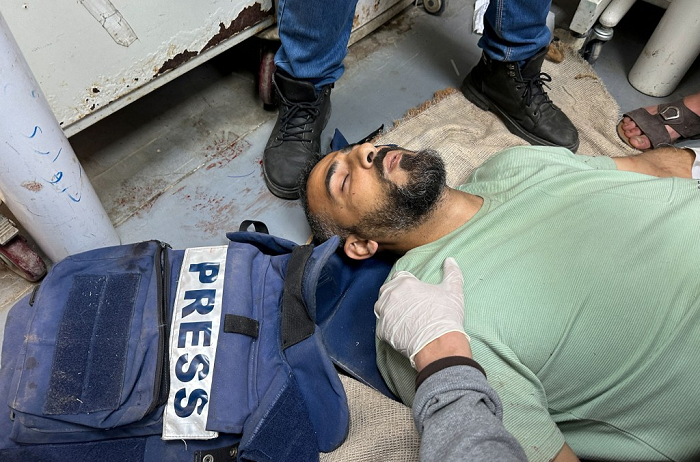
During the reporting period (2022-2025), 186 journalists were killed while covering wars and conflict zones – a 67% increase compared to the previous period covered by the report (2018-2021). In 2025 alone, 93 journalists have been killed, of these 60 were killed in conflict zones.
Despite international commitments to end impunity for killing journalists, accountability is rare. While there has been modest progress — with impunity rates dropping from 95% in 2012 to 85% in 2024 — most perpetrators still go unpunished.
Today, journalists face physical, digital, and legal attacks and threats, forcing them to flee their homes — since 2018, more than 900 journalists in Latin America and the Caribbean have been forced into exile.
Environmental reporters face a heightened risk: UNESCO recorded 749 attacks on journalists covering environmental issues between 2009 and 2023, with a sharp rise in recent years.
Online harassment against journalists – particularly targeting women — has surged. New research carried by the International Center for Journalists’ for UN Women, in partnership with UNESCO, revealed 75% of women journalists and media workers experienced online violence while performing their jobs in 2025, up from 73%in 2020.
Positive trends
Meaningful progress, however, is being made. Between 2020 and 2025, 1.5 billion people gained access to social media and messaging platforms, expanding opportunities for civic participation worldwide.
Collaborative investigative journalism has gained momentum, leading to an increase in significant cross-border investigations. Fact-checking units are growing at many media organizations. And laws recognizing community media are increasing globally, helping to safeguard a vital source of trusted local information.
Solutions
The report sets out practical solutions.
Member states are encouraged to protect and invest in journalism to promote peaceful societies. Defending free, independent journalism must be recognized as a priority. UNESCO advocates cooperation among all actors to ensure transparent access to information, foster accountability, and empower users to make informed choices.
Teaching citizens to critically engage with information and safely navigate social media platforms is essential to building greater trust in today’s information ecosystem. UNESCO has trained over 10,500 content creators from more than 150 countries to build audience trust and ethically shape public opinion, and create engaging content to promote media and information literacy.
The World Trends in Freedom of Expression and Media Development Report is published by UNESCO every four years. The 2022-2025 edition, “Journalism: Shaping a World at Peace,” is based on the contributions, insights, and data provided by over 100 experts in freedom of expression and media development, and derived from hundreds of academic and institutional sources.