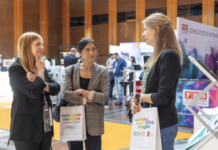
The Media Rumble, a hugely popular news media forum, took place as an in-person event at the India Habitat Centre in New Delhi on 14 and 15 October 2022. The sixth edition, organized jointly by Teamwork Arts and Newslaundry, consisted of insightful, informative, and interactive sessions on some of the burning issues in Indian journalism.
The session ‘Women in Media’ delved into the portrayal of women in Indian media along with the representations of women in society at large. India has deep-rooted notions of patriarchy and gender stereotyping that is cemented by years of repression of women. The session challenged these norms and offered practical solutions with a focus on gender-sensitive coverage in the media. Akash Banerjee, social and political satirist and founder of The Deshbhakt, moderated the panel.

Award-winning journalist Priyanka Dubey spoke about the significance of having women journalists report on rape, gender discrimination, and sexual violence, along with other gender-sensitive issues. Dubey is a recipient of the 2019 Chameli Devi Jain Award, Laadli Media Award, and grantee of the International Women Media Foundation’s Howard Gx Buffet Fund for Women Journalists in 2015. She is a bilingual writer, investigative journalist, and author of No Nation for Women: Reportage on Rape from India, the world’s largest Democracy.
Dubey shared her experience of how women don’t feel comfortable speaking about their stories with male journalists and how it makes sense to invest in and empower women journalists to cover these crimes. Even if it means extra expenditure on resources such as travel and security, the narrative will gain energy and contrast with the prevailing one. A trickle-down approach to creating sensitivity to gender reporting in the Indian newsroom is needed, she said.
The Nirbhaya rape and murder case was a watershed that created a nationwide movement that has reshaped the way the Indian media reports rape. Media houses need to implement initiatives to encourage depth and sensitivity while reporting rape and sexual violence, she said.
Sayema Rehman, a radio presenter at Radio Mirchi, said there is a substantial gender representation in media – but as victims. Women need to stick to their values and principles and stand up for the truth and become role models of confidence. Women have to walk the talk from the very beginning towards creating a safe space for all women irrespective of caste, creed, region, and economic background.
Pop culture’s huge influence, reach and resonance in India has huge relevance in the perpetuation of a culture of violence, said Priyanka Kher, head of media at women’s rights organization, Breakthrough. Art imitates life and the representation is a reflection of hegemonic and toxic masculinity that perpetuates cycles of violence. In this context, some of Breakthrough’s initiatives have helped create an impact.
Redraw Misogyny
News stories of gender-based violence use images and illustrations that portray women as victims, making readers feel pity for them. To switch this narrative, Breakthrough conducted an event – Redraw misogyny: Change the narrative – in 2017 in which a group of illustrators, artists, graphic designers, writers, photographers, activists, and journalists working on gender issues got together.
This discussion, co-arranged by Breakthrough India, Instagram, ICFJ Knight International Journalism Fellowship, and Hacks/Hackers, centered on creating empathy for the victim and or survivor and anger towards the perpetrator. Redraw Misogyny brought out concepts and images that can be implemented to counter the prevalent narratives. These included moving the focus to the perpetrator, altering the colors used in the background, and positively depicting bystander intervention or a supportive legal and judicial system towards a transition from victimhood to survivor-hood.
Another initiative discussed was #shareyourstory with your son, again by Breakthrough to introduce the sexual harassment conversation in our homes – to break the silence through the use of intergenerational dialog as a tool. The campaign motivated female family members to be vocal and share their experiences of sexual harassment in public spaces and the impact on their mental well-being with male family members. Through the sharing, the young men were able to relate to the impact felt by their female family members to those outside the family. This not only discouraged the men from sexually harassing women and girls but also went a long way in preventing and stopping their friends, colleagues, and or male peers from engaging in this type of reprehensible behavior.
More open discussions within families on sexual violence and harassment while encouraging responsible parenting, reinforces the role of young men as the next generation agents of change. They are capable of rejecting traditional patriarchal norms and undesirable practices of gender discrimination and violence leading to the creation of a safer, inclusive, and democratic social and workplace environment for young girls and women.