In August 2016, Mimaki India, the 100% subsidiary of Mimaki Japan, made a comeback in the Indian market after a long gap of three years. Mimaki has opened its office and demo centre in New Delhi, India. The company will be present across three core segments in the country—sign graphics, industrial printing, and textile & apparel printing. In its course to market expansion, product distribution and after-sales services, Mimaki India will assisted by four Indian distributors—Chennai-based Monotech Systems, Delhi-based Insight Communications and Angel India Cad Cam, and Mumbaibased Silicon Infotech. The four representatives will look after the Southern and Eastern regions, Northern and Western regions, Northern region, and Western region, respectively, for the sign graphics, textile and apparel, and industrial printing segments.
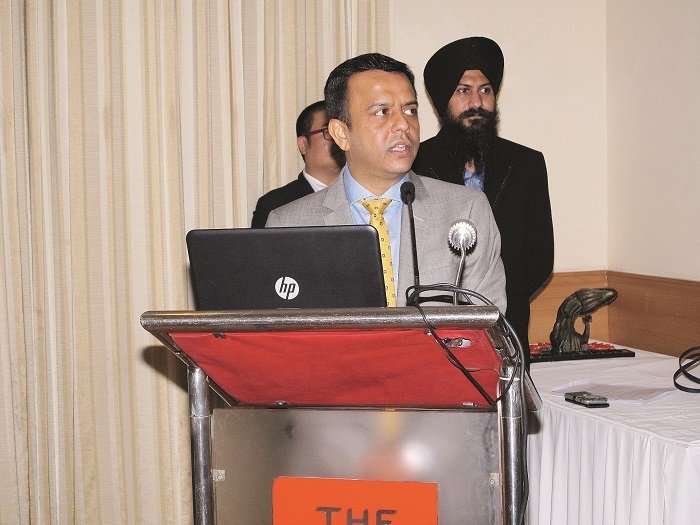
Inaugurating the 3,000 sq. ft demo centre in Delhi, Tomohiro Ikeda, managing director, Mimaki India says, “India is an important market for us and we will keep expanding our base in the country with more offices in future. We are quite enthusiastic about increasing our installations base in India as we are getting great response in the market. We never expected that we will catch up so soon.” Mandar Nalawade, director, Mimaki India observes, “The next expansion will be in Mumbai where we will start a textile lab. There is also a possibility of setting up a demo centre in the Southern region in the future.”

According to Ikeda, the company will stick to close-ink system as he believes that Mimaki’s inks are efficiently priced and come in a competitive quality. The printheads for the printers will be sourced from companies such as Ricoh, Epson and Kyocera depending on the machine. In the industrial printing segment, the company is hopeful of achieving a growth of 20 to 30%.
In India, Mimaki has launched its Pro series (belt type direct-to-textile inkjet printers), which includes Tiger-1800B, Leopard-1800B, and Fox-1800B. The company also has plans to explore manufacturing possibilities in India in future, according to Ikeda.