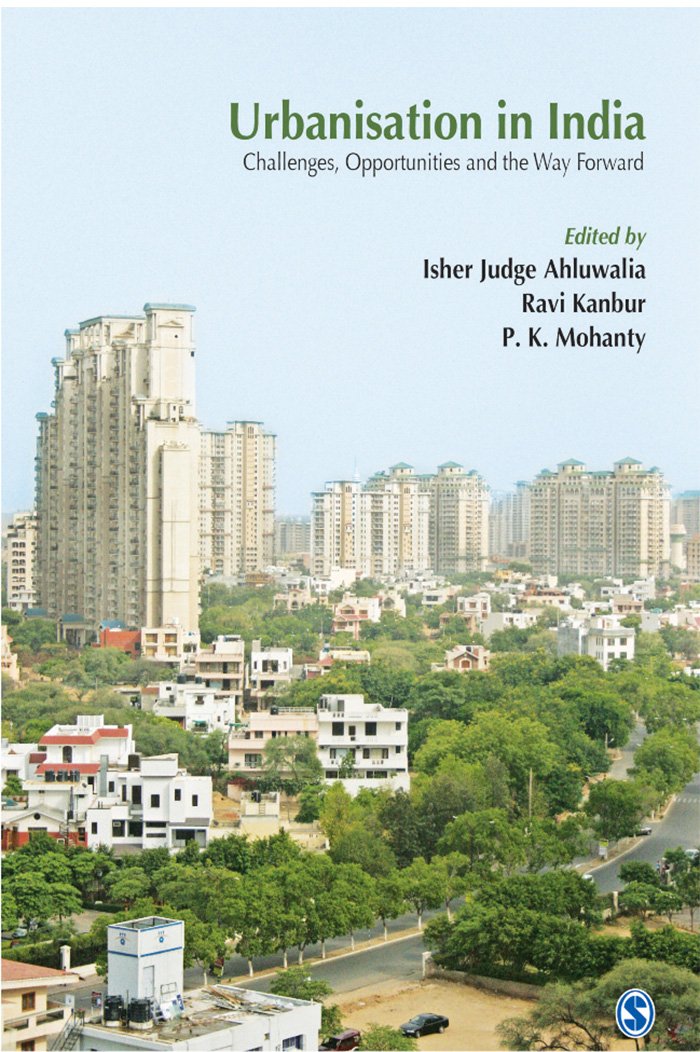
Delhi-based Sage India publishes academic books, text books and journals primarily looking at South Asian content in two domains sociology and management. The editorial team looks at six segments — economics and sociology, gender studies and literature, media and communication, text books, political science and international relations, and business and management.
Moreover, there is a sprinkling of serious non-fiction books that are produced each year in all the six publishing segments. R Chandra Sekhar, associate vice president, commissioning of social science publisher, Sage India, speaks about how scholarly content is commissioned, processed and produced.

“Our annual commissioning programme is aligned with what our company does best,” says Sekhar emphasizing that the focus is primarily on its core competencies and publishing titles based on feedback from its marketing team. Response is gathered from both library users as well as retail buyers. Sage produces eighty academic titles annually while twenty are aimed at the retail book trade.
The commissioning process
Sage India has 11 commissioning editors in an editorial team of 40 that includes all editorial functions from
commissioning to final proof reading activity for producing 100 titles annually plus over 50 journals. The front list consists mostly of core subjects, but commissioning editors can propose new ideas to develop within the key domains. Authors also submit book proposal forms in any of Sage’s publishing segments.
The first idea of a book is developed and discussed threadbare with the author during the ideation stage. The manuscript is invited from the author based on a reasonable and mutually agreed on time frame. The manuscript goes through a peer review process where experts on Sage’s panel give their inputs on the book within a ninety-day framework. This is again checked for relevance in context to the book by the editorial team. The right feedback after interpretation by the editors is given to the author for reworking the manuscript. After the reworked, revisited, updated and enhanced material arrives from the author, the process of publishing starts. A book is usually produced in a nine month time frame — after the zero date when the revised manuscript reaches the editorial team.
Strong presence in journals
Like most academic publishers, Sage too has a strong presence in the scholarly journal market and produces over 700 journals globally including 55 from India. It publishes journals for institutions like UNDP and IIFT besides universities in Kerala, Maharashtra and Punjab.
Among its well-known journals are The Indian Journal of Gender Studies; Journal of South Asian Development; Science Technology and Society; and Progress in Development Studies.
Page layout and cover design use Adobe Indesign and Quark software. There are a few specialists in the editorial team but most are generalists. “Sage has many experienced and skilled employees
and we are continuously training them to adapt to new technologies — we are in the process of starting in-house training,” says Sekhar.
Sekhar adds that since typesetting is outsourced, the technology part of content delivery and conversion of content to multi media platforms is not an immediate challenge for the in- house team. However an established premedia vendor is developing tailor- made software for enhancing the company’s in-house capabilities.