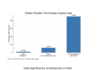
India’s writing and printing (W&P) paper industry is expected to see a measured improvement this fiscal, with operating margins projected to expand by around 150 basis points as easing hardwood prices reduce a key input cost, according to Crisil. Efficiency-focused investments are expected to support profitability despite structurally modest growth and rising digitization.
An analysis of 13 W&P paper manufacturers, accounting for around 70% of industry revenue, indicates that the improvement will be largely driven by lower input costs rather than pricing.

Says Shounak Chakravarty, director, Crisil Ratings, “The margin story this fiscal is not being driven by pricing alone. A favorable hardwood cycle is the bigger swing factor. With plantation acreage added after the pandemic now entering harvest, domestic hardwood prices should soften further after declining last fiscal. Since wood is central to pulp costs, accounting for 50-55% of operating costs, increased supply at lower costs will directly aid profitability. Coupled with tighter process controls, operating margins should improve to about 13.5% this fiscal from about 12% last fiscal.”
Hardwood availability is expected to improve as plantations established after the pandemic enter the harvesting cycle, putting further pressure on domestic wood prices. This should provide relief on pulp costs, while process efficiencies are expected to provide an additional boost to margins.
Paper realizations are also expected to rise by 2-3%, supported by higher landed costs of imported paper amid elevated freight rates and rupee depreciation. The increase should help offset inflation in logistics, employee and other fixed costs.
Demand is expected to remain stable, with volumes likely to grow 3-4%. Education-related consumption, including demand from coaching institutes, along with usage in the banking and judiciary sectors, should provide support. However, increasing digitization is likely to keep manufacturers cautious about adding significant greenfield capacity over the medium term.
As a result, industry capex is expected to rise only marginally, by around 5% year-on-year to approximately Rs 2,500 crore this fiscal. Investments are likely to focus on improving costs and yields rather than expanding capacity.
Spending is expected to be directed towards backward integration into wood pulp, recovery and reuse of process chemicals, optimization of ash and moisture levels, and greater adoption of renewable power. These measures should improve operational efficiency and strengthen the industry’s resilience.
Says Pallavi Singh, associate director, Crisil Ratings, “Credit profiles of W&P paper players should remain stable because the industry’s improvement is cash-accrual-led. Even with marginally higher efficiency capex, incremental borrowing is expected to be limited. We expect debt-to-Ebitda1 and interest cover to improve to around 1.7 times and 4.6 times this fiscal, respectively, from around 1.9 times and 4.2 times last fiscal.”