Distribution and last-mile delivery are emerging as major challenges for the newspaper industry, as suggested by multiple reports and industry discussions across news media forums and conferences.
A recent report says that the press-to-door distribution network, once the print segment’s key competitive advantage, is now under pressure due to the unavailability of delivery agents, who are increasingly seeking more financially viable alternatives, such as the gig economy.

“The inability to secure delivery boys is forcing a re-evaluation of the business model, with the physical network shrinking in several markets despite stable demand for the product,” says the Ficci-EY report released this year.
According to the report, the print segment is considering various options to continue doorstep delivery, including reducing agents’ distribution efforts, increasing remuneration, enabling agents to increase their income through incentives, among other measures.
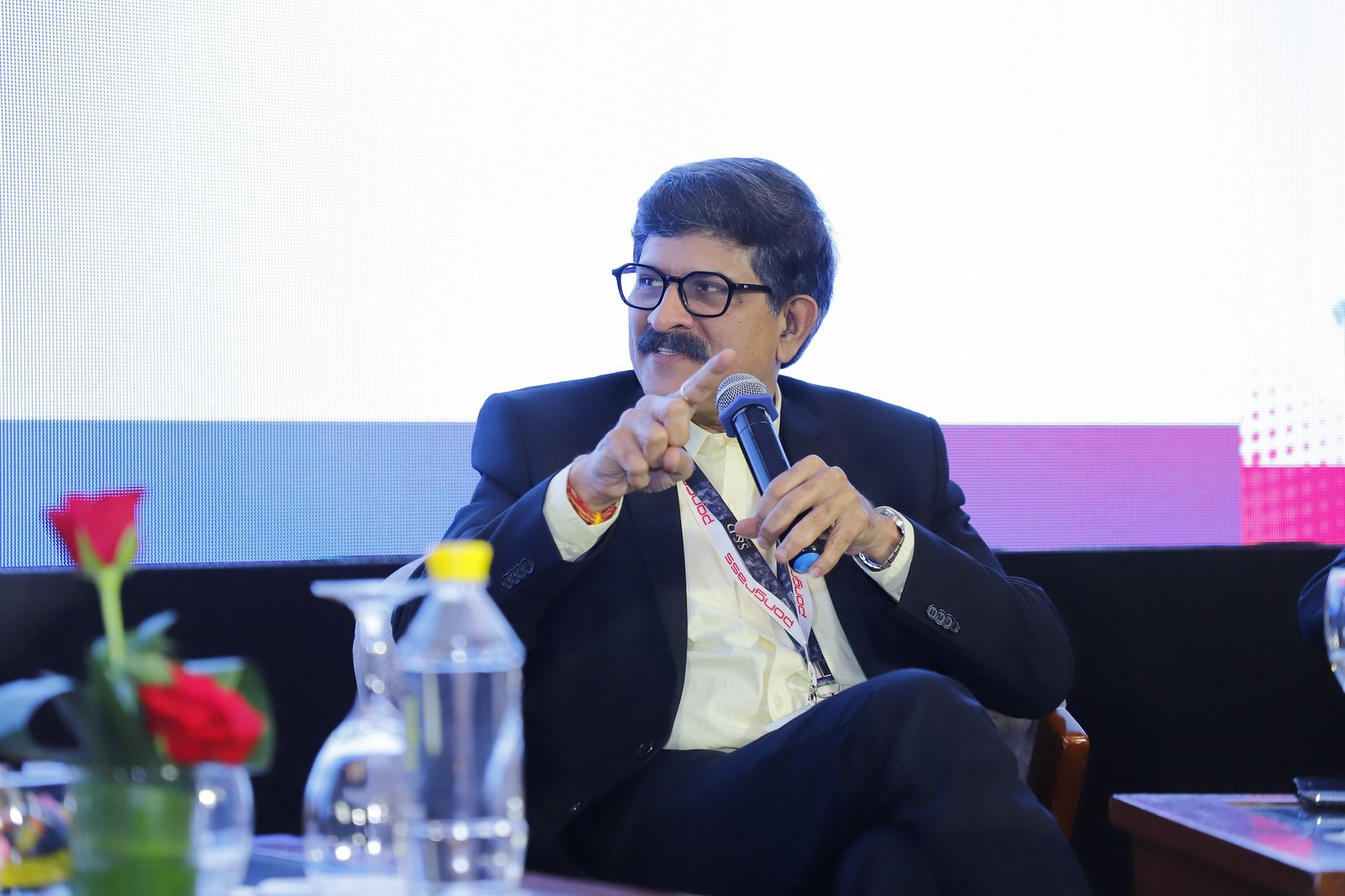
In this backdrop, Indian Printer and Publisher had a conversation with Sridhar Aranala, Chief Sales & Distribution Officer, The Hindu Group of newspapers, to understand the depth of the issue.
Addressing the severity, Aranala stated that the problem is no longer limited to a few regions but has become one of the biggest operational concerns across the print media industry. “The dependable early-morning doorstep delivery system, what was once the strongest advantage and defining strength of newspapers, is now under visible pressure.”
Asked if delivery agents are shifting to eCommerce or food delivery platforms, Aranala felt they could be moving toward more attractive sectors that offer better earning potential, flexible work structures, incentive-driven models, digital payment systems, and, in many cases, better social perception around the nature of work.
In contrast, newspaper delivery remains a time-sensitive early-morning task with limited earning opportunities. “ The economics that once sustained the traditional hawker ecosystem are becoming increasingly difficult, especially in urban markets.”
Aranala emphasized that this shift should be seen not just as a manpower shortage but as a structural transformation in the broader delivery economy because today’s workforce has choices that did not exist earlier. “As an industry, we need to rethink how we value, support, and strengthen the last-mile ecosystem rather than assuming that the old model will continue unchanged. Constantly living in denial that this too shall pass might not work this time,” he cautioned.
Noting that while demand for credible print content remains stable in many household segments, he said the dual challenge lies in maintaining product relevance in its current form and ensuring efficient delivery in a changing workforce environment.
Retention and innovation
On the need to retain these agents and find innovative ways to tide over the problem, Aranala explained that solutions cannot rely solely on higher pay. “The distribution ecosystem has evolved, and so our approach has to evolve from being purely transactional to being more engagement and sustainability-driven.”
The Hindu Group, he says, is working to improve earning opportunities through cover price adjustments, offering better margins to delivery partners, and launching additional publications to create supplementary income streams so that newspaper distribution remains economically viable for them.
“The company focuses on welfare initiatives, recognition, and strengthening relationships within the distribution network, which has traditionally been built on trust.”
Additionally, the group is exploring integration with emerging logistics systems such as hyperlocal delivery and platform-based distribution models. Aranala pointed out that newspaper distribution has historically been a pioneer in hyperlocal delivery and now needs to collaborate with newer players to build a sustainable ecosystem.
Expansion into quick-commerce channels reflects a shift beyond traditional methods, though the existing hawker network will not be replaced overnight.
“The objective is not to replace the conventional hawker network overnight, because it remains extremely valuable. The effort is to create a more flexible, efficient, and sustainable distribution model in partnership with the existing ecosystem that can adapt to changing market realities.”
Industry collaboration
Asked if the industry could collaborate to address such common issues, Aranala said the conversation has gained importance as challenges such as rising costs, manpower shortages, and shrinking last-mile networks affect all publishers.
“While media houses have traditionally operated independent distribution systems, there is growing openness to sharing insights and exploring backend efficiencies such as shared logistics, cluster-based delivery, and common handling points.”
Collaboration models, he explained, are evolving differently across markets. However, they must balance shared efficiency with individual publication needs.
“The approach has to be balanced because each publication has its own market dynamics, timing sensitivities, and reader commitments. We are exploring common factors, and some are operational already.
Some consolidation already exists at the hawker and distributor levels, he said, adding that broader industry collaboration appears increasingly likely. Collaboration need not dilute competition but can strengthen long-term sustainability.
“Ultimately, the larger objective is the same, ensuring credible print journalism continues to reach readers reliably and sustainably every morning.”
Opportunity to rethink
Aranala pointed out that the current disruption should not be viewed solely as a challenge but also as an opportunity to rethink, innovate, and modernize a system that has remained largely unchanged for decades. “At least we are seriously contemplating a completely revamped last-mile distribution, which will work both for the partners and for us.”
Despite shifts in media consumption, trust in credible print brands remains strong, he said, explaining that the key challenge is not simply about protecting legacy systems but also about building a future-ready and sustainable distribution framework.
The delivery network is more than just logistics, he said. “It is the final bridge between journalism and readers. The people who sustain that last mile every morning have played a critical role in building readership habits and brand loyalty over generations.”
The last mile already works with all the brands, and it is probably the most coordinated distribution system running for decades, Arnala said, adding that all that is needed is a combination of innovation, collaboration, technology adoption, and stronger engagement with distribution partners to navigate this transition successfully.
“The model may evolve, but the importance of reliable reach will remain central to print media,” he concluded.