The Nalanda Literature Festival continues to build its vision as a platform for deep intellectual engagement and cultural exchange with the launch of the Delhi Nalanda Dialogue 2026, to be held on 9 and 10 May 2026 at the Multipurpose Hall, Kamaladevi Complex, India International Centre, New Delhi, a press release said.
As a key initiative under the festival, the dialogue will bring together over 100 senior government delegates, policymakers, scholars, authors, diplomats, and emerging voices for a two-day convening centred on the theme Governance, Culture & Literature.

Conceptualized as an extension of the Nalanda Literature Festival’s larger mandate, the dialogue expands the festival’s scope beyond conventional literary programming, creating a space where governance, knowledge systems, civilizational thought, and literary traditions intersect to shape contemporary discourse, the festival said.
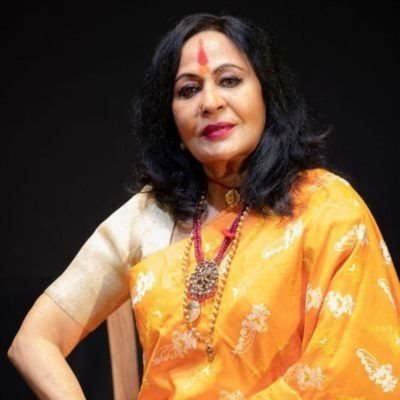
Civilizations endure not merely through power, but through the continuity of ideas, expression, and dialogue. The Nalanda Literature Festival seeks to reclaim that continuum, where knowledge is not archived, but lived, shared, and questioned across generations,” said Padma Vibhushan Sonal Mansingh, chairperson, Nalanda Literature Festival.
“At its core, the Nalanda Literature Festival is an exercise in connecting worlds, policy with poetry, tradition with transition, and intellect with imagination. It is in these intersections that meaningful cultural and intellectual progress takes shape,” said D Aaliya, festival chairperson, Nalanda Literature Festival.
“In an age defined by speed and fragmentation, the need for reflective, informed dialogue becomes even more critical. The Nalanda Literature Festival is designed as a platform where ideas are not just exchanged, but examined with depth, context, and responsibility,” said Pankaj KP Shreyaskar, festival advisor and official spokesperson, Nalanda Literature Festival.
With participation from leading voices across governance and culture, the Delhi Nalanda Dialogue 2026 marks the beginning of a sustained, multi-city and international series of engagements, aimed at building a long-term framework connecting policy, culture, and intellectual traditions across geographies.
Inspired by the historic legacy of Nalanda as a global centre of learning, the dialogue reflects the festival’s commitment to reviving traditions of inquiry, exchange, and interdisciplinary thinking, bringing them into conversation with present-day challenges and opportunities.
The inaugural ceremony will open with a keynote address by Chanchal Kumar, secretary, Ministry of Information & Broadcasting, and Government of India. He will be joined by eminent dignitaries including Padma Vibhushan Sonal Mansingh, Amitabh Kant, and KN Shrivastava, marking a significant convergence of leadership across policy, culture, and institutional thought. The opening session will also feature Purushottam Agrawal, Shamika Ravi, and Sachin Chaturvedi, in conversation moderated by Gaurav Sawant.
The two-day programme is structured as a comprehensive, multi-sectoral dialogue spanning governance, civilizational wisdom, cultural diplomacy, and future knowledge systems. Day one will feature sessions examining governance frameworks and institutional evolution with Amarjeet Sinha, Anju Ranjan, Mugdha Sinha, and Tripurari Sharan, alongside discussions on India’s cultural diplomacy and global engagement led by KJ Alphons, Sanjeev Chopra, and Varsha Das. A major highlight will be the diaspora and identity dialogue, bringing international perspectives through Anil Sooklal, Sarita Boodhoo, Suman Keshari, and Ajay Dubey.
Further sessions will explore leadership, authorship, and cultural continuity, featuring Padma Shri Shovana Narayan, Mukul Kumar, Nitishwar Kumar, and Sachchidanand Joshi, alongside contributions from Shashank Shekhar Sinha and Himanshu Prabha Ray, whose work across history, culture, and knowledge systems adds depth to the discourse.
Day two will expand the conversation into Indian languages, knowledge preservation, and future-facing intellectual frameworks, with leading voices such as Kapil Kapoor, MJ Warsi, Kaushal Kishore, and Surekha Sahu. Sessions on public engagement and academic exchange will bring together Vishwapati Trivedi, Tajender Singh Luthra, Ashutosh Agnihotri, and Shubha Sarma, reflecting the intersection of governance and lived experience.
The program will further explore the intersection of technology and knowledge systems, featuring Uma Kanjilal, Anand Kumar, and Amit Pandey, addressing the role of AI and digital innovation in cultural preservation and future learning. A special session with William Dalrymple will reflect on Nalanda’s enduring intellectual legacy, leading into the Delhi–Nalanda Declaration—an outcome-oriented framework expected to shape future discourse at the intersection of governance and culture.
The Delhi Nalanda Dialogue 2026 is being organized by Dhanu Bihar, with the Art, Culture and Languages Department, Government of NCT of Delhi as a major partner, in collaboration with the India International Centre, New Delhi. This partnership underscores a shared institutional vision to position Delhi as a leading hub for cultural diplomacy, intellectual exchange, and policy dialogue.
A defining feature of the dialogue is its emphasis on intergenerational exchange, bringing young thinkers and writers into direct conversation with experienced policymakers, scholars, and global thought leaders.
Each day will conclude with curated cultural programming, reinforcing the festival’s belief in the intrinsic relationship between intellectual discourse and artistic expression.
As India navigates complex questions of governance, identity, and global engagement, the Nalanda Literature Festival, through the Delhi Nalanda Dialogue 2026, seeks to position itself as a vital, future-facing platform—one that not only convenes conversations, but actively shapes them.
Nava Nalanda Mahavihara University is the partner of the festival.
Know more about the festival and upcoming initiatives at @NalandaLittFest.