The primitive human tendency to decorate and express through visuals has evolved from carving on stony cave walls to printing on clothes in order to communicate our beliefs, knowledge and ideas. Today, this tendency to decorate has paved the way for digital textile printing for decor, garments, household, technical, and display textiles. The emerging trend of personalization, in particular, is triggering the rapid growth of the industry.
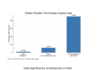
The global digital textile printing industry is growing at a steady pace. The industry, which was valued at Rs 8000 crores in 2015, saw the figures soaring to Rs 10290.4 crores in 2017, and it is further expected to reach up to Rs 26,200 crores by 2022, according to a report by Allied Market Research. A report by Future Market Insights suggests that the industry is expected to grow by 16% annually during the forecast period of 2018-2028. The report also mentions that more than 60% of the revenue in digital textile was generated by direct-to-fabric segment in 2018.

The Asia Pacific region continues to show the highest CAGR of 18% during the forecast period of 2016-2022, according to a report by Allied Market Research. China, Italy, India, Turkey, and the US lead in terms of digital textile printing usage. The output volume of digitally printed fabric in China, Italy, India, Turkey, and the US is 47% of the global volume. In addition, China’s investments in high-end machinery are expected to contribute significantly to output volumes in the coming years.
According to the report, sublimation transfer continues to be the most popular in the ink segment. Given the lower cost of sublimation printers and reduced ink prices, direct sublimation transfer technique is popular and can be observed as trending in fashion textile printing.
The growth in digital textile printing is the result of the advancement of printing techniques and technology. Digital texting printing is rapidly replacing conventional screen printing owing to the several benefits that it offers in terms of saving time and costs by reducing the consumption of dye, water and energy in the post-print finishing process. This makes it a sustainable printing option. The versatile ability of digital to print on different substrates further gives it an edge over traditional printing methods.
However, it is not merely a technological advancement that is responsible for the shift in the textile printing industry. Andy Yarrow, president of Kornit Digital’s Asia Pacific region, at the recent Shift_019 event on 9 May 2019 in New Delhi presented some of the global trends and opportunities in the textile industry. According to him, current mega trends (trends that keep growing with time) in the fashion industry are a strong influencer to the textile printing industry. These include the personal expressive attitude of millennials, the influence of social media on fashion choices, the rising popularity of eCommerce and growing awareness towards sustainability.
According to Yarrow, around 74% of millennials love personalized apparel and are willing to pay 20% more for it. Also, social media has come a long way from a communication medium to one that influences fashion choices. Approximately 46% of consumers get their fashion ideas from social media platforms such as Instagram. At the same time, the ultra-fast business model of online shopping has led to a meltdown of traditional retail. Retailers are shutting stores due to stagnancy in sales and this phenomenon does not spare luxury brands either. Yarrow illustrated this point by giving the example of popular fashion apparel brand H&M, which burned around US$ 4.3 billion of its unsold clothes in 2018.
The high per unit printing cost is making it a challenge for the industry to adopt digital completely. Traditional printing technologies are still being used for secondary packaging. While conventional printing enjoys more trust and prominence due to consistency and quality in long run print work, digital needs to evolve to adapt to high volume handling in order to grow further.