Printers and packaging manufacturers were briefed on changes in government export support, the implementation of new labor codes and the use of artificial intelligence (AI) to improve collections at a knowledge-sharing session organized by the Bombay Master Printers Association (BMPA) at Sunville Banquets on 19 November.
The three-hour evening program featured presentations by export consultant Mihir Shah, labor law specialist Hiral Chheda and Vineet Mago of Vayana Network. The discussions focused on practical measures businesses can adopt to reduce financing costs, prepare for regulatory changes and improve working capital management.
Interest subvention offers export support
Shah said government support for exporters had shifted from direct cash incentives to measures such as cheaper credit and improved access to international markets. With the World Trade Organization (WTO) discouraging direct export subsidies, incentives that previously amounted to 10–12% had been reduced to a fraction of a percentage point, he said.
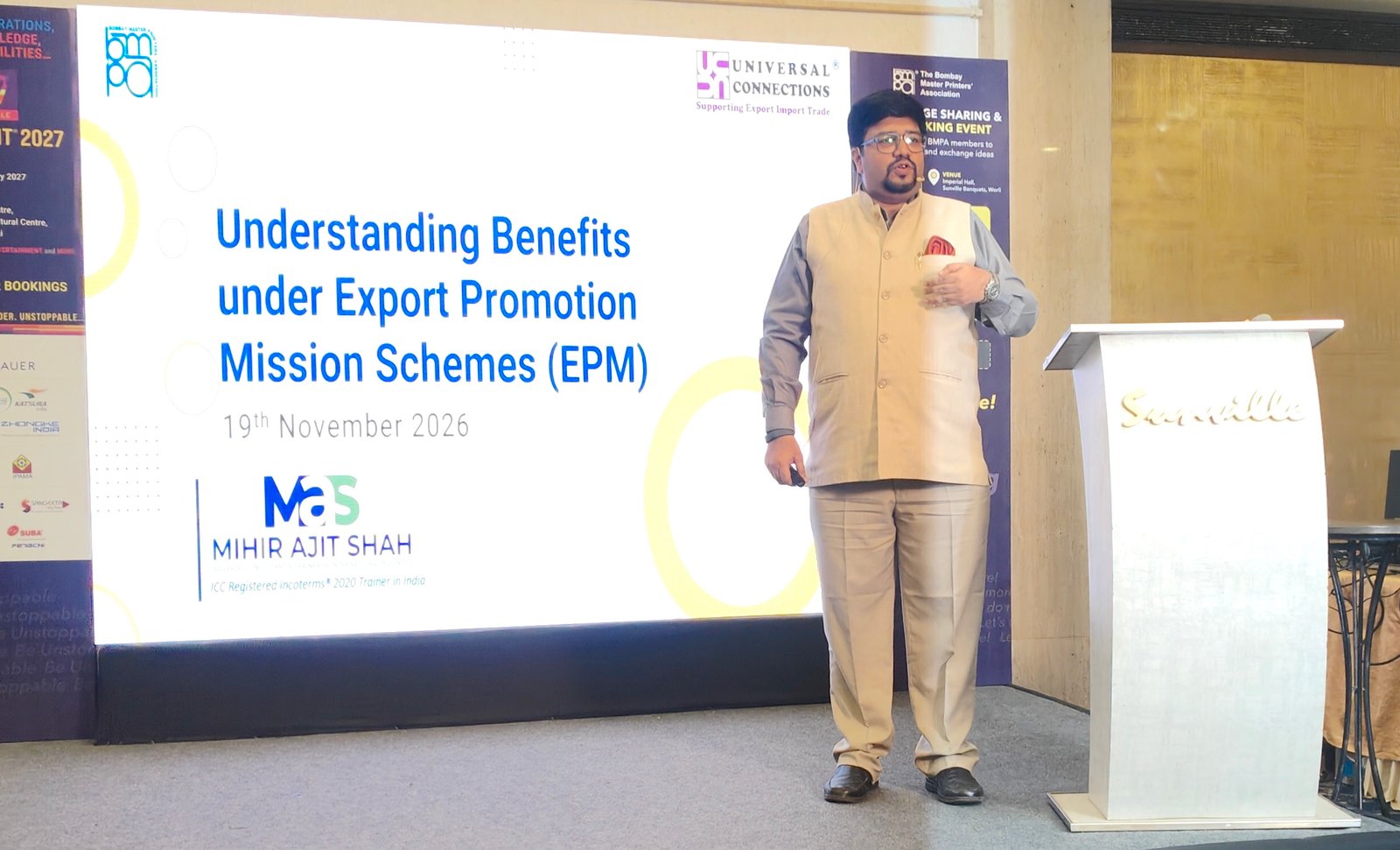
The government is increasingly relying on free trade agreements (FTAs), which allow exporters to access markets where buyers benefit from zero or lower import duties. Another key initiative is the Export Promotion Mission, launched in February 2026 with a five-year budget allocation of Rs250.6bn.
Shah identified interest subvention as one of the most useful provisions for members of the printing and packaging industry. Under the scheme, eligible micro, small and medium enterprise (MSME) exporters can receive a 2.75% reduction in interest rates on rupee-denominated pre-shipment and post-shipment export credit. The benefit is available for products covered under an eligible list of approximately 4,200 Harmonised System of Nomenclature (HSN) codes, subject to a ceiling of INR5mn per Importer Exporter Code (IEC) annually.
The interest reduction is applied upfront rather than reimbursed later. Exporters must also obtain a Unit Identification Number from the Directorate General of Foreign Trade (DGFT) to access the benefit.
However, Shah pointed out that the scheme’s coverage for the printing and packaging sector remained limited. Only 112 HSN codes under chapters 48 and 49 are included, while HSN 481920 is excluded. He urged BMPA to take up the issue with the government through the Basic Chemicals, Cosmetics and Dyes Export Promotion Council (Capexil), seeking wider coverage for the industry’s products.
For exporters unable to access the interest subvention, Shah highlighted factoring as an alternative. Under this arrangement, exporters can receive financing against their receivables, with Reserve Bank of India-compliant factoring companies eligible for a separate 2.75% refund, also subject to an annual ceiling of Rs5mn.
He also discussed revisions to the LIFT scheme, which became operational in its updated form on 17 November and now covers 301 districts.
Employers await Maharashtra’s labor rules
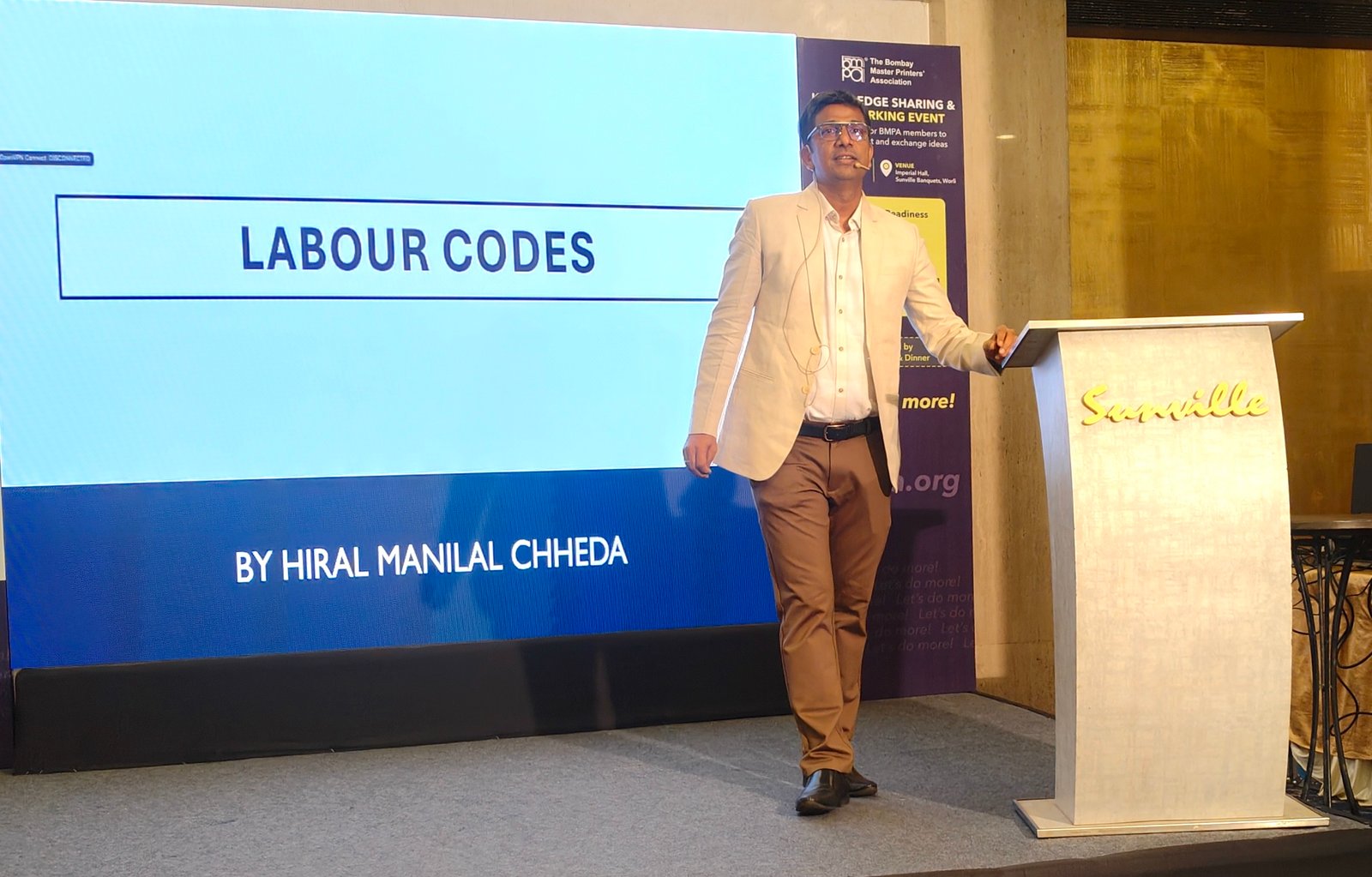
Chheda outlined the implications of the consolidation of 29 central labor laws into four labor codes. The codes came into force on 21 November 2025, but the implementation framework in Maharashtra remains incomplete.
The state notified rules under the Code on Wages on 5 November 2026, while rules governing the other three codes are expected within approximately a month, she said.
Chheda advised employers to prepare for several changes affecting payroll, employee benefits and workplace compliance.
A common definition of wages now applies across the labor codes, with implications for salary structures and statutory calculations. Overtime must be paid at twice the wage rate rather than being calculated on gross salary.
Employers must pay monthly wages by the seventh day of the following month. Wages due following an employee’s separation must be settled within two days of the employee leaving the organization.
The codes also provide for a five-year record-retention period and cap deductions at 50% of wages. Establishments employing 100 or more workers must constitute works committees, while grievance redressal committees are required at establishments with 20 or more workers.
Chheda also highlighted the inclusion of gig and platform workers within the new labor framework, marking an expansion of the categories of workers recognized under labor legislation.
He encouraged businesses to review their employment documentation, payroll practices and compliance procedures ahead of the notification of the remaining Maharashtra rules.
AI agents target delayed collections
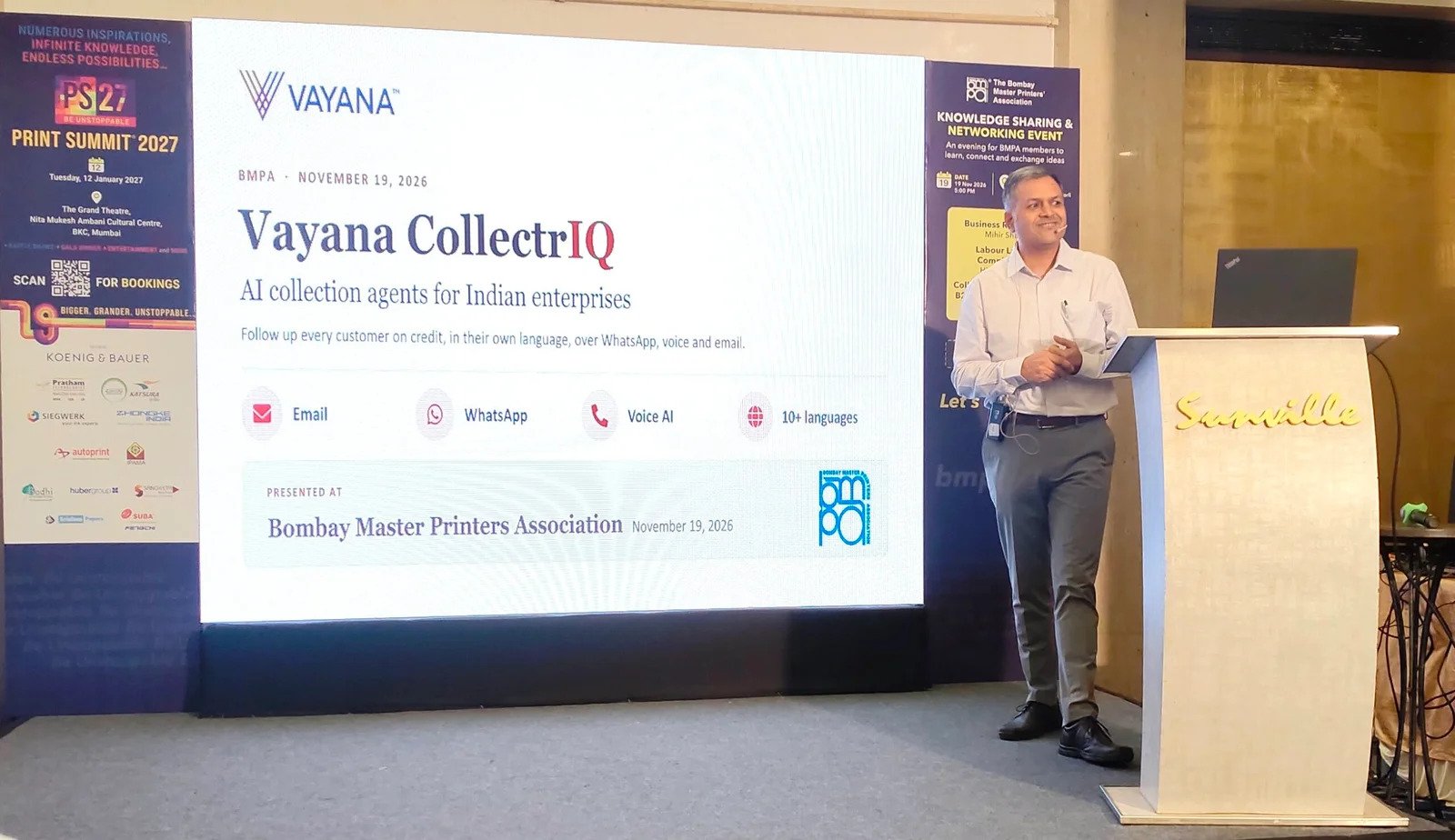
Mago of Vayana Network, which describes itself as India’s largest Goods and Services Tax (GST) Suvidha Provider, discussed how AI could help businesses improve receivables management and reduce the time taken to collect payments.
He said Vayana Network had facilitated more than Rs5.5 trillion in financing over the past 10 years. He presented CollectrIQ, a platform using AI agents to automate customer collections, a function traditionally handled by finance and sales teams.
The system is designed to manage follow-ups with customers and help businesses shorten their credit cycles, improve collections and reduce the workload on internal teams.
Mago said this level of automation had not been possible before 2025. He positioned AI-led collections as a way for businesses to improve working capital efficiency by making receivables management more systematic and less dependent on manual intervention.