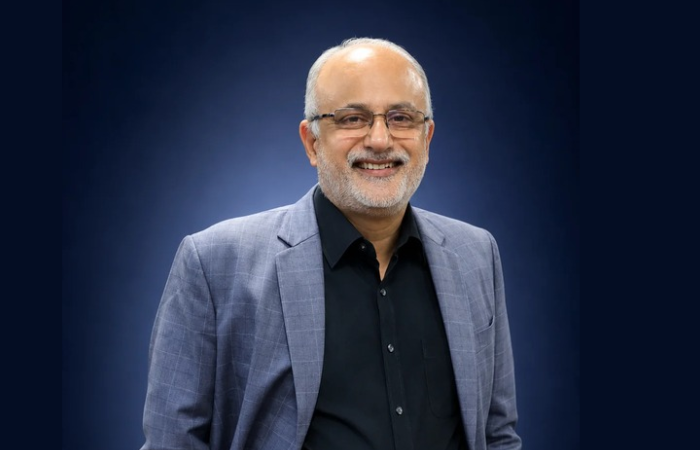
In an interview with Indian Printer & Publisher, Tushar Dhote, president of the All India Federation of Master Printers (AIFMP) for 2026–27, outlines his priorities for the Indian printing industry.
Dhote discusses the need for industry status for printing, support for MSME printers, technology adoption, skill development and sustainability. He shares plans for strengthening AIFMP’s regional network, expanding its initiatives and improving the competitiveness of Indian printers.
IPP: What are your key priorities as AIFMP president for 2026–27. What initiatives do you plan to introduce during your tenure?
Tushar Dhote: My priorities are to secure industry status for printing, strengthen MSME printers, upgrade skills and improve profitability through productivity. We will facilitate awareness of and access to MSME schemes, collaborate with educational institutions and OEMs for training, and promote knowledge-sharing among printers in Tier 2 and Tier 3 towns.
Completing the AIFMP Print Bhuvan and exploring sustainable revenue sources beyond Pamex and Bharat Print Expo are also important priorities. My approach is simple—strengthen our institutions, empower our members and translate our collective vision into measurable action.
India’s printing industry comprises a large number of small and medium-sized enterprises. How will AIFMP help these businesses remain competitive amid rising input costs, pricing pressures and changing customer expectations?
India’s smaller printers need access to knowledge, technology and business practices that improve productivity without necessarily requiring large capital investments. AIFMP will encourage knowledge-sharing, process improvement, awareness of automation and better resource utilization.
Our initiative to negotiate affordable perpetual CorelDraw licenses for affiliate members, particularly printers in Tier 2 and Tier 3 towns, reflects this commitment. We intend to facilitate awareness of MSME schemes and provide documentation support, along with knowledge sessions on MSME subsidies during the Romancing Print initiative across all four zones in India.
Ultimately, competitiveness is not just about reducing costs; it is about improving efficiency, delivering consistent quality and creating greater value for customers.
Since 2025, we have been organizing Bharat Print Expo, a regional exhibition in the South, with events in Bengaluru and Chennai. We have seen great participation from smaller towns, whose printers may not be able to attend Pamex in Mumbai or PrintPack in Noida.
How do you see digital printing, automation and artificial intelligence reshaping the Indian printing industry? What steps will AIFMP take to help printers adopt these technologies?
Digital printing, automation and artificial intelligence are fundamentally changing how printing businesses operate, compete and deliver value. Digital technologies enable shorter runs, personalization, faster turnaround times and new business opportunities, while automation reduces dependence on repetitive manual processes. AI can progressively improve workflows, planning and decision-making.
Through AIFMP, we will encourage technology awareness, practical demonstrations, knowledge-sharing and collaboration with OEMs. Our objective is to help printers understand not just what technology is available, but where it can improve productivity, profitability and customer satisfaction, enabling them to make informed investment decisions.
Paper, ink, plates and other consumables account for a significant share of printing costs. How can printers improve operational efficiency and protect margins amid raw material price volatility?
Printers must move beyond viewing profitability purely in terms of procurement prices. Better estimation, production planning, preventive maintenance, inventory control, waste reduction and disciplined shop-floor execution can substantially improve margins.
I strongly believe in the principle of profitability through productivity. Businesses must measure material consumption, monitor waste, improve machine utilization and establish accountability across departments. Accurate costing and timely reviews of job profitability are equally important.
AIFMP will promote practical knowledge-sharing and operational improvement initiatives to help printers build stronger systems, manage volatility and protect profitability without compromising quality.
I plan to organize PrintNext India, a conclave by AIFMP in Delhi. The National Capital Region and the northern region, including Faridabad, Delhi, Noida, Gurgaon, Chandigarh, Punjab, Rajasthan and Agra, have significant printing production and manufacturing activity, as well as a strong presence of OEMs. Printers in these regions will benefit from such a program. We intend to make it an annual event that printers can look forward to.
What is your assessment of demand across commercial printing, packaging, labels, publishing and other segments? Which areas offer the strongest growth opportunities for Indian printers over the next three to five years?
India offers significant opportunities across packaging, labels, commercial printing and digitally enabled applications. Packaging and labels will continue to benefit from evolving consumer markets, branding requirements and product differentiation.
Commercial printing is transforming through personalized communication, shorter runs and specialized applications. Publishing and books remain important, while digital printing opens up opportunities in new formats and business models.
I believe growth will increasingly favor printers who combine technology, quality, operational efficiency and customer understanding. The opportunity is not simply to print more, but to offer higher-value solutions.
Sustainability is becoming increasingly important for print buyers and brand owners. How can Indian printers reduce waste, improve resource efficiency and adopt more environmentally responsible production practices without compromising profitability?
Sustainability and profitability need not be conflicting objectives. Reducing paper waste, improving energy efficiency, optimizing ink consumption, recycling materials and maintaining equipment properly can deliver both environmental and financial benefits.
Printers must understand emerging regulations and customer expectations, particularly developments such as the European Packaging and Packaging Waste Regulation (PPWR) and the Digital Product Passport.
AIFMP intends to encourage awareness and knowledge-sharing around sustainable production and compliance. The industry must view sustainability not merely as an obligation, but as an opportunity to improve efficiency, strengthen customer confidence and remain relevant in global supply chains.
Skilled labor shortages and the need for technical training remain challenges for many printing businesses. How will AIFMP work with educational institutions, equipment manufacturers and industry associations to develop the next generation of printing professionals?
Skill development is one of the most important requirements for the future of our industry. AIFMP intends to strengthen collaboration between printing institutes, equipment manufacturers, regional associations and industry practitioners.
Training must go beyond theoretical education and include practical exposure, technology updates, workflow understanding and shop-floor competencies. We also need to attract young people by presenting printing as a technology-driven, creative and rewarding profession.
By encouraging structured training programs and knowledge-sharing across regions, we can progressively bridge skill gaps and prepare professionals capable of supporting the industry’s transformation.
The AIFMP Print Bhuvan, our research and training center, will offer training in conventional and digital printing to affiliates. It will also provide testing laboratory facilities for their convenience.
What role should AIFMP play in helping Indian printers access export markets and compete internationally, particularly in commercial printing, packaging and other value-added print products?
AIFMP should act as a facilitator, connecting Indian printers with international opportunities, technology, knowledge and industry networks. Indian printing businesses possess considerable capabilities, but competing globally requires consistency in quality, productivity, sustainability, compliance and delivery.
We must encourage exposure to international markets and build stronger relationships with printing associations across countries. Through initiatives such as Pamex and international industry engagement, AIFMP can create platforms for dialogue and collaboration.
Our ambition is to position Indian printing as a credible, competitive and value-driven contributor to the global printing and packaging ecosystem.
We are members of the World Print Forum and send delegations through AIFMP under the chairmanship of our International Relations chairman.
Through our GPEA Awards, we are also inviting entries and participation from Southeast Asian countries and other markets, including Sri Lanka, the UAE, Malaysia, Singapore, Vietnam, Thailand and South Korea.
How can AIFMP strengthen coordination among regional printing associations, equipment suppliers, paper manufacturers and other industry stakeholders to address common challenges and represent the industry’s interests more effectively?
AIFMP’s greatest strength is its nationwide network of affiliated associations. We must further strengthen this network through regular interaction, structured knowledge-sharing and meaningful participation in industry initiatives.
Regional associations understand their members’ challenges and aspirations, while OEMs and suppliers bring technology and market perspectives. Bringing these stakeholders together will help us develop practical solutions, address common concerns and present a unified voice before policymakers.
I intend to encourage greater participation, stronger regional engagement and collaborative initiatives that make AIFMP more accessible, responsive and valuable to every affiliate.
Looking ahead to the end of your 2026–27 term, what measurable outcomes would you like to achieve, and how will you assess whether your presidency has delivered tangible benefits to AIFMP members?
At the end of my tenure, I would like to see measurable progress toward industry status, wider awareness of MSME schemes, meaningful skill-development initiatives and greater participation by smaller printers in technology programs.
Completing the AIFMP Print Bhuvan, strengthening regional engagement and establishing additional revenue streams for the Federation are important deliverables. I would also like PAMEX to progress toward greater international recognition.
Success will ultimately be measured by member participation, initiatives implemented, tangible benefits delivered and the institutional strength we leave behind.
My guiding principle is: less talk, more action.