The Press Council of India (PCI) has issued guidelines for journalists covering protests and demonstrations. The council says the guidelines aim is to improve the safety of media personnel and encourage responsible reporting and seek better coordination among journalists, media organizations and law enforcement authorities.
The PCI is a statutory and quasi-judicial body in India tasked with “preserving the freedom of the press by maintaining and improving the standards of newspapers and the news agencies” in India.

The guidelines were adopted at a PCI meeting on 14 October and announced in a press release dated 15 October. The Council said they were framed in view of the “prevailing scenario” and the need to facilitate orderly and effective coverage of protests.
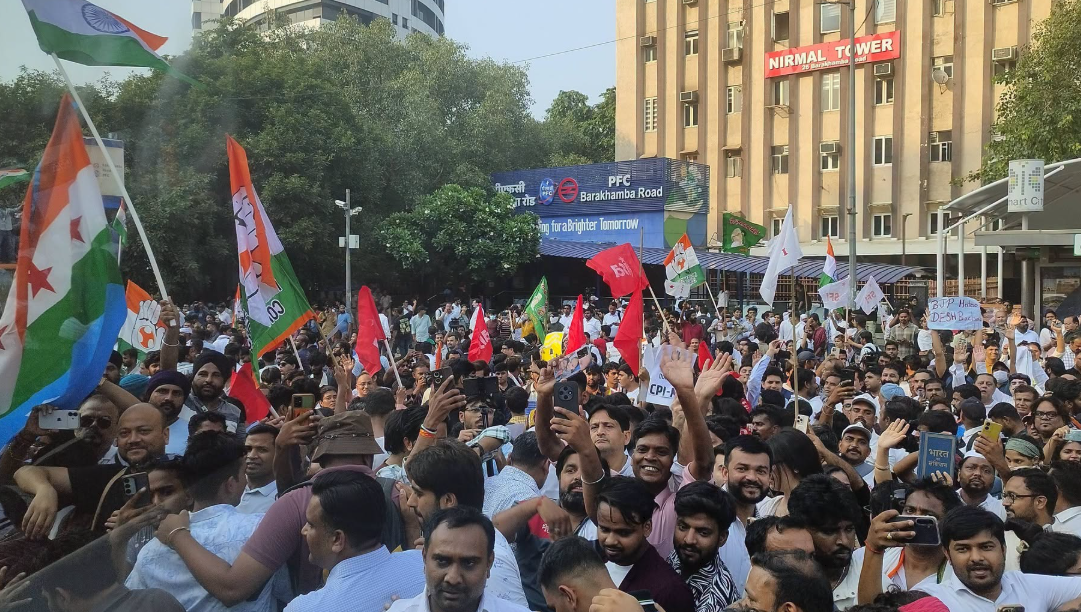
The press release does not name any specific event, but these guidelines come in the backdrop of detentions of multiple journalists covering the recent protests against the special intensive revision of rolls and chief election commissioner Gyanesh Kumar.
Identification and conduct
Journalists have been advised to carry a valid ID card from their organization and, where applicable, valid PIB/DIP accreditation. The card should be visible at all times, and lanyards should be secured to avoid entanglement in crowds. “Journalists should calmly identify themselves to police, stay neutral, and not take sides or provoke confrontations. They should also follow lawful police instructions, especially those issued for immediate safety, while asserting their press status,” the PCI stated.
Positioning and awareness
Reporters, the release stated, should keep a safe distance from confrontations, particularly when tensions rise or police action is expected. They should move through crowds in short steps to avoid falls and keep reassessing their position relative to protesters, counter-protesters and police.
They should not attach cameras or recording equipment to barricades or police vehicles in ways that block movement or damage property. Journalists should also keep an escape route in mind and update it as conditions change. In smoke or tear gas, they should use landmarks and safe routes to leave without moving deeper into the crowd, the guidelines stated.
Protective measures
The council recommends a compact emergency kit with a first-aid kit, essential medication, water, high-protein snacks, a flashlight, a washcloth or hand towel, and eye protection or goggles. Depending on the threat, journalists may consider headgear and body armur, provided it does not encourage unnecessary risk-taking.
They are advised to learn basic first aid and practise with protective gear beforehand. They should never touch or move tear-gas canisters, flash-bang devices or smoke grenades, which may be hot, explode or leave hazardous residue.
Coordination
Journalists should stay in regular contact with their newsrooms, which are asked to designate a point of contact to track reporters’ locations and respond to emergencies. Freelancers should tell a trusted editor or contact their location, assignment plan and expected return time. For planned demonstrations, media organizations are encouraged to coordinate with police, public information officers or press liaisons to clarify communication protocols and identify media staging areas.
Ethical reporting
The guidelines ask journalists to separate verified facts from allegations and unconfirmed claims, and to verify information through multiple sources. They should treat statements from protesters, organizers, police and government with equal scrutiny and describe observable actions rather than assume motives.
Journalists should not publish real-time police positions, tactical movements or escape routes if doing so could compromise safety or operational security. Particular care is advised when filming minors, vulnerable people, the injured and private citizens in distress, given the risks of retaliation, harassment and privacy violations. The council also said that equipment, live-broadcast commitments or pressure to get exclusive footage must not override safety.