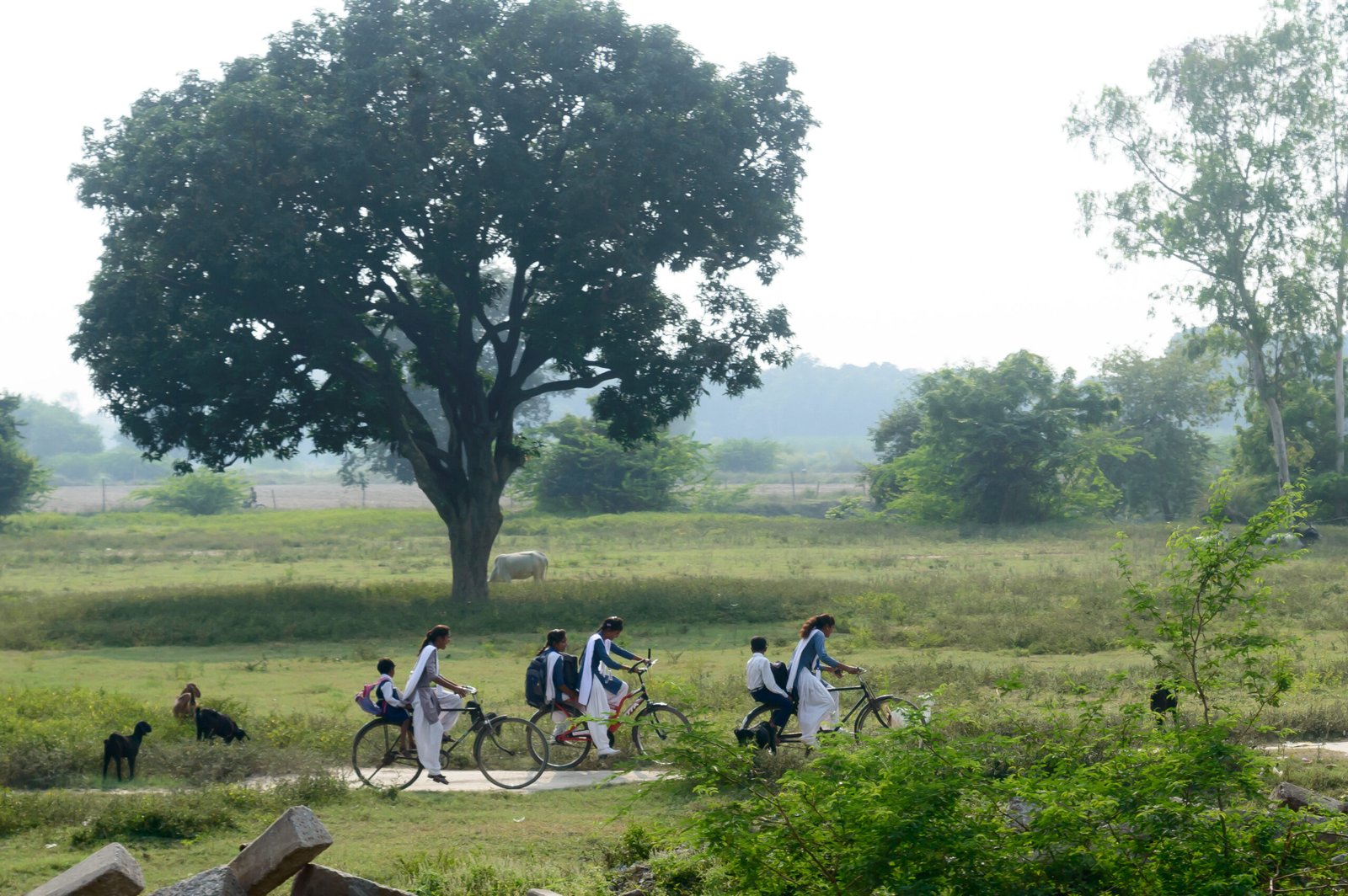
Are government schools steadily declining even as private institutions expand? What has long been discussed in private circles has gained some backing in the form of data presented recently in the Rajya Sabha.
As many as 18,727 public schools have shut down over the past five years— raising serious concerns about equitable access to education. The number of government schools dropped from 10,32,049 in 2020-21 to 10,13,322 in 2024-25, reflecting a gradual but consistent contraction of the public education network.

In 2021-22, the number fell to 10,22,386, in 2022-23, it was down to 10,16,010, while in 2023-24, the total number of schools was recorded at 10,17,660, states the 2 February 2026 data, which quotes union minister of state for education Jayant Chaudhary as saying in a reply to a question by CPI(M) MP John Brittas.
Raising this issue in Parliament on 9 February and via X, Brittas described the trend as alarming, warning that such a decline could weaken the foundations of affordable education in India. Government schools have traditionally served as the backbone of the system, particularly in rural and economically weaker regions where they are often the only accessible option. He also raised concerns about 193,000 teacher vacancies in Uttar Pradesh alone out of the total 357,862 vacant slots.
Officials often attribute the closures to factors such as the rationalization of schools, the merging of institutions with low enrollment, and demographic shifts. However, the scale and consistency of the decline suggest deeper structural challenges. The shrinking network raises critical concerns about access, especially for students who rely on free or subsidized education, mid-day meals, and basic infrastructure provided by government institutions.
At the same time, private unaided schools are expanding rapidly. Their numbers rose from 3,31,108 in 2023-24 to 3,39,583 in 2024-25, marking the addition of 8,475 schools in just one year. For the previous years, the numbers were 3,40,753 in 2020-21; 3,35,844 in 2021-22, and 3,23,430 in 2022-23, according to government data tweeted by Brittas.
This sharp increase highlights a growing demand for private education and reflects changing parental preferences. While private schools are often perceived to offer better discipline, English-medium instruction, and consistent teaching standards, their growth also raises concerns about affordability and widening inequality.
Interestingly, during the AAP rule in Delhi, the Delhi government was credited with turning the tide for government educational institutions via its Schools of Excellence and educational reforms such as extra classes for weak students and parents-teachers meet, with reports of parents ditching private schools for government ones.
Despite the ongoing shift, government schools continue to play a dominant role in India’s education system. They still educate nearly 60% of all school-going children—over 12 crore students—making them indispensable for the country’s social and economic fabric.
Enrollment issue
However, recent enrollment trends point to a worrying pattern. Total school enrollment has declined to 24.69 crore in 2024-25, a decline of about 11 lakh students from the previous year and the third consecutive year of contraction. Government schools alone lost close to 59 lakh students in a single year, while private schools gained a similar number, according to UDISE+ data.
This trend suggests that the issue goes beyond demographics and appears to be a crisis of confidence. Parents are making deliberate choices based on their everyday experiences—teacher attendance, classroom environment, communication, and the perceived seriousness of schooling, according to an analysis in schoolreformer.com.
In many cases, even low-fee private schools attract families because they offer predictability. For parents, especially those with limited means, consistency in teaching and discipline often outweighs policy promises or reported learning outcomes. As a result, thousands of government schools are left with very low enrollment, with some operating with fewer than ten students and others reporting zero enrollment altogether.
In states such as Uttar Pradesh, while initiatives like Operation Kayakalp have focused on improving facilities, the impact remains uneven across regions. Infrastructure gaps, limited funding, and access challenges persist in several areas, contributing to student dropouts, especially among economically weaker sections, reports in careers360.com suggest.
Concerns are also evident in residential schooling schemes such as Kasturba Gandhi Balika Vidyalayas (KGBVs), which are designed to support girls from disadvantaged backgrounds. The reports highlight issues including teacher shortages, vacant posts, and budget constraints under programs such as Samagra Shiksha. These gaps affect the quality of education and retention of students, particularly those who depend heavily on such institutions.
Hope in sight
However, the situation is not without hope. Several successful models within India demonstrate that government schools can regain public trust when supported by the right policies. Delhi’s education reforms, for instance, combined infrastructure upgrades with teacher training, school-level autonomy, and a focus on student well-being. This approach led to a noticeable improvement in both outcomes and public perception.
Tamil Nadu offers another example, with targeted interventions aimed at improving attendance and aspiration. Initiatives such as the Chief Minister’s Breakfast Scheme, expansion of English-medium sections, and reservation in professional courses for government school students have helped retain enrolment and restore confidence among families.
Similarly, the Navodaya Vidyalaya system has shown that high-quality public education is achievable at scale. By focusing on academic culture, residential learning, and merit-based entry, these schools deliver outcomes comparable to elite institutions, particularly for rural students.
The current data, therefore, represents more than just a decline in numbers. It signals a deeper shift in perception and trust. While the closure of thousands of government schools is a cause for concern, it also presents an opportunity to rethink and strengthen the public education system.
The key question is whether India can rebuild confidence in its government schools while adapting to changing expectations. The answer will play a crucial role in determining whether the country can maintain educational equity or move toward a more unequal system driven by private access, as the analysis in schoolreformer.com suggests.