One can quibble and argue about the various flaws in our country’s economic growth – the unevenness, the inequities, and even the corruption that plagues us. Or the actual day-to-day difficulties of doing business, the overall chaos, the new GST regulations, the new labor laws, the Trump tariffs, the lack of trained, skilled, and willing employees, the smog and pollution, and the scarcity of clean drinking water.
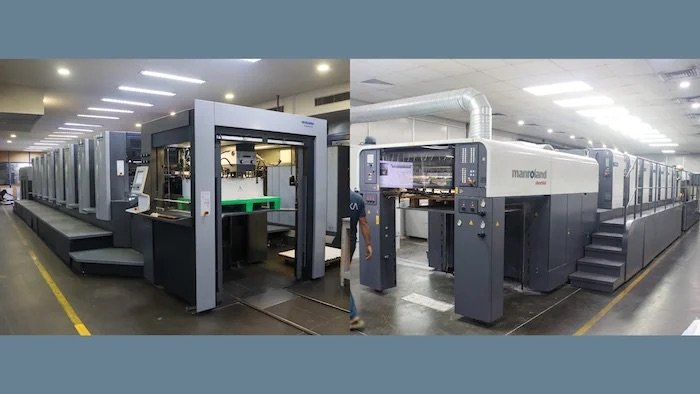
But the basic fact is that when you are a publisher or the owner of a printing factory with modern machines, your productivity is bound to be far higher than the average growth of the economy, which includes large sectors such as agriculture that grow in low single-digit percentages. Even if some of the nominal GDP growth numbers above 6% include inflationary raw material and labor costs, and real growth in volumes is lower, the print industry continues to grow steadily with good capacity building in both offset and digital presses and increased automation of the entire process.

The Indian newspaper industry continues to show resilience as it reaches pre-pandemic revenues, if not circulation. Benign newsprint costs have helped profitability, and news publishers are practicing every type of efficiency to protect their bottom lines. While not rushing out to buy new double-width presses, they are thinking of how to maintain and modernize their production assets and attempting to come to terms with the digital squeeze from Agentic AI and the creator economy. As yet, a relatively small number of newspapers have diversified into packaging.
The Indian book industry is particularly strong both for domestic consumption and for exports. The past year has seen a significant influx of 8-color perfectors and 4 and 5-color offset presses for highly automated book printing. It has also seen a rising number of webfed and sheetfed inkjet digital presses being installed. Several offset book printers have ventured into childrens’ book publishing. Many other book printers have begun their monocarton production plants, while others are acquiring land for this purpose. Still others who have just built large book production plants have also said that packaging plants are within their future orbits.
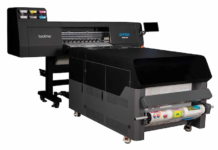
The installations of digital production presses using toner technology have seen growth in the past year, although their proliferation in the big cities has now created hypercompetition and greatly eroded margins. This has encouraged large multilocational traditional digital print businesses to diversify to web-fed inkjet POD work for publishers and also to digital labels.
Indian book printing businesses are displaying agility across technologies and across print sectors. They are adding real estate and investing in equipment, and finding the reduced cost of Asian made inkjet presses easy to digest and experiment with. Although there is some apprehension that inkjet heads are delicate and present difficulties over time, the local inkjet ecosystem and experience are developing. In what is seen as an extremely flexible technology that can work for a large variety of industrial applications, several local manufacturers are developing inkjet presses that could be viable and reliable in the next couple of years.
Thus, this is the year of agility, of rapid change in attitudes and new technology absorption. There is also a marked change in the culture of leading print businesses. They are looking at no compromise in quality and systems, and seem ready to invest in a variety of technologies. They are aware of all the constraints listed above, but are now experienced risk takers and determined builders.