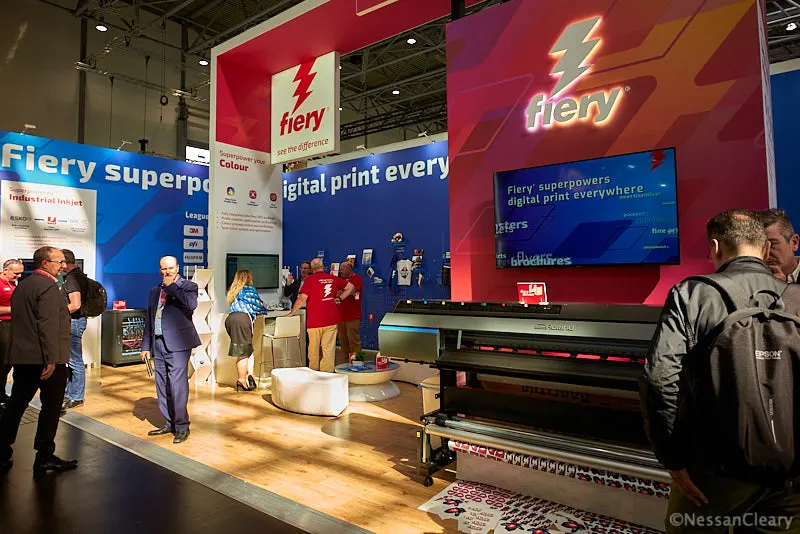
Fiery has enhanced its textile RIP software offering with an update to its Digital Factory RIP, following its recent acquisition of the Spanish company Inèdit Software from EFI Reggiani.
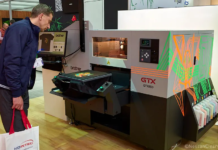
The Digital Factory RIP is aimed at the direct-to-film and direct-to-garment market. The software was originally developed by the Canadian company CadLink, which Fiery acquired in 2022. It’s sold in various editions, but all use the same core RIP. The new version 12 gains the proven Fiery Color Profiler add-on, which can be used to calibrate printers and build ICC profiles in-house. This is complemented by a new saturation rendering created specifically for textiles that’s said to boost vibrancy in traditionally dull areas while preserving natural skin tones and avoiding over-saturation.

There’s a new, streamlined interface with improved production tools. This includes a new Gang Sheet Builder that allows users to drag-and-drop a layout directly into Digital Factory, complete with the ability to preview, group, nest, and auto-close sheets from the queue. Fiery has also expanded the markup system with clearer labels, orientation indicators, and finishing guides, which should make it easier to organise jobs.
Toby Weiss, CEO of Fiery, commented, “The DTF and DTG print market is growing rapidly, and customers want less friction, more impactful color, and future-ready workflows that take their operations to the next level. For over 30 years, Fiery has provided the color technology that tens of thousands of printers around the world have relied on for the best color quality in digital print. Digital Factory 12 changes the game for DTF and DTG printing with that same professional-grade colour calibration, combined with smart automation tools that scale as print businesses grow.”
However, the DtG/F market is only a relatively small part of the overall textile market. But Fiery has also recently acquired Inèdit Software, which will fill a gap in its portfolio and allow it to play more fully across the whole textile market.
Inèdit, which was set up in 1992, specializes in textile printing. Its NeoStampa RIP is widely used by many textile printer OEMs, and it drives everything from single-pass presses to small dye sublimation printers. It also sells NeoMatch, which converts spectral readings and colour libraries to LAB data to generate more accurate colour matches, and NeoCatalog for grouping designs together, as well as a range of textile-specific plug-ins for Adobe Photoshop.
In theory, Inèdit should also regain some of the perception of independence that it lost when it was acquired by EFI Reggiani. However, it’s also worth noting that Fiery is itself owned by Epson, which also develops textile printers, including the Monna Lisa range that directly competes against Reggiani.
Nonetheless, Fiery has worked hard to establish itself as a neutral RIP developer that can work with all players in the market, which is likely to be welcomed by Inèdit’s customers. Fiery intends to maintain Inèdit’s existing brand identities, product independence, and partner and customer bases. Naturally Fiery will add its own technologies to Inèdit’s future product offerings in areas such as colour and imaging, job management, RIP performance, and device integration.
Frank Pennisi, EFI’s CEO, commented, “With this transaction, Fiery will now support our textile business as well, enabling EFI to focus on its core businesses of systems, production software, and ink. In addition, as part of Fiery, LLC, Inèdit will be able to take advantage of additional growth opportunities. We believe this transaction brings strong benefits to both companies while ensuring continued availability of software products that are important to the textile printing industry.”
The deal was expected to close in 2025 following the usual regulatory review period. In the meantime, Digital Factory 12 is available now through Fiery’s dealer network as well as its website.