India’s advertising, signage, and textile printing industries are undergoing a transformation, marked by a rapid shift toward digital solutions and a growing commitment to sustainable practices, inks, and substrates. Raj Manek, executive director and board member of Messe Frankfurt Asia Holdings, highlighted the regional differences in advertising strategies shaped by urban development and consumer behavior.
In a conversation with Indian Printer & Publisher at the recent Media Expo in Delhi, Manek emphasized that the event serves as a vital and consistent platform for the indoor and outdoor advertising, signage, and digital printing sectors—reflecting the rapid evolution of the market. The 2025 edition underscored the industry’s dynamism and immense potential.

“Cities such as Mumbai, owing to extensive urban development, show a clear preference for purely digital advertising. In contrast, the northern region, including Delhi, continues to rely on a mix of print and digital media. India’s rapid urbanization is a major catalyst for sectoral growth, creating numerous marketing opportunities. Tier 1 cities are gravitating toward more targeted indoor marketing in malls, metros, and airports, while Tier 2 and 3 cities still depend heavily on outdoor advertising for broader reach,” he said.
This aligns with what Indian Printer & Publisher reported in October 2023: “The Indian digital signage industry is expected to witness exponential growth in the coming years as brands recognize the advantages new technologies offer over traditional solvent-based and inkjet-to-LED signage. Although LED signage is catching on in cities such as Mumbai, it remains a novelty across much of the country. Even in Mumbai, LED screen-equipped bus stops are still advertising their availability.”
Manek noted a growing focus on vehicle wrapping for advertising on metros and buses—an emerging opportunity that leverages the mobility of public transport across India. Advancements in display technologies (LED, OLED, 4K), integration of artificial intelligence (AI) for personalized content, and the use of cloud-based content management systems are propelling the digital signage segment forward.
Below-the-line (BTL) campaigns are another expanding form of advertising, promoting products through on-ground activities such as roadshows, trade fairs, catalogs, leaflets, and vehicle-based promotions. In indoor advertising, the adoption of cutting tables for producing creative standees and other point-of-sale (POS) materials is rising significantly.
Outdoor advertising, however, requires a distinct approach due to factors such as weather resistance, image quality, sustainability, and the use of the right printing techniques—all crucial for achieving optimal results. The right combination of textile frames, fabrics, and print technologies can create powerful and sustainable outdoor displays. Opting for textile over PVC banners or rigid materials offers an environmentally friendly alternative for most outdoor applications.
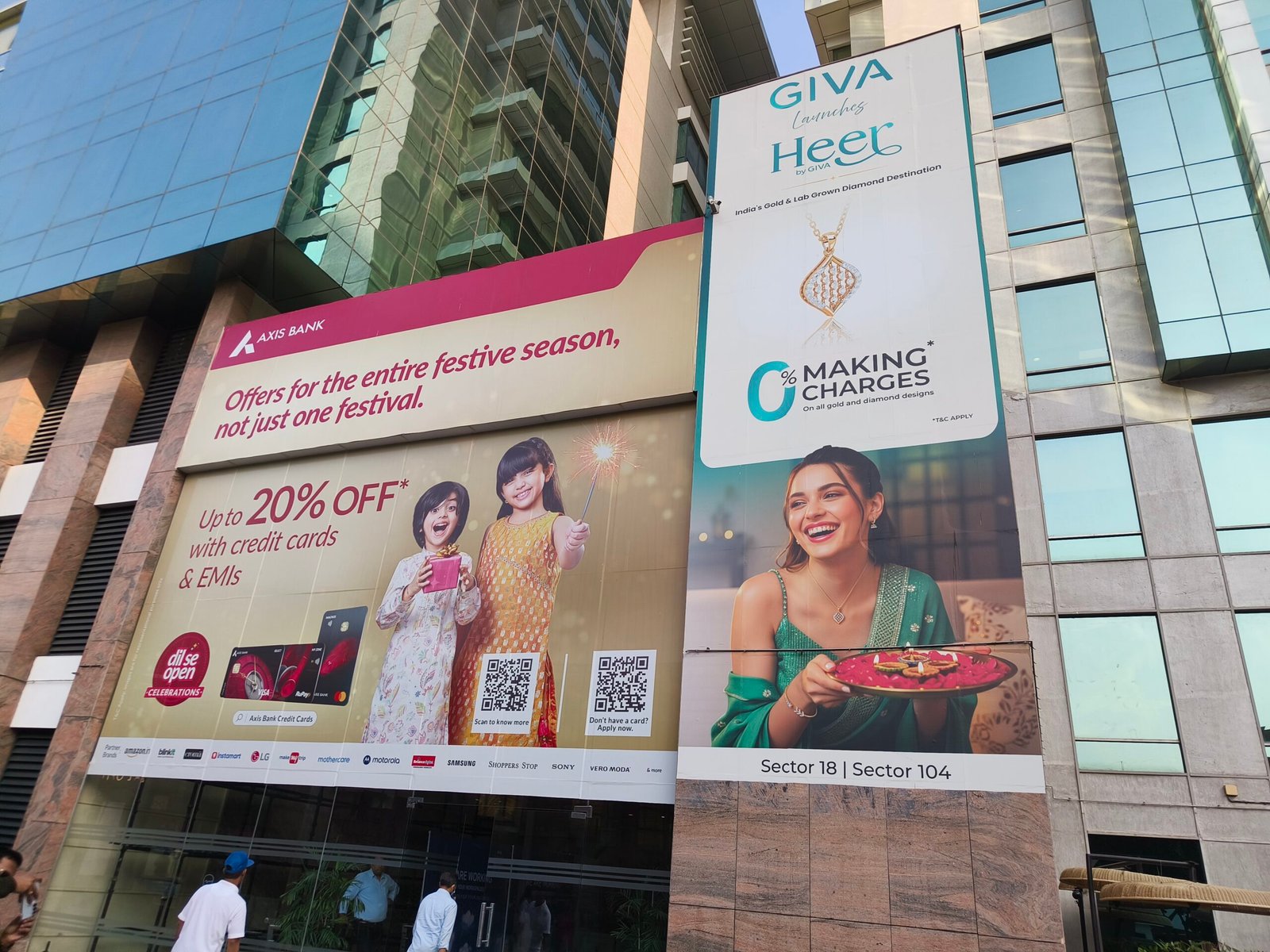
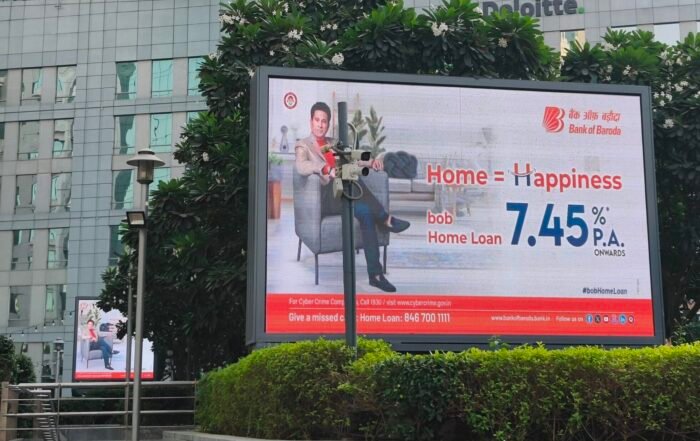
Government initiatives such as the Smart Cities Mission and ongoing urbanization are driving investments in intelligent transportation systems and public information displays that depend heavily on digital signage. Many businesses are shifting from static billboards to dynamic, interactive, and real-time advertising formats to enhance customer engagement—especially in retail, hospitality, and corporate sectors.
While digital continues to gain traction, print remains indispensable in packaging, retail, and eCommerce, where short-run, customized, and sustainable solutions are the norm.
A signage solutions provider from Delhi’s Udyog Nagar remarked, “Advertising has often been seen as a cost with no tangible ROI, which previously encouraged the use of cheaper materials. But now, industry requirements have become more sophisticated, with brands willing to invest in the necessity and value of more sustainable solutions.”
Media forecast
Media agencies have also forecast a promising future for the OOH industry, a key driver of the signage sector. According to the Pitch Madison advertising report for 2025, OOH media contributed 12% to adex growth, registering an adex of Rs 4,650 crore with a market share of 4.3% in 2024. Traditional, transit and DOOH are the three major forms of outdoor now in vogue.
OOH advertising revenue was Rs 4,140 crore in 2023 at 4.2% share, Rs 3,666 crore in 2022 with a 4% share, and Rs 2,178 crore in 2021 (3%). It plunged to Rs 1,292 (2%) crore in 2020 from Rs 3,495 crore (5%) in 2019 in the wake of the Covid lockdown, when print and OOH took the maximum hit. Since then, it has been a steady recovery for OOH advertising.
Word of caution
In spite of the bright future, there’s a word of caution too, as pointed out by World Out of Home (WOO) president Tom Goddard at an event in India last year. He said key issues are a lack of credible industry-wide measurement, uncoordinated adtech development, inconsistent municipal regulations, slow digital conversion rates, fragmented media ownership (over 3,000 OOH operators), and multiple OOH trade bodies.
He emphasized the need for a unified trade association to represent the entire market and support an ongoing audience measurement program. He also called for greater investment in digital transformation, stronger partnerships with municipalities, the elimination of unfair practices, and the development of a carbon-neutral sustainability roadmap.