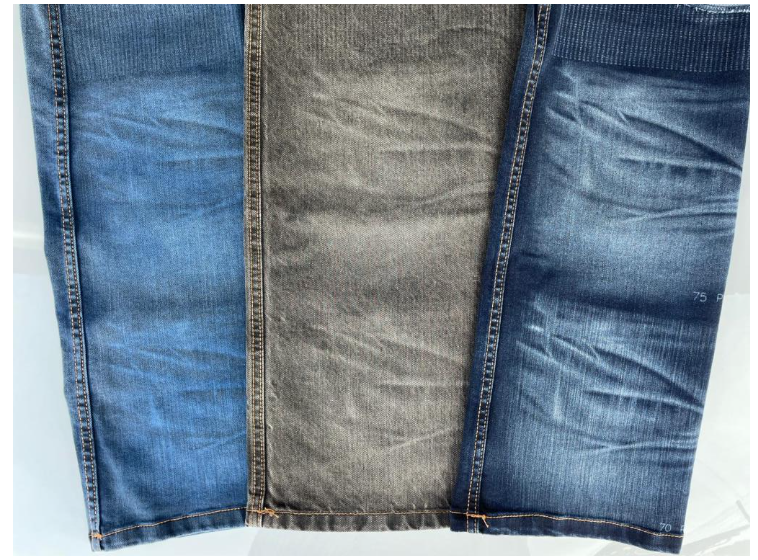
A press release datelined 14 October 2024, Pratteln, Switzerland – announces Archroma’s NTR Printing System to make bio-based pigment printing commercially possible for the first time. Based on renewable raw materials* and designed for safer chemistry, it helps apparel and textile brands reduce their environmental footprint while producing brilliant black shades on garments that deliver both comfort and durability.
Bio-based pigment printing is an emerging technology that is attracting major interest from brands that want to use pigments derived from natural sources, such as plants, in the production of environmentally conscious textiles. Until now, however, bio-based pigments have not delivered color fastness that is comparable to synthetic pigments, and color quality and production performance have not been sufficient to support commercial-scale production.

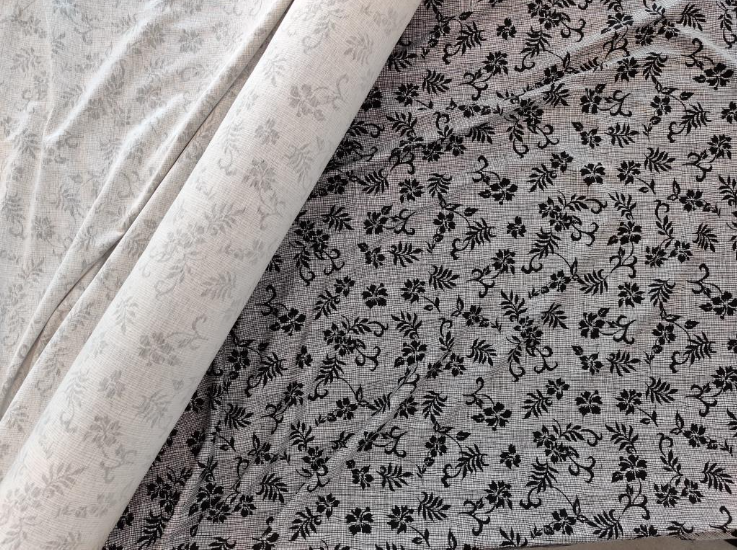
Photo Archroma
Archroma’s NTR Printing System is the first to utilize renewable feedstock* across pigment dispersion, binder and fixing agent. Crucially, it ensures good wet-rubbing and dry-rubbing fastness, with outstanding softness on all kinds of fabrics. Furthermore, it is suitable for most popular application technologies, including printing, coating and continuous pigment dyeing, with outstanding runnability for production efficiency.
“These properties make the new NTR Printing System ideal for the highly competitive denim market, where sustainability, comfort and durability are important; for knits, where very soft handfeel is essential; and on babywear, where both exceptional softness and safety are required,” Joaquin Femat, Market Segment director for Printing, Archroma, said.
“This latest breakthrough is another example of innovation under Archroma’s ‘Planet Conscious+’ roadmap. We develop revolutionary products, systems, and technologies with increased sustainability features than available market alternatives and enhanced value so that brands and mills can differentiate themselves with solutions that meet their business goals and sustainability targets,” he continued.
The result of more than two years of research and development, the innovative NTR Printing System required Archroma to create customized binding and fixing agents to ensure fastness for the pigment black dispersion comparable to current petroleum-based printing systems. All three printing elements are partially based on renewable feedstock to reduce reliance on non-renewable petrochemicals. Archroma also developed the new system to avoid toxic input streams and impurities, including formaldehyde. Two successful bulk trials were conducted with Textprint SA and Jeanologia.
The NTR printing system comprises the following highly efficient and robust printing elements:
• Printofix Black NTR-TF – a non-gelling pigment black with 79% renewable carbon content*, designed for use in textile applications with no impact on fastness levels.
• Helizarin NTR-SS – a formaldehyde-free super-soft binder with 40% renewable carbon content**, designed to ensure very good overall fastness levels.
• Luprintol fixing agent NTR-HF – a formaldehyde-free fixing agent with 40% renewable carbon content**, designed for high wet fastness in rubbing and laundry.
All three elements are currently being evaluated for compliance with globally accepted standards like bluesign, the Global Organic Textile Standard (GOTS) and Zero Discharge of Hazardous Chemicals (ZDHC). The system also supports major industry restricted substances list (RSL) requirements.
“With the launch of the bio-based NTR Printing System, Archroma can now draw on the industry’s most complete portfolio of innovative printing solutions to tailor systems for individual customer needs,” Femat said. “We remain the global leader in pigment printing, with a history of innovation that includes the first formaldehyde-free pigment printing system, introduced in 2012.”
* The NTR printing system utilizes partially renewable raw materials.
** Based on ASTM D6866 bio-based product testing using radiocarbon analysis.