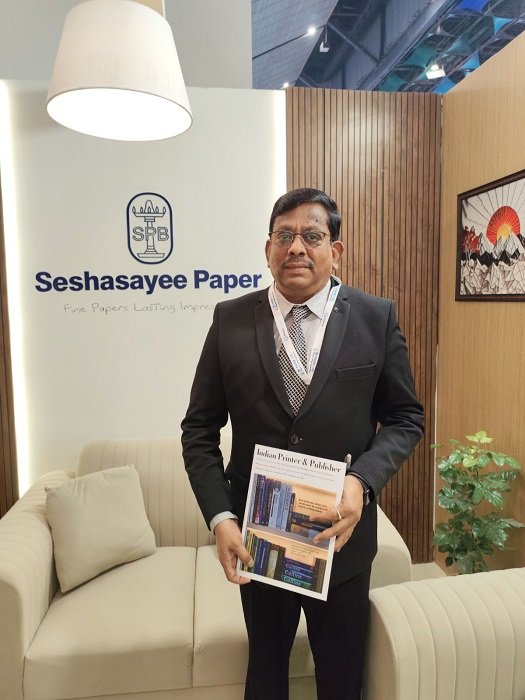
Seshasayee Paper & Boards showcased its portfolio at PaperEx Delhi last December, highlighting machine finished (MF), machine glazed (MG), and Yankee grades, among others. The company also produces multi-layer variants for paper cups, plates, bags, boards, packaging, and corrugation, along with colored and tracing paper ranging from 28 gsm to 240 gsm.
Indian Printer & Publisher spoke with K Gunasekaran, vice president – marketing, who gave details of the firm’s colored paper offerings, including a full spectrum of pastel shades and four standard colors—blue, green, pink, and yellow. Orange and beige are manufactured as per requirment. Dark shades, however, are not feasible, he noted.

Seshasayee Paper & Boards – which operates two manufacturing units in Erode and Tirunelveli, Tamil Nadu – also manufactures copier paper from 65 gsm to 80 gsm. It also offers colored copier paper—a segment where only a limited number of mills are active.
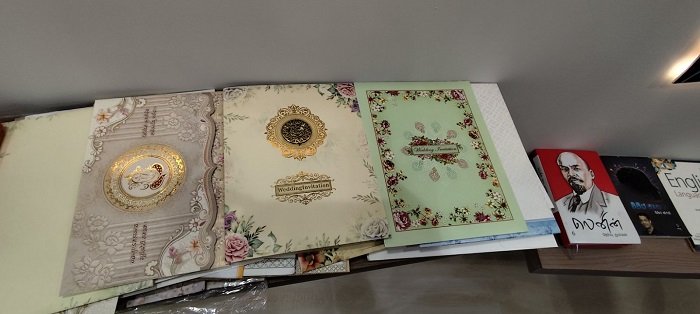
Gunasekaran explained that the company refers to the production of colored paper as color printing. Colored copier sheets are commonly used for notices and project separators. They are popular for wedding invitations and chart paper in schools and colleges. These grades can be produced in low grammages of 28–30 gsm. “Very few mills can supply colored sheets at such low grammages. Tracing paper is another specialty product we provide.”
For paper cups and plates, Seshasayee gives only the base paper, which requires barrier coatings. Earlier, manufacturers relied on chemical and poly coatings—now restricted in several states. Barrier coatings, he said, are more environmentally responsible.
Challenges, innovations & trends in Indian paper industry
“Our main motto is trust,” Gunasekaran said, adding this factor has sustained the company for over 65 years. Established in 1960, the company is led by N Gopalaratnam and has diversified interests in battery, sugar, project, and consultancy services. “We support several mills through consultancy—whether it involves installing a paper machine or setting up a new plant, we assist throughout,” he said.
The Indian paper industry is growing, with India ranking among the fastest-growing markets globally, he said. Growth stands at around 6–7% overall. In contrast, Western markets are largely stagnant due to smartphones and digital adoption reducing demand for writing and printing paper. India, still developing, presents significant headroom—especially in printing and publishing. Per capita consumption here is just 15–16 kg, compared with a global average of 57 kg and more than 300 kg in some countries. A mere 1 kg rise per capita would generate demand for nearly 1 million additional tons. The primary concern, he emphasized, is imports.
Many converters in India prefer imported material over domestically produced paper. According to Gunasekaran, imports pose the single biggest challenge to the industry. Overseas producers operate at far lower costs, supported by cheaper power, labor, and raw materials, as well as larger volumes and advanced technology. Their scale drives down production costs further. Consequently, lower-priced imports are entering the Indian market and disrupting pricing, while domestic manufacturers struggle with higher input costs and comparatively dated technology.
The Indian Paper Manufacturers Association (IPMA) is actively engaging with the government to safeguard the sector. Discussions include free trade agreements, minimum duties, minimum import prices, and safeguard duties. For ASEAN nations, import duty is currently zero, enabling duty-free entry of paper. The recent minimum import price for board offered relief to that segment. The industry is now advocating for similar measures for writing and printing grades. If introduced, such a policy could provide meaningful support, he said.
Indian manufacturers must focus on innovation, he said. With imports unlikely to disappear, companies need to cut costs, explore new segments, and develop differentiated products. “That is the only way to come out of this problem as imports will stay,” he said.
On investments, Gunasekaran said government participation is minimal, leaving expansion largely to private players. Greenfield projects demand substantial capital and may not always be viable. As a result, many are considering brownfield expansions instead.
The company recently raised its capacity to 2.5 lakh tons and is in the process of acquiring another mill with an additional 70,000 tons. Within the next year or two, total capacity is expected to exceed 3 lakh tons. Plans are also underway to establish a new pulp mill to address current capacity limitations.
Indian publishing & printing industry
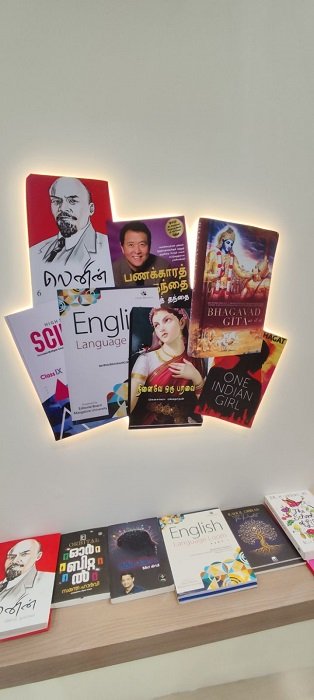
Gunasekaran believes the publishing sector faces mounting pressure as digital steadily replaces printed books. Printers are finding survival increasingly difficult. Procurement volumes among major publishers have declined and may shrink further, he claimed. “Books and magazines are widely accessible in digital formats, and audiobooks add another layer of competition. Readers using Kindle or similar platforms often bypass print editions. Still, printed books remain the best form of reading for retention and tactile engagement.”
Traditional practices have also shifted. Physical wedding and greeting cards are now replaced by WhatsApp invitations. The emotional and personal element, he said, is missing now.
Enhancing shelf life of a paper products
Paper has a long shelf life, yet 20 or 30 years old books often turn brittle, he said. With age, sheets stiffen, yellow, and emit an unpleasant odor caused by color reversion. Pages may crack when turned. It’s inevitable without proper treatment.
Historically, manufacturers used acid sizing in the papermaking process to enhance quality. Today, alkaline sizing—with a pH above 7—is the norm. Alkaline-treated paper offers greater permanence and significantly improved longevity.
Sizing is done to reduce absorbency. Both acid and alkaline methods serve the same function: preventing ink from smudging by imparting water resistance. When writing with an ink pen, the sheet should not soak up the ink. Coefficient of Performance (COP), or Water Absorption Capacity, ideally should not be more than 20–25. Beyond that threshold, absorption increases noticeably, he explained.
Sustainable practices in paper production
Seshasayee Paper & Boards relies on agro-residues, particularly bagasse derived from sugarcane waste in its sugar mills, for paper production. The company supplies treated effluent water to farmers cultivating sugarcane, which is later processed in its sugar plant. The residual bagasse feeds back into papermaking. This process positions Seshasayee as the only Indian paper manufacturer operating a circular economy model of this scale.
Sustainability remains central to its philosophy, he said. Three decades ago, the land surrounding the mill was largely barren. Today, it is visibly green, with farmers benefiting financially from plantation.
The company promotes plantation of forest species such as Eucalyptus and Casuarina through tie-ups with farmers and banks. Saplings are distributed, and after three to four years, the harvested wood is repurchased. This approach expands green cover while supporting small landholders.
Seshasayee utilizes waste paper processed through elemental chlorine-free pulp bleaching, a safer method that substitutes chlorine dioxide for elemental chlorine gas to remove lignin. This prevents the formation of harmful dioxins and furans while delivering stronger, brighter paper.
Paper course
Seshasayee conducts a three-day educational program for traders, customers, and those interested in understanding papermaking. Held twice a year, the course is free, including meals and refreshments; participants arrange their own accommodation. Each batch includes 30–35 attendees.
The course covers the fundamentals—what paper is, how it is produced, the resources involved, and the challenges faced by manufacturers. It serves the broader paper ecosystem by fostering knowledge-sharing and goodwill, he said.