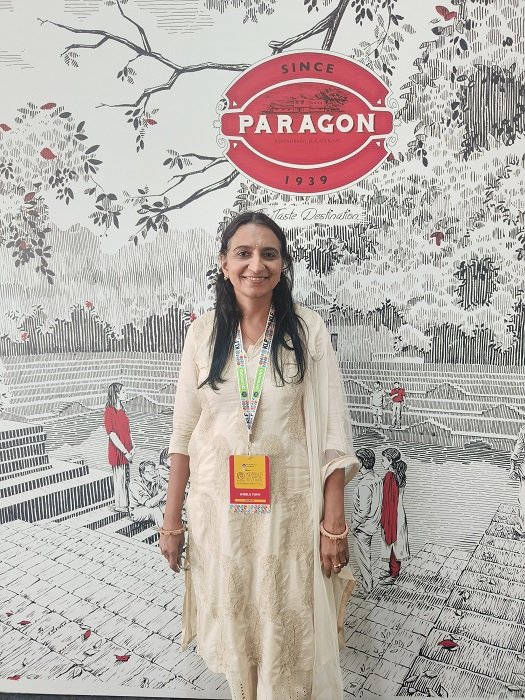
Correspondent Priyanka Tanwar had a conversation with Malayalam author Sheela Tomy at the Kerala Literature Festival, discussing her latest book, Do Not Ask the River Her Name, and topics including the representation of the Palestine-Israel conflict in literature, inspiration from Arabic literature, the significance of translation prizes, and more.
Edited excerpts:
Indian Printer & Publisher (IPP) – Tell us about your new novel, Do Not Ask the River Her Name.
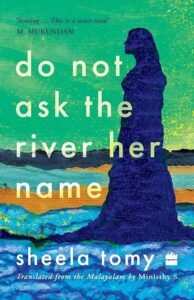
Sheela Tomy – In the novel Do Not Ask the River Her Name I was trying to capture the memories of people driven away from their homes and lands. This novel came out from my diaspora exposure. I was working in the Gulf for more than two decades. This novel’s background is West Asia. I narrated the story through Ruth, a Malayali nurse who traveled across the sea to Saudi Arabia, and then to Dubai, finally reaching Jerusalem, the holy city of three sematic religions always under tension for a century. Ruth was a caregiver at a Jewish family in Nazareth, looking after a retired professor from Hebrew University. Many such Malayali women go in search of work in foreign countries. I wanted to depict the lives of these women who have to struggle to support their families. There are a lot of writings in Malayalam on men’s journeys. But very little is documented about women. As story advances, protagonist Ruth happened to witness the struggles of a Palestinian poet, Sahal, and his sister, Sarah.
I was working with Palestinians, Lebanese, Jordanians and people from other Middle Eastern countries. I happened to hear from a Palestinian colleague about her struggles, her childhood in refugee camps, and how she lost her near and dear ones. I saw a ‘red sea’ in her tears. A sea that can never be crossed. Then the river of sorrows and stories started to flow from her, creating this novel.
IPP – Why did you choose to write about the Malayali emigrant experience and the Palestine conflict?
Sheela Tomy – This novel would not have happened had I not been working in the Middle East. We may get news from the media, but we won’t get to see the real-life experiences. I was deeply moved by my colleague’s story and wanted to show solidarity with the people of Palestine, who are forced to flee, abandoning everything they owned and who are questioned about their identity at hundreds of checkpoints. In May 2021, when I started the novel, there was an Israeli Police strife in the premises of the Al Aqsa Mosque at the Temple Mount of Jerusalem, in the holy month of Ramadan. That was the starting point for the story.
We can never imagine the Palestinian struggles and sorrows because we have never experienced a war. We have never experienced displacement. We have never stood in the queues for a piece of bread. We have never lived in fear of warplanes.
The writing process was not easy as everything — culture, politics, and the geography — was not familiar. I did a lot of research, reading books, watching movies and vlogs and talking to friends. There are lot of misunderstandings, half-truths and lies in our society about the Israel-Palestine issue. The real economic and political cause is always forgotten. I wanted to show the real sufferings and that’s why I opted for that theme. The story tells about human love beyond borders.
IPP – How has the response been to its English translation?
Sheela Tomy – The English translation was well accepted. I did not expect such a response because it’s a sensitive political issue. Here Palestine is only a symbol. This can happen anywhere where human rights are violated and the world keeps a silence, not standing with the suffering people. A lot of readers, especially youngsters not familiar with Palestinian-Israeli politics, were impressed and responded positively. They said they started researching to understand Palestine issue well.
This novel is about standing with humanity. It stands for people who are suffering. We know what happened in Germany, Russia and European countries before 1948, before the formation of Israel. Jewish suffered the same plight. But that is not a reason to throw Palestinians out of their land with the support of Britain and America, saying ‘land without people is given to people without land’.
Overall, the response has been good. Readers were tempted to search for the real history and problem as well as the threats of settler colonialism and occupation, which ended up in the unfortunate genocide the world witnessed in the last two years. This novel was written in 2021, well before the latest war started on 7 October 2023. The Palestinian issue is a century old. Keralites in general have been well-informed of what is happening in Palestine. Even in our childhood, we heard about standing with Palestine. But presently, sectarianism and a rightist shift is prevalent, which denies human dignity and is least bothered about others, and only stands for your religion, your caste or your country.
Many identified the river as a river of humanity, a river of love though some said it’s a river of blood, a river of extinction. The novel was the first runner-up in The Wise Owl Fiction Award 2026.
IPP – What kind of research did you about Palestine before writing the novel?
Sheela Tomy – I used to read Palestinian literature – poems, novels, fiction, non-fiction. I had Palestinian colleagues and friends and so it was easy to know about their life. When I started the novel, I re-read many fiction books; I watched the movies again and watched some vlogs. I read Israeli historian and political scientist Ilan Pappe and Palestinian-American academic and literary critic Edward Said. I re-visited their books and articles. I read Murid Bargouti. I was in constant contact on WhatsApp with friends in Israel to get a real-life experience of what is happening in the Jewish family.
IPP – Your books have very captivating illustrations on their cover
Sheela Tomy – I am really thankful to the illustrator. The cover illustration of Valli is hand-drawn. For Do Not Ask the River Her Name, Ramnika Sehrawat, the designer, depicted a lady who flows like a river through different geographies of the land. I think she has done a very good job.
IPP – How did you decide on the title, Do Not Ask the River Her Name, and how was it contextualized in terms of the story?
Sheela Tomy – In Mahmood Darwish’s poem, The Passport, we read, ‘do not ask the trees for their names, do not ask the valleys who their mother is.’ It reflects the identity crisis of the Palestinians, the displaced. The title of the novel was evolved from those lines.
River is a symbol, representing the life of the displaced people. The river does not belong to any specific place as it flows from one land to another, just like the displaced people. They do not belong to any country. We have seen more than 20 lakh people moving from north Gaza to the southern side in a few months. 70,000 innocent people lost their lives, of which 20,000 were innocent children. Many poets and journalists lost their lives or they were made silent.
The Jordan River is at the center of the story. If you read through Palestinian poet Mourid Barghouti’s memoir I saw Ramallah, (Arabic: Ra’aytu Ram Allah), you can see he waited at a 50-meter bridge at the Jordan River for 30 years, to cross it to go to his homeland. After the Six-Day War in 1967, he was dispelled from his country. Like him, thousands Palestinians wanted to visit their homeland but could never do it. They were living in refugee camps in Jordan, Lebanon, or neighboring countries. So I thought the river is a suitable symbol. And this is in a way paying respect to the great poet Darwish, a symbol of Palestinian resilience.
A name sometimes acts as a bomb, which reveals caste, creed, religion and nation. In this divided world, better not to ask anyone their name, if you can’t accept them as fellow human beings irrespective of their caste, religion, color or national boundaries.
IPP – What challenges did you face while writing Do Not Ask the River Her Name?
Sheela Tomy – The first thing was the unfamiliarity of the country’s culture, geography, and customs. The second thing was the sensitive politics. But I took the risk, in the hope that fiction can melt hearts and dissolve misunderstandings about the Palestinian crisis.
A lot of literature, written by the Palestinian people with their blood, is available. I thought, what is the importance of writing about Palestine from outside Palestine? I think it’s important, because we are listening to the Western narratives about Palestine. We need to fight these narratives. This novel is a humble attempt to show solidarity to the people whose human rights are violated.
IPP – Your novel Valli was shortlisted for the JCB Prize for Literature. What role do literary prizes play in promoting translated works?
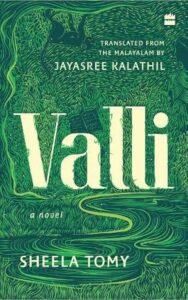
Sheela Tomy – If there were no literary prizes for translations, I don’t think Valli would have been read by such a wider audience. Because of the translation prizes, we get visibility for translated works. Apart from the JCB Prize for Literature, Valli has been shortlisted for other awards. These include being shortlisted for the American Translators Association Translation Prize, the Bangalore Literature Festival’s Atta Galatta Book Prize, GreenLitFest Honour Books Award, and the Kalinga Literary Festival (KLF) Book Awards. Valli was also the winner of the Muse India-GSP Rao Translation Jury Award, Pen and Paper Awards, the V Abdulla Memorial Translation Award instituted by V Abdulla Memorial Trust in Kerala, and the Book of the Year Award for Translation at FICCI Publishing Awards.
IPP – Malayalam translations are gaining prominence in India’s literal translation scene. What are your thoughts on these language translations?
Sheela Tomy – In our childhood, we read translations from Bengali, Russian, Latin American, Spanish and other languages. There is a recent trend of more and more regional books getting translated into English. I think that happened because of the translation prizes. That’s a good thing as the writers get more visibility. I think translated works are sometimes more interesting than Indian English writing as they discuss a variety of subjects, new perspectives and are written on unfamiliar backgrounds and cultures. I think translations help to make bridges to unite India.
IPP – What is the future of vernacular Indian translations in a global scenario?
Sheela Tomy – South Korean author Han Kang was awarded the Nobel Prize in Literature in 2024. I hope our books from regional languages will get the Booker and Nobel one day.
IPP – Tell us about your translators.
Jayasree Kalathil has done a wonderful work in Valli. It is difficult to translate Malayalam slangs, and the Paniya language, used by a tribal community in Northern Kerala. I have used many of their words and songs in Valli, and she has skillfully translated them into English, keeping the essence and beauty of craft intact. Likewise, for Do Not Ask the River Her Name; Ministhy S went through thorough research to fact-check Palestinian updates.
I have written many poems in the novel which she translated beautifully. In two months, she completed the original draft, spending sleepless nights after her highly demanding day job of a civil servant, not only due to her passion, but for the devotion and emergency of the subject discussed in the novel. My craft and emotions were safe in her hands. I am obliged to them for taking my words across the borders to new worlds. They are not mere translators but co-creators.