The Women’s Prize Trust has revealed the 16 books that make up the 2026 Women’s Prize for Non-Fiction longlist. A hopeful longlist that reflects the belief that every woman’s voice has the power to elicit and inspire change, the sixteen captivating titles span politics, memoir, science, history, biography, art and more, in an extraordinary, international celebration of women’s writing.
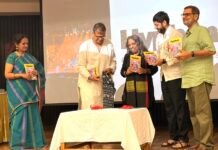
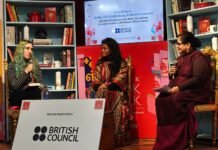
Arundhati Roy’s powerful memoir Mother Mary Comes to Me has been longlisted for the prize along with 15 other non-fiction titles. The book has also been awarded the prestigious Mathrubhumi Book of the Year Award and declared as the bestseller of the year by Bahrisons booksellers.

The 16 books – seven of which are debuts – are a compelling and inspiring reading list for 2026 and beyond. They showcase the many varied ways in which writers approach memoir writing, use personal experience to unlock stories of the past, and tackle the social, political, cultural, legal and environmental issues facing society today, with many offering an image of hope for the future.
“The books on this hopeful longlist are rigorous and researched, lyrical and flowing. They are drawn together by the originality and skill with which they have been written. This reading list carries relevance and truth for the future as well as holding significant value for the present day – the books spark curiosity and demand attention; they are for everyone navigating the complicated and unpredictable world we are living in. The voices of these sixteen remarkable women need to be heard – loud and clear,” Thangam Debbonaire, Chair of Judges noted.
Claire Shanahan, executive director of the Women’s Prize Trust, said, “At the Women’s Prize Trust, the charity behind the Prize, we believe that every woman’s voice has the power to inspire change. Reading and hearing a multiplicity of perspectives, experiences and ideas through non-fiction writing is more vital than ever – it is how we make sense of the world, it’s how we learn from the past, challenge injustice, and imagine new futures. We are grateful to our brilliant judging panel for the care and consideration in their reading and discussions, and we are immensely proud of this year’s longlist: I offer our congratulations to these sixteen exceptional writers whose voices shed light on what it means to be human amidst the wider issues shaping society today.
The full list in alphabetical order by author surname is:
Daughters of the Bamboo Grove: China’s Stolen Children and a Story of Separated Twins by Barbara Demick (published by Granta)
The Finest Hotel in Kabul: A People’s History of Afghanistan by Lyse Doucet (published by Hutchinson Heinemann, Cornerstone, Penguin Random House UK)
Don’t Let It Break You, Honey: A Memoir About Saving Yourself by Jenny Evans (published by Robinson, Little, Brown Book Group, Hachette UK)
Art Cure: The Science of How the Arts Transform Our Health by Daisy Fancourt (published by Cornerstone Press, Cornerstone, Penguin Random House UK)
With the Law on Our Side: How the Law Works for Everyone and How We Can Make It Work Better by Lady Hale (published by The Bodley Head, Vintage, Penguin Random House UK)
To Be Young, Gifted and Black: Creativity and Race in the 21st Century by Kadiatu Kanneh-Mason (published by Oneworld, Oneworld Publications)
Artists, Siblings, Visionaries: The Lives and Loves of Gwen and Augustus John by Judith Mackrell (published by Picador, Pan Macmillan)
Ask Me How It Works: Love in an Open Marriage by Deepa Paul (published by Viking, Penguin General, Penguin Random House UK)
Death of an Ordinary Man by Sarah Perry (published by Jonathan Cape, Vintage, Penguin Random House UK)
The Genius of Trees: How Trees Mastered the Elements and Shaped the World by Harriet Rix (published by The Bodley Head, Vintage, Penguin Random House UK)
Hotel Exile: Paris in the Shadow of War by Jane Rogoyska (published by Allen Lane, Penguin Press, Penguin Random House UK)
Mother Mary Comes to Me by Arundhati Roy (published by Hamish Hamilton, Penguin General, Penguin Random House UK)
Finding Albion: Myth, Folklore and the Quest for a Hidden Britain by Zakia Sewell (published by Hodder Press, Hodder & Stoughton, Hachette UK)
To Exist As I Am: A Doctor’s Notes on Recovery and Radical Acceptance by Grace Spence Green (published by Wellcome Collection, Profile Books)
Nation of Strangers: Rebuilding Home in the 21st Century by Ece Temelkuran (published by Canongate)
Indignity: A Life Reimagined by Lea Ypi (published by Allen Lane, Penguin Press, Penguin Random House UK)
This year’s Chair of Judges, Thangam Debbonaire, CEO of UK Opera Association, cultural strategist and politician, is joined by Roma Agrawal, engineer, author and broadcaster, Nicola Elliott, founder of NEOM Wellbeing, Nina Stibbe, novelist and memoirist, and Nicola Williams, Crown Court judge and thriller author.
The judges will now narrow down the longlist to a shortlist of six, which will be announced on 25 March 2026. The winner of the 2026 Women’s Prize for Non-Fiction will be revealed on Thursday 11 June 2026 at the Women’s Prize Trust’s summer party in Bedford Square Gardens, London (along with the winner of its sister prize, the 2026 Women’s Prize for Fiction).
The winner of the 2026 Women’s Prize for Non-Fiction, sponsored by Findmypast, will receive £30,000 and a limited-edition artwork known as the ‘Charlotte’ sculpted by Ann Christopher RA FRSS, and both gifted by the Charlotte Aitken Trust.